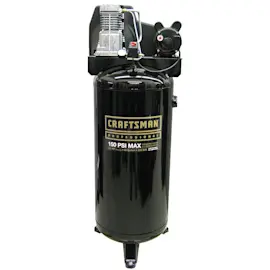
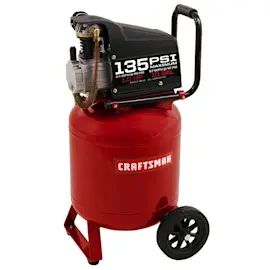
Installation guide
 Owner’s manual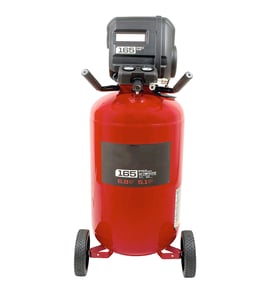


Is it worth it to repair a compressor?
For the Craftsman 919167700 air compressor, repair is worth it when the problem is a normal wear item (like a restricted air intake filter, leaking safety valve, or defective check valve) and the tank is sound. If repairs involve major electrical work or repeated failures, replacement is usually the better value.
- Repair if the compressor runs but has performance issues (pressure drop, slow fill, minor air leaks).
- Repair if the fix is a common service task (regulator adjustment, filter cleaning, check valve replacement).
- Replace if the unit needs repeated major repairs or won’t reliably build/hold tank pressure.
- Replace if the issue points to a larger capacity need (your tools require more SCFM than the compressor can supply).
- Stop and service safely if the repair involves wiring or internal electrical components.
The troubleshooting guidance for this model calls out several issues that are typically straightforward to correct:
| Symptom | Common cause | Typical fix |
|---|---|---|
| Regulated pressure gauge drops under use | Some drop is normal; regulator may need adjustment | Adjust regulator under flow conditions |
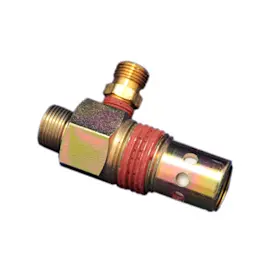
| Knocking noise | Defective check valve or leaking safety valve | Replace check valve; replace safety valve if it leaks |
| Not enough air for tools | Air requirement exceeds compressor output | Use a larger compressor for that tool |
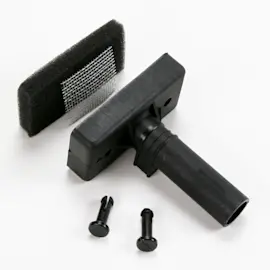
| Low air output | Restricted intake filter or air leaks | Clean/replace filter; tighten fittings |
For model-specific procedures and safety steps (unplugging, bleeding tank pressure, cooling the unit), follow the owner's manual.
- Parts cost vs. replacement cost: If the repair is a small part plus basic labor, repair usually wins.
- Time to diagnose: Chasing intermittent “won’t start” or pressure problems can add up quickly.
- Electrical risk: The manual warns that electrical wiring/repairs should be handled by trained service personnel.
- Performance match: If you constantly see pressure drop because your accessory demand is high, upgrading capacity saves frustration.
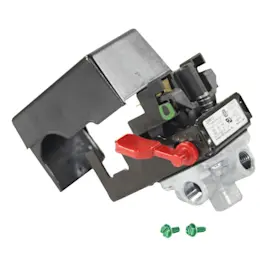
A properly working pressure switch, check valve, regulator, and intake filter helps your 919167700 build pressure correctly and cycle safely. Fixing small issues early also prevents overheating and excessive run time.
Related help: air compressor won't build tank pressure
Last updated: February 2026
What is the most common cause of air compressor failure?
The most common cause of failure on a Craftsman 919167700 air compressor is poor maintenance that leads to overheating and accelerated wear. Restricted ventilation, a dirty or clogged air intake filter, and running the compressor beyond its capacity commonly cause hard starting, low output, and premature component failure.
When maintenance slips, these issues show up most often:
- Overheating from restricted airflow: blocked ventilation openings or operating in a confined area can overheat the motor and pressure switch.
- Restricted air intake filter: a clogged filter reduces airflow, lowers performance, and makes the pump work harder.
- Air leaks: loose fittings, leaking hoses, or leaking valves force longer run times and extra heat.
- Check valve problems: a restricted or defective check valve can cause poor performance and abnormal noise.
- Overuse or undersized compressor: prolonged excessive use can make it seem like the unit is “failing” when it is simply not large enough for the air demand.
Use these practical checks to pinpoint the real cause:
- Confirm the compressor has at least 12 inches of clearance from walls or obstructions and is in a clean, well-ventilated area.
- Inspect and clean or replace the air intake filter (never run with the filter removed).
- Listen for constant hissing and soap-test fittings to find air leaks.
- Pull the ring on the safety valve to confirm it moves freely; replace it if it sticks or does not operate smoothly.
- Compare your tool’s air requirement to the compressor’s output; if demand is higher, pressure drop and long run times are expected.
For model-specific safety, operation, and maintenance intervals, follow the owner's manual.
| Symptom | Common cause | What to do first |
|---|---|---|
| Runs hot or trips | Poor ventilation, restricted openings | Improve airflow and clearance |
| Won’t build tank pressure | Air leaks, restricted intake, valve issues | Check leaks, filter, valves |
| Pressure drops under use | Regulator setting, demand too high | Adjust regulator under flow |
| Knocking noise | Check valve or safety valve issue | Inspect/replace the valve |
Overheating and air restriction do not just reduce performance; they shorten the life of the motor, pressure switch, seals, and valves by forcing longer run times and higher operating temperatures.
Last updated: February 2026
Is a 20 gallon air compressor big enough for air tools?
Yes, a 20-gallon air compressor is big enough for many air tools used intermittently, but it can struggle with high-CFM tools that need steady airflow. With the Craftsman 919167700, match the tool’s SCFM and pressure needs to what the compressor can supply, and keep regulated pressure within the tool’s rating (see the owner's manual).
A 20-gallon tank mainly helps by storing air so the motor does not need to run every second. It is typically a good fit for short-burst tools and general garage tasks.
- Brad/finish nailers and staplers
- Tire inflation and blow guns
- Light-duty impact wrench use (short bursts with pauses)
- Small ratchets and inflators
- Quick, occasional use of air nozzles and accessories
Tank size does not create airflow; SCFM does. If the tool consumes air faster than the pump can make it, tank pressure drops and the motor may run nearly nonstop.
- DA sanders and grinders (continuous airflow)
- HVLP/continuous spraying (steady demand)
- Media blasting (very high, continuous demand)
- Any tool that causes a big pressure drop while you are actively using it
Use this quick check before buying or running a tool:
| What to compare | What to look at | What it tells you |
|---|---|---|
| Tool requirement | SCFM at 90 PSI (or at the tool’s rated PSI) | Whether the compressor can keep up while running |
| Pressure rating | Max PSI on the tool | Set the regulator below this limit |
| Usage pattern | Burst vs continuous | Burst tools work better with smaller tanks |
- Set regulator pressure while air is flowing (tool running), not with the trigger released.
- Expect some gauge drop under load; large drops usually mean the tool demand is higher than the compressor output.
- Keep the duty cycle reasonable; this model’s manual recommends about a 50% to 75% average duty cycle (roughly 30 to 45 minutes of run time per hour).
- Use only hoses, fittings, and accessories rated at or above the compressor’s rating.
Oversizing the tool demand leads to low working pressure, slow tool performance, and excessive run time. Keeping the regulator within the tool’s maximum pressure rating also reduces the risk of bursting or hose whip.
Last updated: February 2026
What are the 4 types of compressors?
The four main compressor types are reciprocating (piston), rotary screw, centrifugal, and axial. Your Craftsman air compressor model 919167700 is a portable, piston-style unit; it compresses air into the tank and uses a pressure switch to cycle on and off (see the owner's manual).
- Reciprocating (piston): Common in portable and shop compressors; good for intermittent use.
- Rotary screw: Common in commercial shops; designed for steady, continuous air demand.
- Centrifugal: Used in large industrial plants; high flow at higher horsepower.
- Axial: Typically used in specialized high-flow applications (often aerospace and large systems).
| Type | Compressor class | Typical use | What it’s best at |
|---|---|---|---|
| Reciprocating (piston) | Positive displacement | Home, garage, light shop | Higher pressure, lower cost |
| Rotary screw | Positive displacement | Pro shops, manufacturing | Continuous duty, steady output |
| Centrifugal | Dynamic | Industrial facilities | Very high airflow |
| Axial | Dynamic | Specialized systems | Extremely high airflow in compact stages |
Most portable Craftsman units like the 919167700 are designed for intermittent run time, not nonstop operation. For example, the manual guidance for this style of compressor is that the pump should not run more than 30 to 45 minutes in any given hour.
Choosing the right compressor type helps match duty cycle, airflow needs, and pressure requirements to your tools. Using a portable piston compressor for continuous-demand work can lead to overheating and frequent cycling.
Last updated: February 2026