Owner’s manual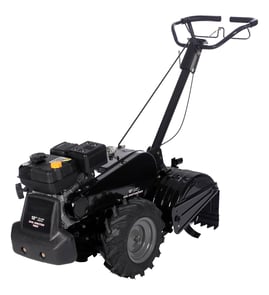



Where is the model number on a Craftsman rear tine tiller?
On the Craftsman rear-tine tiller model 247299320, the model number is printed on the product identification label. On this series, it’s commonly found on the tine shield/guard area; check the frame near the tines first, then check the front of the unit if you don’t see it.
Most common places to check
- On or near the tine shield (rear tine guard area)
- On the main frame rail close to the transmission/gear case
- Near the engine mounting area (frame plate below the engine)
- On the front of the tiller frame (forward-facing plate)
- Near the handle support brackets
How to find it fast (and what to write down)
- Park the tiller on a flat surface and let the engine cool.
- Wipe dirt off the frame and tine shield with a rag so the label is readable.
- Look for a sticker or metal tag that says Model No.
- Record the full model number and any additional numbers on the tag.
| What you see on the label | What it’s used for |
|---|---|
| Model number (example: 247299320) | Matching the correct parts diagrams and parts list |
| Serial number | Identifying the exact production run for service and support |
| Engine info (HP/cc, engine model) | Getting the right engine maintenance and carburetor parts |
Why it matters
We use the model number to match the exact Craftsman parts list and diagrams for your rear-tine tiller. That prevents ordering look-alike hardware or drive parts that fit a different 247-series variation. For model-specific diagrams and identification details, use the 247299320 operator’s manual.
Last updated: February 2026
How much does it cost to fix a tiller?
For a Craftsman rear-tine tiller model 247299320, repair cost depends on whether you need basic maintenance, a belt or cable replacement, or internal gear case work. Most shop labor is billed hourly, and many common repairs land in the $200 to $300 range total.
Typical repair cost ranges (what you can expect)
These ranges help you budget before you tear into the tiller or take it to a shop; confirm exact procedures and specs in the 247299320 owner's manual.
- Basic tune-up and adjustments: $75 to $200
- Drive belt or clutch engagement issues: $150 to $350
- Cable replacement and setup: $150 to $300
- Tines, shields, and hardware repairs: $50 to $250
- Gear case or drivetrain repairs: $300 to $900+
| Repair type | Common symptoms | Cost driver |
|---|---|---|
| Belt and clutch system | Tines do not spin, slipping under load | Labor time, correct belt fit and routing |
| Cable and controls | Handle feels loose, clutch will not engage | Cable adjustment vs. replacement |
| Gear case/drivetrain | Grinding, oil leaks, no drive | Parts cost plus teardown labor |
What you can do first to keep costs down
The manual calls out routine lubrication and hardware checks that prevent bigger failures.
- Disconnect the spark plug wire before maintenance
- Check for loose or missing hardware about every 10 operating hours
- Keep both tires equally inflated (typically 15 to 20 PSI) to reduce pulling and uneven wear
- Oil pivot points on the clutch handle and clutch cable
- Clean rust and burrs from the tine shaft and apply grease before reinstalling tines
Parts that commonly affect repair price
If the tiller will not engage the tines, a worn or stretched clutch cable is a frequent culprit; for this model, the tiller clutch cable is sold as tiller clutch cable 746-1117.
Why it matters
Rear-tine tillers put heavy load on the belt, clutch, and gear case. Catching slipping, loose hardware, or poor lubrication early usually turns a high-dollar drivetrain repair into a simpler belt or cable service.
Last updated: February 2026
What are common tiller problems?
Common problems on the Craftsman rear-tine tiller model 247299320 include a no-start engine, rough running, overheating, wheels or tines not turning, and poor tilling performance. Most issues trace back to fuel quality, ignition, belt/clutch engagement, or basic maintenance outlined in the 247299320 owner's manual.
Quick symptom checklist (what to look for first)
- Engine fails to start: old fuel, clogged fuel path, fouled spark plug, safety controls not set
- Engine runs erratically: contaminated fuel, dirty carburetor, restricted airflow
- Wheels/tines will not turn: drive belt worn, clutch cable out of adjustment, jammed tine shaft
- Tines turn but wheels do not: drive engagement issue in the drive system
- Wheels turn but tines do not: tine drive issue, obstruction, or drivetrain wear
- Poor tilling performance: dull/bent tines, incorrect depth setting, tire pressure uneven
Maintenance items that prevent the most problems
The manual calls out several routine checks that directly reduce common failures.
- Disconnect the spark plug wire before service and wait for all moving parts to stop
- Keep tire pressure at 15 to 20 PSI and keep both tires equally inflated to prevent pulling
- Check for loose or missing hardware about every 10 operating hours
- Clean and lightly dress rust or burrs on the tine shaft; grease shaft ends before reinstalling tines
- Oil pivot points on the clutch handle and clutch cable to keep engagement smooth
Parts that commonly relate to “won’t drive” complaints
If the tiller starts but will not move or the tines will not engage, these are frequent mechanical suspects.
| Symptom | Most common cause | What to inspect |
|---|---|---|
| Wheels/tines won’t turn | Drive belt or clutch not engaging | Belt condition, belt cover area, clutch cable travel |
| Poor tine action | Tines binding on shaft | Rust, debris, bent tines, shaft lubrication |
| Pulls to one side | Uneven tire pressure | Set both tires to the same PSI |
If the clutch handle feels loose, stretched, or inconsistent, replacing the cable is a common fix; use the model-matched tiller clutch cable 746-1117.
Why it matters
Catching fuel and maintenance issues early prevents hard starting, reduces drivetrain wear, and helps the 247299320 tiller track straight and dig consistently. Simple checks like tire pressure, hardware tightness, and clutch smoothness often solve problems before parts fail.
Last updated: February 2026
What tiller is made in the USA?
Some tillers are made in the USA, but it depends on the brand and the specific model. For your Craftsman rear-tine tiller model 247299320, we use the Craftsman 247299320 owner's manual to identify the correct parts and service procedures; for country-of-origin details, check the product ID tag and the original packaging documentation.
USA-made tiller options (what to look for)
When you are shopping specifically for a USA-made tiller, focus on model-specific labeling rather than brand name alone.
- Look for a "Made in USA" statement on the data plate (often on the frame near the engine or handle mount)
- Check the engine brand and model separately from the tiller frame (they can be sourced differently)
- Confirm whether the claim is "Made in USA" vs "Assembled in USA"
- Verify the exact model number on the tag matches what you are buying
- Keep the manual and receipt for documentation
Where to find the country-of-origin label on a rear-tine tiller
Most rear-tine tillers place the model and serial tag in one of these spots:
- On the rear frame near the transmission/gear case
- On the handle support or handle tube area
- Near the engine mounting plate
- Under or behind a belt cover
Quick comparison: what “USA-made” can mean
| Label wording | What it usually indicates | What to do next |
|---|---|---|
| Made in USA | Manufacturing meets USA-origin requirements | Confirm on the model tag and keep documentation |
| Assembled in USA | Final assembly in the USA; parts may be imported | Ask for the model tag details before purchase |
| Designed/engineered in USA | Design work done in the USA | Do not assume manufacturing origin |
Why it matters
Country of origin can affect parts sourcing, service documentation, and long-term support. Even on the same Craftsman product line, hardware and drivetrain components can vary by model, so matching the model number (like 247299320) is the fastest way to get the right replacement parts and diagrams.
Last updated: February 2026
Are Craftsman rear tine tillers any good?
Yes. Craftsman rear-tine tillers like model 247299320 are a solid choice for homeowners who need strong digging power and consistent performance in tougher soil; they are built around a 208cc engine platform and include detailed maintenance and safety guidance in the 247299320 operator's manual.
What you can expect from a rear-tine Craftsman tiller
Rear-tine designs put the tines behind the wheels, which helps the machine “pull” through soil more steadily than many front-tine units.
- Strong traction and forward drive for breaking new ground
- Better stability in rocky or compacted soil than lighter tillers
- More serviceable drivetrain components (chains, sprockets, shafts)
- Regular maintenance matters more (belts, fasteners, lubrication checks)
- Wear items (tines, shields, cables) need periodic inspection
Common ownership pros and cons (real-world)
These are the most common themes we see with rear-tine tillers in this class.
| Area | Typically a plus | Typically a drawback |
|---|---|---|
| Power | 208cc-class torque for hard soil | More vibration than smaller units |
| Control | Steadier tracking than front-tine | Heavier to maneuver and transport |
| Durability | Rugged gear case and tine drive | Fastener loosening if not checked |
| Serviceability | Many replaceable parts available | Repairs can be time-consuming |
Parts that affect “how good it feels” in use
If performance starts to drop, these items often make the biggest difference.
- Clutch engagement and drive feel: a stretched or sticky cable can cause slipping or poor control (see tiller clutch cable 746-1117).
- Soil containment and safety: bent or missing shields can let debris fly and reduce control (see tiller tine shield, rear 786-0113A-0691).
- Fuel choice: the manual’s fuel decal warns against E85 and fuel over 10% ethanol (see e85 fuel decal 777X43688).
Why it matters
A rear-tine tiller can be “very good” or “a headache” depending on upkeep. Keeping the clutch system adjusted, shields intact, and hardware tight preserves digging performance and reduces premature wear.
Last updated: February 2026
Why are the tines on my tiller not turning?
On our Craftsman rear-tine tiller model 247299320, the tines usually stop turning when the drive system is not being engaged (clutch control/bail), the belt is off or worn, or the tine assembly is jammed. Start with safe shutdown steps in the 247299320 owner’s manual.
Safety first (before you inspect anything)
- Move the throttle control to STOP.
- Disconnect the spark plug wire and ground it against the engine.
- Keep hands and feet away from the tine area.
Quick checks that fix most “tines not turning” complaints
- Engagement issue: To power the tines, pull the clutch control up against the handlebar; releasing the bail stops wheels and tines.
- Belt problem: A belt that’s broken, stretched, or routed wrong can stop tine drive.
- Debris jam: Twine, roots, or heavy residue can bind the tine shaft.
- Depth/technique: Pushing down on the handlebars can reduce wheel traction and make the tiller behave unpredictably; let the wheels pull while the tines dig.
- Reverse mode confusion: In reverse, tine rotation reverses; it can look “wrong” even when it’s working.
What to do next (in order)
- Confirm engagement: With the engine off, verify the clutch control moves freely and returns smoothly.
- Clear the tines: Remove wrapped debris; try the manual’s “fishtailing” technique during operation to help clear buildup.
- Inspect the belt area: If the belt is loose, damaged, or off the pulleys, replace it and make sure it routes over the idler pulley and inside the belt keepers.
- Check tine wear and attachment: Worn tines reduce performance; also confirm the tine assembly is secured with the correct pins.
Common causes and what you’ll notice
| Symptom | Most likely cause | What to check |
|---|---|---|
| Engine runs, wheels move, tines do not | Belt off/worn, idler issue | Belt routing, idler pulley movement |
| Tines start then stop under load | Debris jam, worn belt | Wrapped material, belt glazing |
| Tines won’t move at all | Jammed tine shaft, missing pin | Tine shaft rotation by hand (engine off) |
Why it matters
When the tines are not turning, the tiller cannot dig to depth and can become harder to control. Correct engagement, proper belt routing, and clean tine assemblies restore safe, consistent tilling performance.
Last updated: February 2026
What kind of oil do you use in a Craftsman tiller?
For the Craftsman rear-tine tiller model 247299320, use a quality 4-cycle engine oil that matches your outdoor temperature: SAE 30 for warmer weather and 10W-30 for cooler conditions. Confirm the exact oil type and fill level using the 247299320 owner's manual.
Recommended oil by temperature
Use this as a practical guide for most Craftsman rear-tine tillers with a 4-cycle engine:
| Outdoor temperature | Recommended oil | Why it’s used |
|---|---|---|
| Above about 40°F | SAE 30 | Stable viscosity in heat; good protection |
| Around 0°F to 100°F | 10W-30 | Better cold-start flow; broad range |
How to check and fill the oil correctly
We recommend checking oil before every use and filling slowly to avoid overfilling.
- Park the tiller on level ground and let the engine cool.
- Clean around the dipstick or oil fill area so dirt does not fall into the crankcase.
- Remove the oil fill cap/dipstick, then add oil a little at a time.
- Reinsert the dipstick (per the manual’s method) and verify the level is in the safe range.
- Tighten the cap/dipstick securely before starting.
Fuel note that helps prevent engine damage
Many small engines used on this tiller are designed for regular gasoline with limited ethanol content. If your tiller has the E85 warning label, follow it exactly; the model’s decal indicates not to use E85 or fuel with more than 10% ethanol.
- Use fresh fuel from a clean container.
- Avoid old fuel that has been sitting for months.
- Store fuel safely away from ignition sources.
Why it matters
Correct oil viscosity protects internal engine parts during cold starts and under heavy tilling loads. Using the right oil and keeping the level correct reduces wear, helps the engine run cooler, and improves starting and power.
Last updated: February 2026
How to lubricate a tiller?
For the Craftsman rear-tine tiller model 247299320, lubricate it as part of routine maintenance: clean off soil and debris, then apply the correct oil or grease to the moving points called out in the 247299320 owner's manual so the drivetrain, controls, and pivots operate smoothly and wear stays low.
What to lubricate on a rear-tine tiller
Focus on friction points and rotating parts that see dirt and load.
- Control pivots and linkages (clutch bail pivot, shift linkage pivots)
- Wheel hubs and axle points (where the wheel rotates on the shaft)
- Tine shaft and tine hardware (light oil on fasteners to prevent rust)
- Depth regulator and handle adjustment points
- Any grease fittings (if equipped) on the transmission or tine drive area
Basic lubrication steps (safe and effective)
- Shut the engine off, wait for all moving parts to stop, and disconnect the spark plug wire.
- Brush and wipe off packed dirt around the tines, shields, and transmission area.
- Apply lubricant sparingly; wipe off excess so it does not attract grit.
- Recheck for loose hardware after cleaning and lubricating (common after heavy tilling).
What lubricant to use (quick guide)
Use what the manual specifies when it calls out a product; otherwise these are the typical choices for tillers.
| Location | Typical lubricant | Notes |
|---|---|---|
| Pivot points, linkages | Light machine oil | A few drops is usually enough |
| Sliding/adjustment points | Light oil or dry film | Dry film helps reduce dirt buildup |
| Gearcase (if serviceable) | Grease specified by manufacturer | Do not overfill; follow manual intervals |
Why it matters
Proper lubrication reduces drag on the tine drive and controls, helps prevent rust after washing or wet soil use, and extends the life of wear items like bushings, bearings, and cables.
Last updated: February 2026