Owner’s manual


How do I tell what model my Kenmore dryer is?
Your Kenmore dryer’s model number is printed on the model and serial number plate; for model 11076712690, that plate is the official identifier you’ll use to match the correct parts, wiring, and operating instructions. Record both the model and serial numbers for future service and parts lookups.
Where to find the model number plate
Check these common locations on Kenmore gas dryers:
- Inside the dryer door opening (door jamb area)
- On the cabinet frame just behind the door
- On the back panel of the dryer
- Near the lint screen housing (some designs)
For the exact location and how it’s labeled, use the 11076712690 owner's manual.
What to write down (and why)
When you find the plate, copy the information exactly as shown.
- Model number (example: 11076712690)
- Serial number (unique to your dryer)
- Date of purchase (helpful for maintenance records)
Quick reference
| Item | What it tells you | Used for |
|---|---|---|
| Model number | The exact dryer design and parts list | Ordering parts like a door switch or thermostat |
| Serial number | Production details for your specific unit | Service history, verifying correct revisions |
Why it matters
Kenmore model prefixes (such as 110 or 796) can point to different manufacturers and designs, and small design changes affect which parts fit. Using the full model number from the plate helps ensure you get the right replacement parts the first time.
Last updated: February 2026
What are the most common issues with 11076712690?
The most common problems we see with the Kenmore 11076712690 gas dryer are no heat, long dry times, won’t start, drum not turning, and loud noise. These issues usually trace to airflow restrictions, ignition components, or drum drive and support wear.
Top symptoms and what usually causes them
- No heat: failed igniter, radiant sensor, gas valve coils, or high-limit thermostat
- Heats then stops: overheating from poor venting, cycling thermostat issues
- Long dry times: clogged venting, lint chute leaks, weak blower wheel
- Won’t start: door switch problem, timer/contact issue, wiring problem
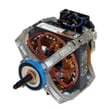
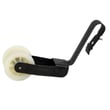
- Drum won’t turn: broken belt, worn idler pulley, seized drum support, motor issue
- Squealing/thumping: drum support/bearing surfaces, roller shafts, baffles
Quick checks before replacing parts
Follow the diagnostic flow in the 11076712690 owner's manual, then:
- Confirm strong airflow at the outside vent hood
- Clean lint screen and check for lint buildup in the lint chute area
- Listen for ignition sequence (click, glow, flame) on a heat cycle
- Check the door closes firmly and the switch clicks
- If the motor hums but drum does not move, inspect the belt and idler
Parts commonly involved (this model)
| Problem | Part to consider | Part ID |
|---|---|---|
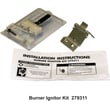
| No heat (ignition) | Igniter 279311 | 279311 |
| No heat (flame sensing) | Dryer radiant sensor WP338906 | WP338906 |
| No heat (gas valve coils) | Dryer valve coil kit 279834 | 279834 |
| Drum not turning | Drum belt 341241 | 341241 |
| Long dry times/noisy airflow | Dryer blower wheel WP694089 | WP694089 |
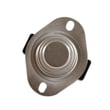
| Overheating/shuts off | Dryer high-limit thermostat W11050897 | W11050897 |
Why it matters
Gas dryer heat complaints are often caused by airflow problems first; fixing venting and lint buildup prevents repeat failures of thermostats, sensors, and gas ignition parts.
Last updated: March 2026
What is the average lifespan of 11076712690?
A Kenmore gas dryer like model 11076712690 typically lasts 13 years with normal household use. Keeping airflow strong (lint screen and venting) and fixing wear items early helps this dryer reach its full service life.
What affects lifespan most
- Vent restriction (long runs, crushed flex duct, clogged wall cap)
- Overheating from lint buildup in the blower housing or lint chute
- Worn drum support parts that strain the motor
- Ignition and heat-control parts cycling excessively
- Heavy loads and frequent back-to-back cycles
Maintenance that adds years
Use the schedule in your 11076712690 owner's manual as your baseline, then follow these best practices:
- Clean the lint screen every load
- Inspect and clean the vent line regularly (especially if dry times increase)
- Avoid overloading; it wears the belt and drum supports
- Stop using the dryer if you smell burning or hear loud squealing
- Replace common wear parts before they damage other components
Common wear parts to watch
| Symptom | Likely wear area | Example part for this model |
|---|---|---|
| Drum not turning, motor runs | Belt or idler system | Drum belt 341241 |
| Squealing or thumping | Drum support/bearing surfaces | Bearing and shaft components (varies by symptom) |
| Long dry times, hot cabinet | Airflow path and thermostats | Lint chute seals, thermostats |
Why it matters
A dryer that runs hot or struggles to move air wears out faster and can damage key components like the drive motor, thermostats, and gas ignition system. Preventive cleaning and timely part replacement usually costs less than a major breakdown.
Last updated: March 2026