Owner’s manual
 Error Codes


Are GE side-by-side refrigerators good?
Yes. GE side-by-side refrigerators like model GSS23GSKPCSS are a solid choice for everyday reliability and convenience; they typically deliver consistent cooling, easy access to both fresh food and freezer sections, and common features like an ice maker and water dispenser. For the features and operating details specific to your unit, use the owner's manual.
What “good” usually means for a side-by-side
A side-by-side refrigerator is considered good when it performs well in these areas:
- Stable temperatures in both compartments (food stays fresh longer)
- Strong airflow from the evaporator fan (even cooling, fewer warm spots)
- Convenient dispensing (water and ice work consistently)
- Usable storage (adjustable shelves, bins, and drawers that fit your routine)
- Reasonable noise level (fans and ice maker sounds are normal, but should not be loud or constant)
Quick checks that tell us your refrigerator is performing well
Use these practical signs to judge performance in your kitchen:
- Refrigerator holds about 37°F and freezer about 0°F
- Ice production is steady after the unit has been running 24 hours
- Water dispenser flow is strong (no sudden slow-down)
- Doors seal tightly and do not pop open
- No heavy frost buildup on the freezer back wall
Common “pros and cons” for GE side-by-side refrigerators
| Area | What’s typically good | What can be annoying (but common) |
|---|---|---|
| Layout | Easy access to both sections | Narrower shelf width than top-freezer models |
| Dispenser | Convenient water and ice | Ice maker can sound loud during harvest cycles |
| Filtration | Better taste and clarity | Filter changes needed to keep flow strong |
Why it matters
A “good” refrigerator is really about temperature control and airflow. When cooling is stable, you avoid food spoilage, freezer burn, and dispenser issues that often trace back to airflow restrictions, frost buildup, or overdue filter maintenance.
Helpful related DIY reading
If you use the dispenser often, follow the maintenance and troubleshooting tips in how to replace the water filter in a GE refrigerator.
Last updated: February 2026
What is the most common problem with a GE refrigerator?
The most common issue we see with a GE refrigerator like model GSS23GSKPCSS is a cooling problem (fresh food section warm, freezer not holding temperature, or both). The usual causes are airflow restrictions, a failed evaporator fan, defrost system trouble, or a temperature-sensing/control issue; use the owner's manual to match symptoms to checks.
Most common symptoms (and what they usually point to)
- Refrigerator not cooling or weak cooling: dirty condenser area, failed condenser fan, sealed system/compressor issue
- Freezer cold but refrigerator warm: airflow/damper problem, evaporator fan issue, frost buildup on evaporator
- Loud humming, buzzing, or rattling: fan blade hitting ice, worn fan motor, loose panels
- Ice maker or dispenser not working: filter restriction, dispenser mechanism issue, water supply/valve problem
- Water leaking or puddles: clogged/iced drain, water line connection leak, dispenser drip
Quick checks we recommend first
- Confirm controls are set correctly and doors seal fully.
- Make sure vents inside the compartments are not blocked by food packages.
- Listen for the evaporator fan running when the freezer door switch is pressed.
- Check for heavy frost on the freezer back wall (often a defrost/airflow clue).
- Replace the water filter on schedule if water flow is slow or ice production drops.
Parts that commonly relate to “not cooling” complaints
| Symptom | Likely system | Example part for this model |
|---|---|---|
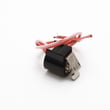
| Warm temps, erratic temps | Temperature sensing | Refrigerator temperature sensor WR55X10025 |
| Frost buildup, warm fridge section | Defrost protection | Refrigerator defrost bi-metal thermostat WR50X10065 |
| Warm fridge, noisy freezer | Evaporator airflow | Motor dc evap fan asm WR60X10307 |
Why it matters
Cooling problems can quickly lead to food spoilage and can also strain the compressor if airflow is restricted. Catching a fan, defrost, or sensor issue early usually prevents bigger, more expensive repairs.
If your display shows an error, use GE refrigerator error codes to narrow the problem to a specific circuit or component.
Last updated: February 2026
Why is my GE side-by-side freezer freezing up?
Frost buildup in the freezer on your GE GSS23GSKPCSS almost always happens when warm, moist air keeps getting into the freezer, most often from the door being left ajar, frequent door openings, or a door seal that is not sealing tightly. Use the owner's manual troubleshooting tips to confirm the most likely cause.
Most common causes (and what to check first)
- Door left open or held open by food packages: Look for boxes or bags preventing a full close.
- Too frequent or too long door openings: Moist room air enters and freezes on surfaces.
- Door seal (gasket) not sealing: Check for gaps, tears, or hardened sections.
- Shelves or baskets not pushed fully back: If a shelf or basket is slightly out of position, the door can look closed but not seal.
- Temperature set too cold: Extremely cold settings can increase frost symptoms after door openings.
Quick diagnostic steps
- Do the paper test: Close the door on a strip of paper. If it slides out easily at any spot, the seal is leaking there.
- Inspect for obstructions: Make sure freezer shelves and baskets are pushed all the way back before closing.
- Check for “door left open” patterns: Frost on the front edges and near vents often points to air leaks.
- Verify settings: Move the freezer control one step warmer if it is at the coldest setting, then monitor for 24 hours.
What you should see (symptom guide)
| What you notice | Most likely cause | Best next step |
|---|---|---|
| Frost on food packages | Door left open or frequent openings | Reduce open time; confirm door closes freely |
| Frost mainly near the door/front | Door seal leak or door not fully closing | Paper test; clean and inspect gasket |
| Ice buildup returns quickly after defrosting | Ongoing air leak | Find the leak point; correct shelf/basket alignment |
Why it matters
Excess frost reduces airflow, makes temperatures less stable, and can lead to warmer spots in the freezer even though the unit seems to be running constantly. Fixing the air leak usually stops the freeze-up without replacing major parts.
When a part is more likely
If the door is sealing well and you still see temperature swings or abnormal frost patterns, a sensor or defrost-related issue becomes more likely. For this model, common related parts include the GE profile refrigerator temperature sensor WR55X10025 and the refrigerator defrost bi-metal thermostat WR50X10065.
Last updated: February 2026
How to reset a GE side-by-side fridge?
To reset your GE GSS23GSKPCSS side-by-side refrigerator and clear minor glitches, we recommend a simple power reset first: unplug the refrigerator (or switch off the breaker) for about 2 minutes, then restore power and allow the controls to reboot.
Quick reset methods (most effective first)
- Power cycle reset: Unplug for 2 minutes, then plug back in.
- Breaker reset: Turn the refrigerator circuit breaker OFF for 2 minutes, then ON.
- Exit showroom mode (common “looks on, won’t cool” issue): Unplug and plug back in; this is the standard way to clear showroom mode on many GE side-by-side models.
- After a water filter change: Press and hold the RESET WATER FILTER button on the dispenser for 3 seconds (some models reset automatically when a new filter is installed).
What to expect after a reset
Most GE side-by-side refrigerators need time to stabilize after power is restored.
| Situation | What’s normal | What to do |
|---|---|---|
| Just powered back on | Fans and compressor may not start instantly | Wait a few minutes for the control to initialize |
| Cooling seems slow | Temperatures take time to recover | Allow up to 24 hours for full cool-down |
| No cooling after reset | Controls may be set to OFF or too warm | Adjust freezer control to a colder setting per the owner's manual |
If the reset did not fix the problem
These checks solve the most common “not running” or “not cooling” complaints after a reset:
- Confirm the power cord is fully seated in the outlet.
- Check the house fuse or reset the circuit breaker.
- Make sure the freezer temperature control is not set to OFF.
- Verify doors are closing fully (a package can hold a door open and cause warm temps).
- If you recently changed the filter, reinstall it firmly; a misinstalled filter can cause beeping or leaks.
Why it matters
A reset clears temporary control-board logic issues and restores normal operation after a power interruption, filter change, or accidental mode change. It also helps you quickly separate a simple control issue from a cooling or dispenser hardware problem.
Last updated: February 2026