Installation guide
 Owner’s manual
 Error Codes


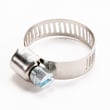
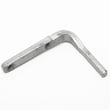
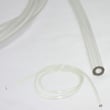
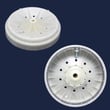
Are Whirlpool washer parts interchangeable?
Whirlpool washer parts are sometimes interchangeable within the same design family, but we recommend matching parts to your exact washer model, WTW6600SW1. Using factory-specified parts helps ensure proper fit, correct performance, and fewer repeat repairs; confirm the correct part by model lookup in the WTW6600SW1 owner's manual.
What “interchangeable” really means
Parts can look identical across Whirlpool washers, but small differences (mounting points, wiring connectors, software compatibility, or shaft sizes) can prevent a correct repair.
Common examples where exact matching matters:
- Lid lock and strike alignment (cycle will not start if mis-matched)
- Drain pump electrical connector style and flow rate
- Motor drive components (rotor/stator) and control calibration
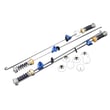
- Suspension rod length and spring rate
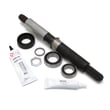
- Washplate and hub spline pattern
Best way to confirm a part fits WTW6600SW1
We use your model number to match the correct revision of the part.
Checklist:
- Confirm the full model number: WTW6600SW1
- Compare the part ID on the listing to the one specified for your model
- Match the part name and function (for example, lid lock vs lid hinge)
- If replacing a drive or wash system part, inspect for wear on mating parts
- Follow safety and access steps in the WTW6600SW1 installation guide
Examples of model-matched parts for this washer
These are parts specifically listed for Whirlpool WTW6600SW1, which is the safest way to avoid interchange issues.
| Repair need | Example part for WTW6600SW1 | What it affects |
|---|---|---|
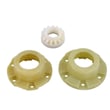
| Basket not engaging, grinding, or slipping | Hub basket W10820039 | Spin performance, basket drive |
| Lid won’t lock or cycle won’t start | Washer lid lock WPW10619844 | Safety interlock, cycle start |
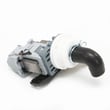
| Won’t drain or leaves water in tub | Pump-water W10536347 | Draining, spin enable |
Why it matters
A “close enough” part can cause leaks, vibration, no-spin conditions, or error codes. Using the correct Whirlpool factory-specified replacement part helps the washer run as designed and reduces the chance of damaging related components.
Last updated: February 2026
How do I reset the lid lock on my Whirlpool washer?
On the Whirlpool WTW6600SW1 washer, we reset the lid lock by pausing the cycle correctly and letting the control release the lock: press PAUSE/CANCEL once, wait for the Lid Lock light to turn off, then open and close the lid and press START to resume. See the WTW6600SW1 owner's manual for the exact button behavior.
Quick reset steps (WTW6600SW1)
- Press PAUSE/CANCEL once to pause.
- Wait until the Lid Lock status light turns off (the lid will not open until it does).
- Open the lid, then close it firmly.
- Press START to continue the cycle.
- If you need to stop the cycle completely, press PAUSE/CANCEL twice; the washer will drain and turn off.
If the lid still will not unlock
These checks fix most “stuck lock” situations on top-load Whirlpool washers:
- Wait for the tub to stop moving; the lock stays engaged during motion.
- Allow time for draining; the control may keep the lid locked until water level is safe.
- Power cycle: unplug for 5 minutes, then plug back in and try PAUSE/CANCEL again.
- If the lock clicks repeatedly, feels loose, or never senses “closed,” the lid lock can be failing; replace the washer lid lock WPW10619844.
What the buttons do (so you do not accidentally cancel)
| Button action | What it does on WTW6600SW1 | When to use it |
|---|---|---|
| PAUSE/CANCEL (once) | Pauses and unlocks so you can add a garment | Lid locked but you need to open it |
| START | Restarts from where it stopped | After closing the lid |
| PAUSE/CANCEL (twice) | Stops cycle; washer drains and turns off | You want to end the cycle |
Why it matters
The lid lock is a safety feature that prevents opening the washer while the basket is spinning or the tub is draining. Resetting it the right way protects the lid switch, control, and your laundry from mid-cycle interruptions.
Last updated: February 2026
Is 4.5 cu ft a large washer?
Yes. A 4.5 cu. ft. washer is considered large capacity for most households; it typically handles bigger loads and bulky items with fewer cycles. For your Whirlpool WTW6600SW1, use the load and cycle guidance in the WTW6600SW1 owner's manual to avoid overloading and get the best cleaning.
What “large capacity” means in real use
A 4.5 cu. ft. tub is designed to wash more at once, but performance still depends on how you load and which cycle you choose.
- Fits most family-size loads in fewer cycles
- Better for bulky items (blankets, jackets) when loaded loosely
- Helps reduce water and energy use by cutting down total loads
- Works best when items can move freely during wash action
- Overpacking can cause poor cleaning, imbalance, and extra noise
How to load a large-capacity top-load washer correctly
We recommend loading for movement, not for “maximum fill.” The high-efficiency wash system senses the load and adjusts water level, so it is normal if the load is not fully submerged.
Quick loading rules
- Add items in loose heaps; do not press them down
- Keep the top of the load below the tub ring area
- Mix large and small items to balance the spin
- Use HE detergent; too much soap can reduce rinsing
Capacity guide (typical)
| Washer capacity | Common label | Best for |
|---|---|---|
| 3.5 to 4.4 cu. ft. | Medium to large | Everyday loads, towels |
| 4.5 to 5.0 cu. ft. | Large | Family loads, bulky items |
| 5.1 cu. ft. and up | Extra-large | Comforters, large households |
Why it matters
Using the right load size helps your Whirlpool WTW6600SW1 run smoother, clean better, and reduce “walk” or vibration. Proper installation also supports stable operation; follow spacing, leveling, and drain setup details in the WTW6600SW1 installation guide.
Last updated: February 2026
What does f6 E1 mean on a Whirlpool washer?
On a Whirlpool washer, the F6 E1 code points to an electronics communication problem (a control not “talking” to another control). On your WTW6600SW1, start by resetting power; if the code returns, service-level diagnosis is typically needed.
What to do first (quick reset and safe checks)
- Press PAUSE/CANCEL once to clear the display (if the washer responds).
- Unplug the washer (or switch off the breaker) for 5 minutes, then restore power.
- Make sure the outlet is properly grounded and you are not using an extension cord.
- Start a normal cycle and watch for the code to reappear.
- If the washer is mid-cycle and won’t respond, disconnect power for safety before touching anything.
If the code comes back: what it usually involves
F6 E1 is most often tied to a control-to-control communication failure. That can be caused by a loose connection, damaged wiring, or a failing electronic control.
Common areas a technician checks:
- Wire harness connections between the main control and user interface
- Pin fit, corrosion, or broken wires
- Control board output and communication signals
Related codes and symptoms (helpful for narrowing it down)
| What you see | What it often means | What to check next |
|---|---|---|
| F6 E1 returns immediately after reset | Persistent communication fault | Harness and control diagnostics |
| Random beeping, dead buttons, or blank display | User interface or power issue | Power supply, UI connections |
| Multiple “F##” codes | Control system fault pattern | Professional diagnosis recommended |
Why it matters
Communication errors can stop filling, draining, locking, or spinning because the washer relies on multiple electronic components working together. Addressing it early helps prevent repeated cycle failures and protects the washer’s control system.
For model-specific operation and troubleshooting steps, use the WTW6600SW1 owner’s manual. For installation and power requirements that can affect electronics, review the WTW6600SW1 installation guide.
Last updated: February 2026
What is the capacity of the WTW6600SW1?
The Whirlpool WTW6600SW1 washer has a 4.6 cu. ft. capacity, which is considered a large-capacity top-load size. That means it can handle bulky items (like comforters) and larger mixed loads while still needing proper loading for best wash and spin performance.
What 4.6 cu. ft. means in everyday use
A 4.6 cu. ft. Cabrio-style top-load washer is designed for fewer loads per week and better handling of bulky fabrics.
- Wash bulky items one at a time (comforter, sleeping bag) to keep the basket balanced
- Load loosely; don’t pack clothes down
- Keep items below the top rim of the basket for proper turnover
- Mix large and small items to reduce out-of-balance spinning
- Use HE detergent and measure carefully to prevent oversudsing
Quick capacity guide
| Load type | Typical fit in 4.6 cu. ft. | Best practice |
|---|---|---|
| Everyday mixed load | Large | Fill loosely, don’t compress |
| Towels | Large | Add a few smaller items to balance |
| King/queen comforter | Often yes (one at a time) | Use bulky/bedding cycle if available |
Why it matters
Capacity affects cleaning and spinning. Overloading can cause poor agitation, longer cycle times, vibration, and wet clothes at the end of the cycle. For cycle and loading recommendations specific to this washer, follow the guidance in the WTW6600SW1 owner's manual.
Last updated: February 2026
What is the most common problem with Whirlpool washers?
The most common Whirlpool washer complaint is a cycle that will not drain or spin correctly. On the Whirlpool WTW6600SW1, this is often tied to load balance, oversudsing from non-HE detergent, or the lid not locking; all three can stop the washer mid-cycle.
Most common symptoms and what they usually mean
- Won’t spin or stops before spin: lid not fully closed or lid lock not engaging
- Won’t drain or drains slowly: drain pump issue, restricted drain path, or installation-related siphoning
- Shakes or bangs: unbalanced load, wrong cycle for the load type, or worn suspension
- Long cycles or repeated pauses: oversudsing, load sensing behavior, or a pause built into the cycle
- New or different noises: direct-drive wash system sounds (often normal)
Quick checks we recommend first (WTW6600SW1)
Use the WTW6600SW1 owner's manual to match your symptom to the correct check.
- Confirm HE detergent: This washer is designed for HE detergent; regular detergent can cause oversudsing, errors, and poor rinsing.
- Rebalance the load: Distribute items evenly and keep the load height at or below the top row of basket holes.
- Watch the Lid Lock light: If the Lid Lock light is on, the lid is locked; wait for it to turn off before opening.
- Check fill basics: Make sure both faucets are on, inlet hoses are not kinked, and inlet valve screens are clean.
- Use the right cycle: Bulky Items is for oversized, nonabsorbent items; using it for regular loads can create imbalance.
Common “problem vs. normal” sounds
| What you hear | When it happens | Usually indicates |
|---|---|---|
| Humming with gurgling/surging | End of drain | Pump removing final water (normal) |
| Clicking between wash and drain/spin | Cycle transitions | Drive system shifting (normal) |
| Air being pulled through pump | End of draining | Fast drain or standpipe setup (often normal) |
When a part is the likely fix
If the washer consistently won’t drain, a failed drain pump is a common repair on top-load washers. For this model, the matching part is the pump-water W10536347. If the washer won’t start or won’t spin because the lid won’t lock, the washer lid lock WPW10619844 is the part to check next.
Why it matters
Drain, spin, and balance issues can look like a major failure, but on the WTW6600SW1 they are frequently caused by correctable conditions (HE detergent use, load distribution, lid lock operation) before you ever need a motor, stator, or control.
Last updated: February 2026