





How do I find out what Craftsman chainsaw I have?
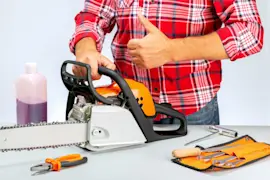
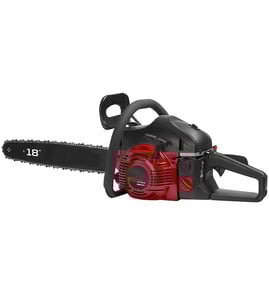
To find out which Craftsman chainsaw you have, locate the model number on the saw itself. For this parts page, the model is Craftsman 358351201; matching your saw’s model number to 358351201 ensures you get the correct parts and diagrams.
Where to look for the model number on a Craftsman chainsaw
We typically see the model number printed on a label or stamped into the housing. Check these common spots:
- On the starter housing (recoil starter cover) near the pull cord
- On the rear handle area, close to the throttle trigger
- On the bottom of the saw body near the oil and fuel caps
- Near the bar mount area (behind the clutch cover)
- On the chassis near the muffler side (sometimes on a metal tag)
What the model number looks like (and what to write down)
For Craftsman saws, the model number is usually a series of digits like 358351201. When you find it, write down:
- Full model number (all digits)
- Any prefix/suffix characters if shown
- The serial number (helpful for production changes)
| Item to record | Example | Why it matters |
|---|---|---|
| Model number | 358351201 | Matches the correct parts list |
| Serial number | (varies) | Helps confirm version changes |
| Bar length (installed) | 20 in (example) | Helps match bar and chain |
Why it matters
Chainsaw parts like the bar, chain, and clutch components can vary by model and even by production run. Using the exact model number helps you avoid ordering a chain, drum sprocket, or gasket set that does not fit.
Parts you can match once you confirm the model
After you confirm your saw is 358351201, you can confidently shop common wear items such as:
Helpful DIY reference
If you are identifying the model because the saw is acting up (hard starting, rough running), use our troubleshooting tips first: tips for a hard to start chainsaw.
Last updated: February 2026
How many links are in a 12 inch chainsaw chain?
A 12-inch chainsaw chain most often has 44 drive links, but the correct count depends on your bar’s pitch and gauge. For your Craftsman 358351201 chainsaw, match the new chain to the bar and sprocket specs so it fits and oils correctly.
How to confirm the right link count (fast checks)
- Look for the drive link count stamped on the guide bar (common format: pitch, gauge, DL).
- Match pitch (for example, 3/8 low profile vs 3/8 standard) to your bar and sprocket.
- Match gauge (the drive link thickness) to the bar groove.
- Count the drive links on your old chain if markings are worn.
- If the chain rides high, binds, or won’t tension correctly, the pitch or gauge is wrong.
Common 12-inch chain setups (typical)
| Bar length | Common pitch | Common gauge | Typical drive links |
|---|---|---|---|
| 12 in. | 3/8 low profile | .050 in. | 44 |
| 12 in. | 1/4 in. | .043 in. | 60 (varies by bar) |
| 12 in. | .325 in. | .050 in. | 47 (varies by bar) |
Why it matters
Using the wrong drive link count, pitch, or gauge can cause poor cutting, thrown chains, or accelerated wear on the bar and clutch drum sprocket. If your chain is skipping or not tracking smoothly, inspect the sprocket and bar condition while you’re sizing the chain.
Parts that affect chain fit and performance
If you’re replacing the chain because of fit or drive issues, these related parts are often involved:
- Drum sprocket 530048084 (worn teeth can make a new chain run rough)
- Bar 200PXBK041 (a worn groove or damaged rails can prevent proper tracking)
- Chain 20BPX078G (a compatible replacement chain option listed for this model)
Last updated: February 2026
Is 40 1 or 50 1 better for chainsaws?
For the Craftsman chainsaw model 358351201, the best mix ratio is the one specified for that engine; between 40:1 and 50:1, 50:1 is the common modern standard for many air-cooled 2-cycle chainsaws, while 40:1 adds more oil and can increase smoke and carbon.
What 40:1 vs 50:1 changes
A lower ratio number means more oil in the gasoline.
| Mix ratio | Oil per 1 gallon gas | Typical result |
|---|---|---|
| 50:1 | 2.6 oz | Cleaner running, less smoke |
| 40:1 | 3.2 oz | More oil film, more smoke and deposits |
How we choose the right ratio in real repairs
Use the ratio the engine was designed for; changing ratios is not a tuning fix.
- If the saw is designed for 50:1, running 40:1 often increases exhaust smoke and carbon buildup.
- If the saw is designed for 40:1, running 50:1 reduces lubrication and accelerates wear.
- Always use air-cooled 2-cycle oil (not marine TC-W3).
- Mix accurately; “a little extra oil” is not a safe substitute for correct carburetor tuning.
- Use fresh fuel; old fuel causes hard starting and rough running regardless of ratio.
Why it matters
The mix ratio directly affects piston and crank bearing lubrication, muffler screen loading, and spark plug fouling. Many “ratio problems” are actually fuel delivery or carburetor issues.
When the ratio question points to a problem
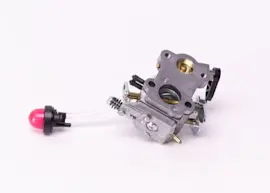
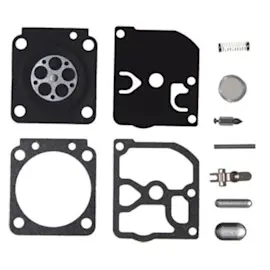
If your 358351201 smokes excessively, won’t rev, or runs rough even with correctly mixed fuel, troubleshoot the fuel system and carburetor. Our guide tips for a hard to start chainsaw covers the most common causes. If you’re servicing the carburetor, a diaphragm and gasket set is a common fix; see gasket kit 530069844.
Last updated: February 2026
What kind of gas goes into a Craftsman chainsaw?
For a Craftsman gas chainsaw model 358351201, we use fresh, unleaded gasoline mixed with 2-cycle engine oil (a gas-oil mix), not straight gas. Mix only what you will use soon, and always fill the fuel tank and bar-and-chain oil tank separately.
Fuel type and mix basics
Most Craftsman 2-cycle chainsaws run best on:
- Unleaded gasoline (fresh, clean fuel)
- 2-cycle (2-stroke) engine oil made for air-cooled engines
- A gas-to-oil mix (commonly 40:1 or 50:1, depending on the engine’s requirement)
Because we do not have a model-specific manual for 358351201 here, we follow standard 2-cycle chainsaw practice: use the mix ratio specified on the saw’s fuel cap/label or in your printed documentation.
Quick do and don’t checklist
- Do use fresh fuel; old fuel causes hard starting and rough running.
- Do use 2-cycle oil (not automotive motor oil).
- Do store mixed fuel in an approved fuel container.
- Don’t run straight gasoline in a 2-cycle chainsaw.
- Don’t confuse fuel with bar-and-chain oil; they go in different tanks.
Fuel vs bar oil (they are different)
| What you’re filling | What to use | What it does |
|---|---|---|
| Fuel tank | Gasoline + 2-cycle oil mix | Runs the engine |
| Bar-and-chain oil tank | Bar-and-chain oil | Lubricates bar and chain |
If your chain looks dry or the bar is overheating, check the oiler system and oil tank venting. A restricted vent can contribute to oiling problems; the fitting 530024475 is one of the oil-tank vent related parts listed for this model.
Why it matters
Using the correct gas-oil mix prevents piston and cylinder damage, improves starting, and reduces plug fouling. Keeping bar oil separate protects the bar, chain, and drum sprocket from premature wear.
For more starting and fuel-related tips, use our tips for a hard to start chainsaw guide.
Last updated: February 2026