Owner’s manual
 Error Codes



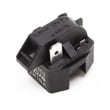

How to remove bottom grille on GE refrigerator?
On the GE PDS22SFSBRSS bottom-mount refrigerator, we remove the bottom (base) grille by grasping it at the bottom edge and pulling it straight out. The grille is held in place by prongs that snap into holes in the cabinet, so it releases with a firm, even pull. See the PDS22SFSBRSS owner's manual for the exact procedure.
Steps to remove the bottom (base) grille
- Unplug the refrigerator or switch off power at the breaker if you will be working near wiring.
- Stand in front of the unit and locate the base grille at the very bottom of the cabinet.
- Grasp the grille at the bottom edge with both hands.
- Pull the grille straight out toward you (do not pull up or twist).
- Set the grille aside on a non-scratching surface.
How it reattaches (so you do not break it)
The base grille snaps back in using alignment prongs.
| Task | What to do | What to avoid |
|---|---|---|
| Reinstall grille | Align prongs on the back of the grille with the cabinet holes, then push forward until it snaps in | Forcing one side in first, which can bend prongs |
| If it feels stuck | Pull evenly from both ends | Prying with a screwdriver (can crack the grille) |
| After reinstall | Confirm it sits flush and does not rattle | Leaving it partially engaged |
Why it matters
We recommend removing the base grille only when needed (for moving, doorway clearance, or access). Reinstalling it correctly helps protect lower components and keeps airflow and appearance as designed.
Last updated: February 2026
What are the disadvantages of a bottom freezer refrigerator?
Bottom-freezer refrigerators like the GE PDS22SFSBRSS put fresh food at eye level, but the tradeoffs are real: the freezer is lower (more bending), the deep drawer can be harder to organize, and some models can be more involved to move, level, and service around the freezer section.
Common disadvantages to expect
- More bending and lifting: you reach down for frozen foods, ice bins, and heavy items.
- Deep drawer organization: items can stack and get buried, especially in large freezer drawers.
- Heavier freezer access: a loaded drawer can feel heavy and awkward for kids or anyone with back or knee issues.
- More steps during moving/installation: on many bottom-mount designs, doors and the freezer drawer may need removal to fit through doorways; the manual also recommends two people and a padded hand truck for moving.
- Potential for drain/defrost-related messes: bottom-freezer layouts can be less forgiving if a drain issue leads to ice buildup near the freezer area.
Quick comparison: bottom freezer vs top freezer
| Feature | Bottom freezer | Top freezer |
|---|---|---|
| Fresh-food access | Easier (eye level) | More bending |
| Freezer access | More bending | Easier (higher) |
| Freezer organization | Often deep drawer | Often shelves/bins |
| Moving through doorways | May require drawer removal | Usually simpler |
What we recommend for easier day-to-day use
- Use bins or baskets to separate meats, vegetables, and quick-grab items.
- Keep heavier items (bulk meat, large bags) toward the back to reduce strain when opening.
- Avoid overpacking; a jammed drawer can affect closing and sealing.
- If doors or the freezer drawer need removal for moving, follow the steps in the PDS22SFSBRSS owner's manual.
Why it matters
Choosing a bottom-freezer refrigerator is mostly about ergonomics and habits. If you use the refrigerator section far more than the freezer, bottom-mount can feel more convenient; if you access frozen foods constantly, the extra bending and drawer management can become a daily annoyance.
Last updated: February 2026
What is the most common problem with GE profile refrigerators?
For the GE PDS22SFSBRSS bottom-mount refrigerator, the most common issues we see are ice maker and water dispenser problems (no ice, slow water, leaks) and cooling complaints (warm fridge or freezer). Many of these trace back to airflow and temperature control basics, plus a few high-wear parts.
Most common symptoms (and what they usually point to)
- Not making ice or slow ice production: restricted water supply, clogged filter, or ice maker issue
- Slow water at the dispenser: water filter restriction or low household water pressure
- Water leaking: filter seating, water valve seepage, or a cracked water line
- Fridge warm but freezer cold (or uneven temps): damper/airflow problem or sensor/control issue
- Runs a lot or cycles frequently: dirty condenser area, doors opened often, or controls set too cold
Quick checks we recommend first
These steps solve a large share of “common problem” calls without replacing major components:
- Confirm doors fully close and nothing is holding them open
- Set temperature controls to a normal mid-range setting (not the coldest)
- Clean the grille and condenser area (dust buildup drives long run times)
- If the unit seems “dead”, check the outlet, then replace the house fuse or reset the breaker
- If you are troubleshooting lights, unplug first; turning the control to Off does not remove power to the light circuit (see the PDS22SFSBRSS owner's manual)
Parts that commonly fix these problems
If symptoms persist after the basics, these model-matched parts are frequent solutions:
| Symptom | Common part to check | Example part on this model page |
|---|---|---|
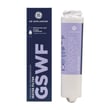
| Slow water, poor ice production | Water filter | GE smartwater refrigerator water filter GSWF |
| No water to dispenser/ice maker | Water inlet valve | Refrigerator water valve WR57X10033 |
| Warm temps or erratic temps | Temperature sensing | GE profile refrigerator temperature sensor WR55X10025 |
| Warm fridge, poor airflow | Air damper | Damper asm g WR14X10239 |
Why it matters
Ice and water issues can look like “big” failures, but they are often caused by restrictions (filter) or supply control (valve). Cooling complaints are frequently airflow-related; keeping the condenser area clean helps the compressor run less and maintain steadier temperatures.
Last updated: February 2026