Owner’s manual
 Error Codes


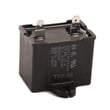
Can you still get parts for Kenmore refrigerators?
Yes. We still support Kenmore refrigerator parts, and for Kenmore Elite model 10655606400 you can replace common wear items like the water filter, ice maker, door bins, and water inlet valve using the correct model-based part match. Use the 10655606400 owner's manual to confirm locations and maintenance steps.
For model 10655606400, these are some of the most frequently replaced parts we see customers need:
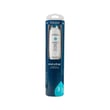
- Water filter: genuine Kenmore refrigerator water filter EDR3RXD1
- Ice maker assembly: refrigerator ice maker 2198597
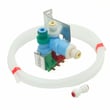
- Water inlet valve (water to dispenser and ice maker): refrigerator inlet valve W10408179
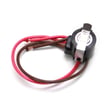
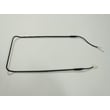
- Defrost components (cooling and frost issues): refrigerator heater WP2323198 and refrigerator defrost bi-metal WPW10225581
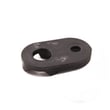
- Door hardware and storage: refrigerator door cam (black) WP2182179 and refrigerator door bin WPW10160952
Use these checks before you buy:
- Match the full model number exactly: 10655606400
- Compare the part ID on the listing to the part you are replacing
- Confirm color and position for door parts (left vs right, freezer vs fresh food)
- For water system parts, shut off the water supply and unplug the refrigerator first
- After replacing a filter, flush water through the dispenser to clear air and carbon fines
The manual calls out a base grille water filter cartridge and lists Order Part #9020 for the cyst cartridge. That aligns with the filter family used on this refrigerator (your part match should still be confirmed by model).
| Item you’re replacing | What it affects | Common symptom |
|---|---|---|
| Water filter | Water taste, flow, ice quality | Slow dispense, bad taste/odor |
| Inlet valve | Water supply to ice maker/dispenser | No ice, no water, weak flow |
| Ice maker | Ice production | No ice, small cubes, leaking mold |
Using model-matched Kenmore parts helps restore proper fit, water sealing, and cooling performance. It also prevents repeat issues like leaks at the valve, poor ice production, or doors that do not close smoothly.
Last updated: February 2026
How to find Kenmore Elite model number?
For Kenmore Elite refrigerator model 10655606400, the model and serial number label is located inside the refrigerator compartment on an inside wall. We recommend writing the full model number and serial number down so you can match parts and get faster service help. See the 10655606400 owner's manual for the exact label location description.
- Open the fresh food (refrigerator) door and look on the inside wall of the refrigerator compartment
- Check near the crisper drawer area and side walls where labels are commonly placed
- Use a flashlight and look for a sticker that lists Model and Serial
- Record the model number exactly as printed (for example, 10655606400)
- Take a clear photo of the label for reference when ordering parts
Most Kenmore side-by-side refrigerator ID labels include these fields:
| Label field | What it’s used for | Example you might see |
|---|---|---|
| Model number | Matching parts diagrams and compatible parts | 10655606400 |
| Serial number | Identifying production run details | Varies |
| Purchase date (you record it) | Service and maintenance records | Your date |
The model number is the key to getting the right Kenmore Elite refrigerator parts the first time. Even small model number differences can change which water filter, ice maker, inlet valve, or door gasket fits.
If you are ordering water and ice system parts, confirm the model number before you buy. For this model, a common water filter option is the genuine Kenmore refrigerator water filter EDR3RXD1.
Last updated: February 2026
How to tell cubic feet of Kenmore refrigerator by model number?
You typically cannot determine the exact cubic-foot capacity from the Kenmore model number alone. For Kenmore Elite model 10655606400, the reliable way is to look up the capacity in the specifications section of the 10655606400 owner's manual or calculate it from the interior dimensions.
- Check the specifications section in the 10655606400 owner's manual.
- Look for a rating/spec label inside the fresh food compartment (often lists volume or key specs).
- Measure the usable interior and calculate cubic feet (best when you cannot find specs).
- Compare your refrigerator’s size class to typical side-by-side capacities (quick estimate).
Measure the inside of each compartment (fresh food and freezer) in inches:
- Height (H)
- Width (W)
- Depth (D)
Then use:
- Cubic feet = (H × W × D) ÷ 1728
- Add fresh food + freezer results for total capacity.
- Measure usable space, not the door bins.
- Subtract areas blocked by the evaporator cover, air diffuser, shelves, and drawers.
- Use the same depth reference point (back wall to inside front edge).
Most 33–36 inch side-by-side refrigerators fall into these ranges:
| Side-by-side size class | Typical total capacity |
|---|---|
| Compact / older designs | 18 to 21 cu. ft. |
| Common mid-size | 22 to 26 cu. ft. |
| Large | 27 to 30 cu. ft. |
Cubic feet helps us match the right replacement parts and accessories (like shelves, bins, and filters), and it also helps you compare energy use and storage space when planning food storage.
Last updated: February 2026
Is a Kenmore Elite a good refrigerator?
Yes. Kenmore Elite refrigerators, including model 10655606400, are built for long-term everyday food storage and typically deliver strong cooling performance when they are installed, leveled, and maintained correctly. For model-specific use, care, and setup details, follow the 10655606400 owner's manual.
A refrigerator is “good” when it holds safe temperatures, runs reliably, and fits your household needs. For a side-by-side like Kenmore Elite 10655606400, we focus on these practical measures:
- Temperature stability: Fresh food stays near 37°F; freezer stays near 0°F.
- Door sealing and alignment: Doors close easily and seal tightly to prevent frost and warm spots.
- Ice and water performance: Consistent dispensing and normal ice production.
- Noise and airflow: Fans run smoothly without excessive vibration.
- Maintenance needs: Routine cleaning and periodic filter changes keep performance consistent.
The manual highlights common “ownership” items that directly affect day-to-day satisfaction, such as leveling, door alignment, and gasket cleaning.
- Keep door gaskets clean if doors feel sticky or hard to open.
- Level the refrigerator if it wobbles or doors do not line up.
- Replace the water filter on schedule to protect water flow and taste.
- Confirm the water supply meets requirements before troubleshooting ice or water issues.
| Need | What you may replace | Example part for this model |
|---|---|---|
| Better water taste and flow | Refrigerator water filter | Refrigerator water filter EDR3RXD1 |
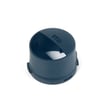
| Filter won’t seat or cap is damaged | Refrigerator water filter cap (black) | Refrigerator water filter cap (black) WP2260518B |
A side-by-side refrigerator can only perform as designed when airflow is unobstructed, doors seal correctly, and the water system is maintained. Those basics prevent temperature swings, frost buildup, and weak ice or water dispensing.
Last updated: February 2026
What are the common problems with Kenmore Elite refrigerators?
Common problems we see with the Kenmore Elite 10655606400 side-by-side refrigerator include warm temperatures from restricted airflow, incorrect control settings, or dirty condenser coils; water and ice dispenser issues from a clogged filter or low water supply; and moisture buildup from blocked vents or frequent door openings. Use the 10655606400 owner's manual troubleshooting steps first.
- Refrigerator or freezer too warm: air vents blocked, doors opened often, large warm food load, or controls not set correctly.
- Not cooling after a power event: control needs a reset (turn OFF then ON for models with digital controls).
- Water dispenser slow or not dispensing: clogged or incorrectly installed water filter, kinked supply line, or shutoff valve issue.
- Ice maker not making ice: water supply problem, filter restriction, or ice maker component failure.
- Water or ice leaking at the dispenser: glass not held under chute long enough, ice cube stuck holding the trap door open, or air in water lines.
- Interior moisture buildup: high humidity, frequent door openings, or blocked air vents.
- Confirm set temperatures: most owners run about 0°F freezer and 37°F fresh food (your control range is -5°F to 5°F freezer and 33°F to 41°F refrigerator).
- Wait 24 hours after any adjustment before changing settings again.
- Check airflow: clear packages away from interior vents and avoid overpacking.
- Reset the controls (digital models): turn the unit OFF, then ON.
- Verify water supply: make sure the shutoff valve is open and the line is not kinked.
- Replace the filter on schedule; a restricted filter is a top cause of weak water flow. If you need the correct cartridge, use refrigerator water filter EDR3RXD1.
| Symptom | What to inspect first | Part that often fixes it (if failed) |
|---|---|---|
| No ice or small cubes | Water supply, filter restriction | Refrigerator inlet valve W10408179 or refrigerator ice maker 2198597 |
| Weak water at dispenser | Filter install/clog, supply line kink | Refrigerator water filter EDR3RXD1 |
| Frost buildup, warming | Defrost system operation | Refrigerator heater WP2323198 or refrigerator defrost bi-metal WPW10225581 |
Catching airflow, control-setting, and water-supply problems early prevents temperature swings that spoil food, reduces ice maker and dispenser complaints, and helps the sealed refrigeration system run efficiently.
Last updated: February 2026
What is the average lifespan of a Kenmore Elite refrigerator?
A Kenmore Elite refrigerator like model 10655606400 typically lasts 10 to 15 years with normal household use. Regular maintenance (cleaning, good door sealing, and proper temperatures) helps you reach the high end of that range; details on care are in the 10655606400 owner's manual.
Most side-by-side refrigerators land in the same general window, but these factors make the biggest difference:
- Condenser cleanliness (dust buildup makes the compressor work harder)
- Door seal condition (air leaks cause longer run times and frost issues)
- Ice maker and water system health (clogs and leaks create extra wear)
- Temperature settings and airflow (overpacked compartments reduce cooling efficiency)
- Power quality (surges can damage control boards and compressors)
We recommend these habits to extend service life and reduce common failures:
- Vacuum dust from the condenser area regularly (unplug first).
- Keep door gaskets clean and dry; sticky gaskets can make doors hard to open.
- Replace the water filter on schedule; use the correct refrigerator water filter EDR3RXD1.
- Confirm the refrigerator is level so doors close consistently.
- Watch for slow water dispensing or small cubes; those can point to a restricted filter or a weak refrigerator inlet valve W10408179.
| Age of refrigerator | What we commonly see | Practical next step |
|---|---|---|
| 0 to 5 years | Minor adjustments, occasional ice/water issues | Maintain, replace small parts as needed |
| 6 to 10 years | More frequent ice maker, fan, or defrost complaints | Repair is usually worthwhile |
| 11 to 15 years | Higher chance of sealed-system or control issues | Compare repair cost vs. replacement |
| 16+ years | Multiple systems may be near end-of-life | Replacement often makes sense |
Knowing the typical lifespan helps you plan: if your 10655606400 is already in the 11 to 15 year range, investing in maintenance items (like filters, gaskets, and leveling) can prevent expensive strain on the compressor and sealed refrigeration system.
Last updated: February 2026
Why is my Kenmore Elite ice maker not making ice?
If your Kenmore Elite refrigerator model 10655606400 isn’t making ice, the most common causes are the ice maker being switched OFF, the freezer not being cold enough yet, or a water supply issue. After turning the ice maker ON, allow 24 hours for the first ice and up to 72 hours for full production (then discard the first three batches). See the 10655606400 owner's manual.
- Confirm the ice maker ON/OFF switch is ON (left) in the freezer compartment.
- Make sure the freezer door closes fully; the ice maker stops when the door is open.
- Wait the full cool-down time: 24 hours for first batch; 72 hours for full output.
- Check the household water shutoff valve is fully open and the supply line is not kinked.
- Flush the water dispenser for 6 to 7 minutes to clear air from the line (water may spurt).
- If the ice bin is full or not seated correctly, reseat it; the sensor can stop production.
A weak or blocked water supply is a top reason an ice maker stops filling.
- If water dispensing is slow, replace the filter and re-flush the line.
- If the dispenser works but the ice maker does not fill, the dual water valve can be the issue.
Helpful parts for this model:
- Refrigerator inlet valve W10408179 (controls water flow to the ice maker and dispenser)
- Genuine Kenmore refrigerator water filter EDR3RXD1 (a restricted filter can reduce flow)
Once the refrigerator is fully cooled, the manual indicates typical production of about 70 to 120 cubes per 24 hours.
| Time after turning ON | What to expect |
|---|---|
| First 24 hours | First batch may appear |
| Up to 72 hours | Full ice production begins |
| First 3 batches | Discard (flushes system) |
Ice makers are sensitive to airflow, door closure, and water pressure. Getting the switch position right, allowing proper cool-down time, and ensuring steady water flow prevents repeat no-ice problems and protects components like the inlet valve and ice maker assembly.
Last updated: February 2026