Error Codes


Where is the model number on a Crosley washer?
On a Crosley washer like model CAW35114GW1, the model number is printed on a rating label attached to the cabinet. You’ll typically find it under the lid around the opening, on the back of the control console, or low on the cabinet side near the base.
Most common places to check
- Lift the lid and look around the tub opening (rim area)
- Check the back of the control panel/console
- Look on the left or right cabinet side near the bottom front corner
- Check the rear panel if the label is not visible from the front
- If the label is worn, use a flashlight and look for faint printed characters
Quick checklist before you start
- Unplug the washer or turn off the breaker (safer when reaching behind the console)
- Keep a flashlight handy; labels are often in shadow
- Write the model number exactly as shown (letters and numbers)
- Take a photo of the label for ordering parts later
What the label usually looks like
| What you’ll see | Why it matters |
|---|---|
| Model number (example: CAW35114GW1) | Ensures parts fit your exact washer |
| Serial number | Helps identify production run/version |
| Electrical ratings | Useful for troubleshooting and service |
Why it matters
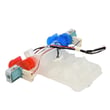
We use the model number to match the correct Crosley washer parts and diagrams. Even small model-number differences can change key components such as the washer lid lock W11307244 or the water inlet valve assembly W11210459.
Last updated: February 2026
Why is my Crosley washer not spinning or agitating?
If your Crosley CAW35114GW1 washer fills and the motor runs but it will not spin or agitate, the most common causes are a worn drive belt, a failed shift actuator, or a lid lock problem that prevents spin. Start with simple checks, then inspect the drive system parts.
Quick checks first (no parts needed)
- Make sure the load is not overloaded or heavily unbalanced; redistribute items and try a Drain/Spin cycle.
- Confirm the lid is fully closed; press down on the lid near the lock area and retry.
- Verify the washer drains; standing water often stops spin.
- Unplug the washer for 2 minutes, then restore power and retry a cycle.
- Listen for symptoms:
- Motor running but no basket movement often points to a belt or drive pulley issue.
- Clicking or repeated shifting sounds often points to an actuator issue.
Parts that commonly cause “won’t spin or agitate” on CAW35114GW1
These are the most likely part-related fixes for this symptom set:
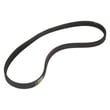
- Washer drive belt WPW10006384: if stretched, glazed, or broken, the motor cannot turn the transmission/basket.
- Whirlpool washer drive pulley W10721967: a damaged pulley can slip or wobble and stop agitation/spin.
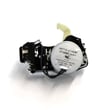
- Washer actuator W10913953: if it cannot shift between agitate and spin modes, the washer may do neither.
- Whirlpool washer lid lock W11307244: if the control does not sense a locked lid, it may refuse to spin.
- Gear case assembly W11454741: internal failure can prevent agitation and spin even with a good belt.
Symptom-to-part guide
| What you notice | Most likely area | Good next step |
|---|---|---|
| Drains but neither agitates nor spins | Belt/pulley/actuator | Inspect belt condition and pulley tightness |
| Agitates but will not spin | Lid lock or actuator | Check lid lock engagement; then actuator |
| Hums, squeals, or smells hot rubber | Belt/pulley | Replace belt; inspect pulley for damage |
| Loud grinding during agitation/spin | Gear case/drive components | Stop using; inspect drive system |
Why it matters
Continuing to run a washer that is slipping a belt or failing to shift can damage the drive pulley, gear case, or basket drive components. Catching the cause early usually keeps the repair smaller and less expensive.
For model-specific fault indications, use our Crosley compact top load washer error codes guide to match any flashing lights or error behavior to the most likely failed system.
Last updated: February 2026
Why is my Crosley washing machine leaking from the bottom?
A bottom leak on a Crosley CAW35114GW1 washer usually comes from a failed tub seal, a loose or damaged drain hose connection, or a leaking drain pump. Start by identifying whether the leak happens during fill, wash/agitate, or drain/spin; that timing points to the most likely part.
Quick checks we recommend first
- Unplug the washer and turn off both water supplies.
- Pull the washer forward and look for a drip trail (front, center, or back).
- Check the standpipe and household drain for overflow (it can look like a washer leak).
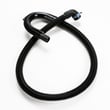
- Inspect the drain hose for splits, pinholes, or a loose clamp; consider replacing the washer drain hose W11244231 if it is brittle or damaged.
- If the leak appears mainly during draining, the drain pump is a prime suspect; inspect the washer drain pump W10919003 area for cracks or seepage.
Match the leak timing to the likely cause
| When you see water | Most common source | What to look for |
|---|---|---|
| During fill | Water inlet valve or supply hoses | Drips at the back, wet valve body, hose washers |
| During wash/agitate | Tub seal or tub-to-pump hose | Water under center of tub, spray pattern, bearing noise |
| During drain/spin | Drain pump or drain hose | Leak near pump, wet hose path, puddle near front |
What a tub seal leak looks like (and why it matters)
A torn tub seal can let water seep down the transmission/gearcase area and into the tub bearings. That often leads to louder spin noise, rough basket movement, and bigger repairs if it continues.
Why it matters
Catching a bottom leak early helps prevent secondary damage to bearings, the gearcase, wiring, and flooring. A small drip can turn into a major failure if water keeps reaching moving parts.
Helpful troubleshooting resource
If your washer is also flashing an error code, use Crosley compact top load washer error codes to narrow the failure to the fill system, drain system, or lid lock.
Last updated: February 2026
How to clean the hoses to a Crosley washing machine?
For the Crosley CAW35114GW1 washer, cleaning the hoses usually means flushing the inlet hoses (fill hoses) and clearing the drain hose so water can flow freely. Shut off the water, disconnect the hoses, rinse out debris, then reconnect securely and run a quick test cycle.
Safety first
- Unplug the washer before moving it or removing panels.
- Turn off both hot and cold water supply valves.
- Keep a shallow pan and towels ready for spills.
- If you tip the washer, get help to prevent injury and cabinet damage.
Clean the water inlet hoses (hot and cold)
- Unscrew the inlet hoses from the wall valves first, then from the washer.
- Check the hose screens at the washer inlet ports; rinse away sand, scale, or sediment.
- Flush each hose into a bucket for 10 to 20 seconds.
- Reconnect hoses hand-tight, then snug slightly with pliers (do not overtighten).
- Turn water back on and check for leaks.
Clean the drain hose (clogs and slow draining)
- Inspect the full length for kinks, crushing, or a pinched section behind the washer.
- Remove the hose and flush it with hot water; a flexible brush can help push out lint.
- If the washer still will not drain, check the pump for blockage and consider replacing the washer drain hose W11244231 if it is restricted, split, or permanently kinked.
Quick symptom guide (what you see vs. what to clean)
| Symptom | Most likely hose to check | Common cause |
|---|---|---|
| Slow fill or no fill | Inlet hoses and inlet screens | Sediment in screens, closed valve |
| Slow drain or standing water | Drain hose | Lint, small items, kinked hose |
| Leaks at connections | Inlet or drain hose ends | Loose fitting, worn washer gasket |
Why it matters
Clean hoses help the CAW35114GW1 fill at the right speed, drain completely, and avoid nuisance issues like long cycle times, poor rinsing, and pump strain. If you see an error code after cleaning, use Crosley compact top load washer error codes to match the code to the next best check.
Last updated: February 2026