Owner’s manual





What is the most common problem with a Maytag washer?
For the Maytag MHW6630HC2 washer, the most common service issues are “won’t drain” and “won’t spin,” because draining problems stop the cycle and prevent high-speed spin. The usual causes are a clogged drain path, a failing drain pump, or a door lock issue that keeps the washer from advancing.
- Washer won’t drain or stops mid-cycle: drain pump filter restriction, kinked drain hose, or a weak pump
- Washer won’t spin: often follows a drain problem; can also be a door lock/strike problem
- Water leaks at the front: door boot (bellow) not sealing, debris on the gasket, or clamp issues
- Bad odors: detergent residue buildup; needs routine cleaning and ventilation
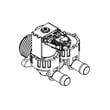
- No fill or slow fill: inlet screens clogged, hose issues, or a failing water valve
Use these steps first; they solve many “common problems” without parts.
- Run the washer empty on the Clean Washer cycle and leave the door slightly open afterward (this helps prevent odor-causing residue); follow the routine in the MHW6630HC2 owner’s manual.
- Confirm the drain hose is not kinked and the standpipe is not blocked.
- If the washer is not draining, clean the drain pump filter (have towels ready for residual water).
- Verify both water faucets are fully open; check inlet hose screens for sediment.
- Use only HE detergent and avoid over-dosing; excess suds and residue can contribute to odors and performance issues.
| Symptom | Most likely area | Example model-matched part |
|---|---|---|
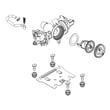
| Won’t drain, F9-type drain symptoms | Drain pump or restriction | Washer drain pump assembly W11458345 |
| Won’t fill or fills slowly | Inlet valve or supply | Water valve W11688995 |
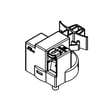
| Door won’t lock, cycle won’t start/advance | Door lock/strike | Ha15g janus- W11565030 and strike, door W11316914 |
| Leaks at door | Door boot (bellow) | Bellow, d412 W11314648 |
On front-load Maytag washers like the MHW6630HC2, draining is a “gate” function: if water cannot pump out quickly, the control will pause or end the cycle and the washer will not ramp up to a full spin. Fixing the drain path first prevents repeat errors, wet loads, and odor buildup.
Last updated: January 2026
What is the average lifespan of a Maytag washing machine?
Most Maytag washing machines last 10 to 13 years. For your Maytag MHW6630HC2 front-load washer, regular care (especially using HE detergent and keeping hoses and drainage in good shape) is what most often determines whether you land closer to 10 years or push beyond it; see the MHW6630HC2 owner's manual for the maintenance schedule.
- Detergent choice and dosing: use HE detergent and avoid over-dosing to reduce residue and stress on the drain system.
- Load size: chronic overloading increases wear on the motor, suspension, and door boot.
- Water quality: hard water can increase buildup in the dispenser and internal plumbing.
- Ventilation and cleaning: leaving the door ajar between loads helps reduce odor and mildew.
- Hose condition: worn inlet hoses are a common source of leaks and water damage.
The MHW6630HC2 manual calls out key habits that protect long-term reliability.
- Replace water inlet hoses about every 5 years and inspect for bulges, kinks, cuts, wear, or leaks.
- Keep the washer area clear so airflow is not blocked.
- Run the washer cleaning routine as recommended and keep the dispenser clean.
- Address draining issues early (slow drain, standing water, or repeated drain errors).
| Care level | What it looks like | Typical outcome |
|---|---|---|
| Minimal | Overloads, too much detergent, little cleaning | Closer to 10 years |
| Average | Normal use, occasional cleaning, basic upkeep | 10 to 13 years |
| Proactive | HE detergent, routine cleaning, hoses replaced on schedule | Often 13+ years |
A washer that is kept clean and draining properly runs with less strain on high-wear components like the drain pump, door lock, and water valve. Preventive care also reduces leaks and odor issues that can shorten the useful life of a front-load washer.
Last updated: January 2026
Is MHW6630HC2 stackable?
Yes. The Maytag MHW6630HC2 is designed for recessed or closet installations that include a stacked washer and dryer setup; you just need the correct stacking kit for your specific Maytag dryer and installation space. See the MHW6630HC2 owner's manual for spacing and closet venting requirements.
A stackable front-load washer like the MHW6630HC2 can be installed with a compatible dryer mounted above it using a manufacturer-approved stacking kit. The washer itself stays on the floor; the dryer stacks on top.
- Confirm you have a compatible Maytag dryer and the correct stacking kit for that dryer series.
- Measure the closet or recessed area; allow clearance for the washer door to fully open.
- Plan for at least 1 inch of space around the washer to help reduce noise transfer.
- If installing in a closet with a door, provide top and bottom air openings in the door.
- Verify the drain setup (standpipe or laundry tub) and secure the drain hose to prevent it from coming loose.
| Item to verify | What to plan for | Where to confirm |
|---|---|---|
| Closet/recessed install | Space for door swing and service access | MHW6630HC2 owner's manual |
| Noise control | 1 inch clearance on all sides | MHW6630HC2 owner's manual |
| Closet door ventilation | Top and bottom air openings required | MHW6630HC2 owner's manual |
| Drain hose security | Hose must be secured to avoid leaks | MHW6630HC2 owner's manual |
Stacking saves floor space, but tight closets can increase vibration, noise transfer, and service difficulty. Following the MHW6630HC2 spacing and venting guidance helps the washer run quieter and reduces installation problems.
Last updated: January 2026