Owner’s manual
 Error Codes


What is the life expectancy of a Kenmore dryer?
A Kenmore dryer like model 79661512210 typically lasts 10 to 13 years. With consistent venting and lint maintenance, many dryers reach 15 years or more, and the biggest lifespan killers are restricted airflow, overheating, and running the drum drive parts while worn.
What affects dryer lifespan the most
- Airflow and venting: crushed ducting, long runs, or lint buildup make the heater work harder
- Lint control: a torn or clogged screen lets lint collect inside the cabinet
- Heat stress: repeated overheating shortens the life of thermostats, sensors, and the heating element
- Drum drive wear: a worn belt, idler pulley, or roller can strain the motor
- Load habits: frequent overloading accelerates drum support and belt wear
Maintenance that adds years (best ROI)
Use the 79661512210 owner's manual for the exact cleaning points and intervals for your Kenmore Elite dryer.
- Clean the lint screen every load; replace it if the mesh is damaged
- Check the vent hood flap outside; it should open strongly during a cycle
- Clean the full vent path periodically (dryer outlet to exterior)
- Avoid over-drying; use sensor cycles when available
- Stop using the dryer if you hear squealing, thumping, or grinding; fix the drive parts early
Common wear parts to watch on this model
| Symptom | Most likely wear area | Example part for 79661512210 |
|---|---|---|
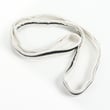
| Drum not turning, motor runs | Belt or idler | Dryer drum belt 4400EL2001F |
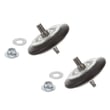
| Thumping or rumbling | Drum support rollers | Dryer drum support roller (inspect rollers and shafts) |
| Clothes take too long to dry | Airflow restriction or heat control | Dryer thermistor or thermostats (inspect vent first) |
Why it matters
A dryer that is struggling to move air often overheats and cycles the heater and thermostats more aggressively. Keeping airflow strong reduces heat stress, improves drying performance, and helps expensive components like the motor and heating element last longer.
Last updated: February 2026
Where is the model number on a Kenmore Elite dryer?
On the Kenmore Elite dryer model 79661512210, the model number is typically printed on a rating label inside the door opening; open the dryer door and check the cabinet frame around the opening first, then the inside of the door.
Most common label locations to check
- Inside the door opening on the top cabinet lip
- Inside the door opening on the left or right cabinet frame
- On the inside face of the dryer door (near the hinge or latch side)
- Just behind the door opening on the front panel edge
What the label looks like and what to copy
The rating label usually includes several identifiers. Write them down exactly as shown.
| Label item | What it’s used for | Example format |
|---|---|---|
| Model number | Finds the correct parts list and diagrams | 79661512210 |
| Serial number | Helps date the unit and match revisions | Letters and numbers |
| Electrical rating | Confirms power requirements | Volts/amps |
Why it matters
Using the exact model number prevents ordering the wrong Kenmore dryer parts (like a drum belt, heating element, or door switch) because similar-looking Elite dryers can use different components.
If the label is hard to read
- Wipe dust off with a damp cloth and let it dry
- Use your phone camera and zoom in for clearer text
- Copy the full model number and serial number before ordering parts
For additional model identification details and diagrams, use the 79661512210 owner's manual.
Last updated: February 2026
How do I tell what size dryer I have?
For your Kenmore Elite dryer model 79661512210, the most reliable way to tell the dryer’s “size” is to confirm (1) its physical dimensions (width, height, depth) and (2) its drum capacity class (compact vs full-size) using the model’s specifications in the 79661512210 owner's manual.
What “size” means for a dryer
Dryer size is usually described in two ways:
- Exterior dimensions: helps with fit in a laundry closet, alcove, or under a counter
- Capacity class: compact vs full-size (often tied to drum volume)
- Door swing and clearance: affects how much space you need in front
- Venting location: can change required depth behind the dryer
How to measure your dryer (quick steps)
Use a tape measure and record in inches.
- Measure width: left side to right side at the widest point
- Measure height: floor to top of the cabinet
- Measure depth: front to back (include the control panel if it sticks out)
- Add clearance: allow space for the power cord, vent duct, and airflow
- Note door clearance: measure how far the door extends when open
Typical dryer size ranges (helpful comparison)
These ranges help you sanity-check your measurements.
| Dryer type | Typical width | Typical height | Typical depth |
|---|---|---|---|
| Compact electric dryer | 24 in | 33 to 36 in | 24 to 28 in |
| Full-size dryer | 27 in | 38 to 40 in | 29 to 32 in |
Why it matters
Knowing the correct size helps us match the right venting setup, confirm installation clearances, and avoid ordering parts that do not fit your cabinet layout. It also helps when planning repairs that require cabinet access, such as replacing a dryer drum belt 4400EL2001F or checking drum support components.
Last updated: February 2026
What are common problems with Kenmore dryers?
Common problems on Kenmore dryers like model 79661512210 include no heat, long dry times, the drum not turning, and loud squealing or thumping. Most of these issues trace back to restricted airflow (lint buildup), worn drive components, or failed temperature-sensing and safety parts; see the 79661512210 owner's manual for cycle and care guidance.
Most common symptoms and what usually causes them
- Dryer won’t heat: failed heating circuit parts such as a heating element, high-limit thermostat, or thermistor
- Takes too long to dry: clogged lint screen, crushed/long vent run, blocked blower housing, or weak airflow
- Drum won’t turn: broken belt, worn idler pulley, seized drum rollers, or a failing motor
- Loud noise (squeal, rumble, thump): worn drum support rollers, idler pulley wear, belt damage, or a blower wheel issue
- Stops mid-cycle or overheats: airflow restriction causing safety devices to trip
Quick checks we recommend before replacing parts
- Clean the lint screen and confirm strong airflow at the outside vent hood.
- Inspect the vent path for kinks, heavy lint, or a stuck damper.
- Try a timed dry cycle to compare performance versus sensor cycles.
- Listen for where the noise comes from (front, rear, or blower area).
- If the drum does not move, stop using the dryer to prevent motor damage.
Parts that commonly fix these problems (for 79661512210)
| Symptom | Common part to check | Example part for this model |
|---|---|---|
| Drum not turning | Drum belt | Dryer drum belt 4400EL2001F |
| Loud rumble/thump | Drum support rollers | Dryer drum support roller 4581EL2002L |
| No heat or poor temperature control | Thermistor | Dryer thermistor AGM30045804 |
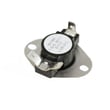
| Overheating or no heat | High-limit thermostat | Dryer high-limit thermostat 6931EL3003D |
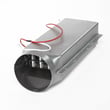
| No heat (electric models) | Heating element | Lg dryer heating element 5301EL1001H |
Why it matters
Airflow problems make drying slow and can overheat the dryer, which shortens the life of key components like thermostats, the heating element, and the motor. Fixing venting and worn drum-drive parts early helps the dryer run quieter, dry faster, and avoid repeat failures.
Last updated: February 2026
Why is my Kenmore Elite dryer not tumbling?
If your Kenmore Elite dryer model 79661512210 powers on but the drum will not turn, the most common causes are a broken drum belt, a failed door switch, or a problem in the drive system (idler pulley, rollers, or motor). Use the 79661512210 owner's manual to confirm the correct access steps and checks.
Quick checks we recommend first
- Make sure the door fully closes and latches; a dryer will not tumble if the door switch is not made.
- Try starting a cycle and listen:
- Hums but no drum movement: belt, idler pulley, jammed drum, or motor issue.
- Clicks then stops: door switch, control, or motor overload condition.
- Spin the drum by hand (dryer off); it should turn with steady resistance, not bind.
- Check for an overloaded drum; remove half the load and retry.
- Reset power: unplug for 2 minutes, then retry.
Most likely parts when the drum will not turn
If the drum turns by hand but will not tumble under power, we focus on the belt and drive components.
| Symptom | What it usually points to | What to inspect next |
|---|---|---|
| Drum does not move; motor runs or hums | Belt slipped or broken | Dryer drum belt 4400EL2001F and idler pulley alignment |
| Loud squeal or thump before it stopped tumbling | Worn support rollers or idler pulley | Drum support rollers, idler pulley, belt wear |
| Drum hard to turn by hand | Seized roller, foreign object, drum seal drag | Rollers, blower area, drum seals |
Why it matters
A no-tumble condition is not just an inconvenience; a slipping belt or failing roller can overwork the motor and increase wear on the idler pulley and drum supports. Catching the cause early helps prevent a bigger repair.
When to stop and schedule service
- The drum is difficult to rotate by hand.
- You smell burning rubber or see belt debris.
- The dryer hums repeatedly and shuts off.
Last updated: February 2026
How to hard reset a Kenmore dryer?
To hard reset your Kenmore Elite dryer model 79661512210, we recommend disconnecting power for a few minutes to fully reboot the electronic control. This clears many temporary control glitches and can restore normal operation after an unresponsive panel or a cycle that will not start; see the 79661512210 owner's manual for model-specific reset and control-lock details.
Hard reset steps (safe and effective)
- Turn the dryer OFF.
- Unplug the power cord (or switch the dryer breaker OFF).
- Wait 3 to 5 minutes.
- Restore power.
- Press Power, then start a cycle to confirm the controls respond.
If the panel still seems “locked” or buttons do not respond
Many Kenmore Elite dryers have a control lock feature that can look like a failure.
- Look for a Control Lock/Child Lock indicator on the display.
- Press and hold the lock-related button for 3 seconds (common on electronic models).
- Power-cycle again after unlocking.
Quick checks that prevent repeat problems
A reset helps most when the dryer is otherwise healthy. These checks fix the most common causes of “won’t start” or “stops mid-cycle” symptoms.
- Clean the lint screen and make sure it seats correctly; replace a damaged screen such as the dryer lint screen by lg 5231EL1001C.
- Confirm the door closes firmly; a failing door switch can prevent starting.
- Verify strong airflow (crushed vent, long run, or blockage can cause overheating shutdowns).
- If the dryer runs but heat is erratic, temperature sensing parts such as the dryer thermistor AGM30045804 can be involved.
What the symptoms suggest
| Symptom after reset | Most likely area to check | Typical next step |
|---|---|---|
| No power, no lights | Power supply, breaker, cord | Check breaker, outlet, cord fit |
| Powers on, will not start | Door switch, control lock, start circuit | Confirm door switch and lock status |
| Starts then stops | Venting/overheat protection | Inspect venting and lint buildup |
| Runs but no/low heat | Heating circuit, thermostats, sensor | Check heating and temperature components |
Why it matters
A hard reset clears temporary electronic faults, but it will not fix an underlying airflow restriction or a failed component. Addressing lint and venting first helps protect the heater, thermostats, and motor and improves drying performance.
Last updated: February 2026
What are the codes for Kenmore Elite dryer?
Kenmore Elite dryer model 79661512210 uses error codes to point you to the system that needs attention (power, control, keypad, heater circuit, or temperature sensing). Start by noting the exact code, then follow the checks in the 79661512210 owner's manual and clear the issue before running another cycle.
Common Kenmore Elite dryer error codes
- PF: Power failure (cycle interrupted by a power loss)
- F:01: Main electronic control board problem
- F:02: Keypad or user interface problem
- F:20: Heater relay problem (heating circuit control)
- F:22 / F:23: Outlet thermistor problem (temperature sensing at exhaust)
- F:24 / F:25: Inlet thermistor problem (temperature sensing at intake)
What to do first (quick checks)
- Unplug the dryer for 1 minute, then restore power and retry a cycle.
- If you see PF, check the home breaker, outlet fit, and power cord connection.
- If you see F:20, verify airflow: clean the lint screen and confirm the vent is not crushed or clogged.
- If you see F:22 to F:25, clean lint buildup and check for restricted venting that can cause abnormal temperature readings.
- If you see F:02, press each key once; a stuck key or moisture on the console can trigger keypad faults.
Code-to-system map (helps you choose the right next step)
| Code group | What it usually points to | Typical next step |
|---|---|---|
| PF | Incoming power interruption | Check breaker, outlet, cord; rerun cycle |
| F:01 | Main control | Power reset; inspect wiring connections |
| F:02 | Keypad or UI | Check for stuck keys; power reset |
| F:20 | Heater relay or heating control | Check airflow; then heating circuit diagnostics |
| F:22 to F:25 | Thermistor (temperature sensor) | Check airflow; then sensor and wiring checks |
Why it matters
Using the right code prevents guesswork. For example, airflow restrictions can trigger heating and thermistor-related codes, while control and keypad codes usually point to the console or main control wiring.
For model-specific code definitions and any reset steps unique to your dryer, use the Kenmore elite dryer error codes reference.
Last updated: February 2026
How do I know if my Kenmore dryer thermal fuse is blown?
On Kenmore Elite dryer model 79661512210, a blown thermal fuse usually shows up as a dryer that will not start or runs but will not heat (depending on the circuit design). The sure way to know is to unplug the dryer and test the fuse for continuity with a multimeter, then correct the overheating or airflow problem that caused it.
Quick symptoms to look for
- Dryer will not start even though the control panel responds
- Motor hums briefly, then stops (some situations)
- Dryer tumbles but there is no heat (common on some designs)
- Cycle ends early or clothes stay damp because heat shuts down
- Burning smell or very hot cabinet (stop using the dryer and check venting)
How we test a thermal fuse (safe, reliable method)
- Unplug the dryer (or switch off the breaker) before opening any panels.
- Access the fuse location using the steps in the 79661512210 owner’s manual.
- Pull at least one wire off the fuse terminal.
- Set a multimeter to continuity or lowest ohms.
- Touch probes to the fuse terminals.
What the meter reading means
| Meter result | What it means | What to do next |
|---|---|---|
| Beep or near 0 ohms | Fuse is good | Keep troubleshooting heat/airflow or controls |
| No beep or OL/infinite | Fuse is blown | Replace the fuse and fix the airflow/overheating cause |
Why the fuse blows (and what to fix so it does not happen again)
A thermal fuse is a one-time safety device; it opens when the dryer overheats. Before running the dryer after replacement, we correct the most common causes:
- Clean lint from the lint screen housing and blower area
- Inspect the vent hose for kinks, crushing, or long runs
- Clear the wall duct and exterior vent hood (make sure the flap opens fully)
- Avoid flexible foil venting; use rigid or semi-rigid metal where possible
- Do not overload; heavy loads restrict airflow through the drum
Related parts that often get checked during “no heat” or overheating
These parts are commonly involved in temperature control and airflow on this model:
Why it matters
If the thermal fuse is blown, the dryer is telling you it overheated. Replacing the fuse without fixing venting or airflow can lead to repeat failures, longer dry times, and additional damage to heating and thermostat components.
Last updated: February 2026
What model number is the Kenmore Elite 79661512210 dryer?
The model number for this Kenmore Elite dryer is 79661512210. You’ll use 79661512210 to match the correct Kenmore parts (like a dryer drum belt, heating element, or thermistor) and to pull the right diagrams and service information in the 79661512210 owner's manual.
Where to find the model number on the dryer
We recommend confirming the tag on the appliance so you’re ordering parts for the exact unit.
- Open the dryer door and check the door opening frame
- Look for a rating label on the cabinet near the door switch area
- Check the back panel label if you don’t see it at the door
- Write the full number exactly as shown: 79661512210
Why the model number matters for parts compatibility
Kenmore Elite dryers often share similar styling across multiple model families, but internal parts can differ. Using the full model number helps ensure the part fits and functions correctly.
| What you’re doing | Why the model number matters | Example for this dryer |
|---|---|---|
| Buying replacement parts | Prevents ordering the wrong version | Drum belt, idler pulley, moisture sensor |
| Troubleshooting symptoms | Points you to the right diagrams and checks | No heat, squealing, won’t start |
| Looking up error codes | Matches the correct Kenmore Elite error code set | Use a Kenmore Elite specific guide |
Common parts customers replace on model 79661512210
If you’re diagnosing noise, no-heat, or long dry times, these are frequent wear items for this Kenmore Elite dryer.
- Dryer drum belt 4400EL2001F (broken belt, drum not turning)
- Dryer thermistor AGM30045804 (temperature sensing issues)
- Lg dryer heating element 5301EL1001H (no heat on electric models)
- Dryer moisture sensor 6500EL3001A (auto cycles ending too soon or running too long)
Why it matters
Using 79661512210 keeps your repair accurate, reduces returns, and helps you get the right Kenmore Elite dryer parts the first time.
Last updated: February 2026