Installation guide
 Owner’s manual
 Error Codes

How to read Kenmore washer model numbers?
Kenmore washer model numbers are structured so the first three digits identify the manufacturer, the next set of digits identifies the base model, and the remaining digits indicate specific feature or design variations. For Kenmore model 11024292300, the 110 prefix is the key manufacturer identifier.
What each section of a Kenmore model number means
Most Kenmore washer model numbers follow this pattern:
- Prefix (first 3 digits): identifies who built the washer for Kenmore
- Base model digits (middle group): identifies the core platform or series
- Suffix digits (ending group): identifies version details (color, revisions, feature changes)
To confirm the exact model number format used on your unit, we recommend checking the model and serial label location and recording details in the 11024292300 owner's manual.
Where to find the model number on this washer
On Kenmore washer 11024292300, the model and serial number label is located under the washer lid.
- Lift the lid and look around the rim of the opening
- Write down the full model number and serial number
- Use the full number (not just the 110 prefix) when ordering parts like a lid switch or drain pump
Why the full model number matters for parts
Even small suffix changes can affect which parts fit. Using the complete model number helps match the correct diagrams and parts list for your washer.
| What you use | What it helps with | Example outcome |
|---|---|---|
| 3-digit prefix | Identifies manufacturer family | Narrows to the right parts system |
| Full model number | Identifies exact build | Ensures correct fit |
| Serial number | Identifies production range | Helps confirm revisions |
Quick example using common washer parts
When you shop by the full model number, we can match parts that commonly vary by revision, such as:
- Lid safety components like the washer lid switch WP3949238
- Drain components like the washer drain pump WP3363394
- Drive system parts like a motor coupling or clutch
Why it matters
Reading the model number correctly prevents wrong-part orders, repeat repairs, and downtime. For Kenmore washers, the prefix plus the full remaining digits is the fastest way to get an exact parts match.
Last updated: January 2026
How to hard reset kenmore washer?
For Kenmore washer model 11024292300, a hard reset is simple: unplug the washer (or switch off the breaker) for 2 minutes, then restore power and start a cycle. This clears many temporary control and cycle issues without changing any mechanical settings; see the 11024292300 owner's manual.
Hard reset steps (recommended)
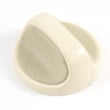
- Turn the Cycle Control knob to OFF.
- Unplug the washer (or turn OFF the circuit breaker).
- Wait 2 minutes.
- Restore power.
- Close the lid and select a normal cycle.
- Pull out the Cycle Control knob to start.
If the washer still will not run
These checks solve the most common “won’t start” symptoms on this style of Kenmore top-load washer.
- Confirm the lid is fully closed; a failed lid switch can stop agitation and spin.
- Check the outlet and breaker; a loose plug can mimic a control failure.
- If it fills but will not agitate or spin, inspect the drive system (coupler, clutch, gear case).
- If it will not drain, check for a clog or a weak pump.
- If it drains but will not spin, look for an out-of-balance load and re-level the washer.
| Symptom after reset | Most likely area | Common next step |
|---|---|---|
| Won’t start at all | Lid switch, power | Test/replace washer lid switch WP3949238 |
| Hums, no agitation/spin | Motor coupler/drive | Inspect washer motor coupling 285753A |
| Won’t drain | Drain pump/hoses | Check/replace washer drain pump WP3363394 |
Why it matters
A hard reset clears “stuck” cycle states and minor electrical glitches. If the same symptom returns immediately, the issue is usually a switch, drain problem, or drive component, not something a reset can permanently fix.
Last updated: January 2026
What is the average lifespan of a Kenmore washer?
A Kenmore washer typically lasts 10 to 15 years with normal household use. For Kenmore model 11024292300, good installation (level floor, correct water pressure, and proper electrical supply) and routine care help you reach the higher end of that range; see the 11024292300 owner's manual.
Typical lifespan and what affects it
Most washers land in this range because wear items (seals, couplers, pumps, and drive components) gradually loosen, leak, or lose efficiency.
- Usage frequency: multiple loads per day shortens life faster than a few loads per week
- Load size: chronic overloading strains the drive system and suspension
- Water quality: hard water can increase valve and hose issues
- Installation: an unlevel washer increases vibration and component wear
- Maintenance: cleaning, checking hoses, and addressing small leaks early extends life
What “end of life” usually looks like
These are common symptoms that show up as a washer ages, and they often point to repairable parts.
| Symptom | Common cause | Example part for this model |
|---|---|---|
| Won’t drain or drains slowly | Pump obstruction or worn pump | Washer drain pump WP3363394 |
| Won’t spin or stops mid-cycle | Lid switch or drive issue | Washer lid switch WP3949238 |
| Agitates poorly or “slips” | Worn agitator dogs/cam | Agitator dog 80040 |
Quick checks that help you get the full 10 to 15 years
- Keep loads balanced and avoid packing the basket tight
- Verify the washer sits on a level floor (max slope is typically about 1 inch under the washer footprint)
- Use the correct detergent amount; excess suds can stress draining and spinning
- Inspect fill hoses periodically and replace if cracked or bulging
- If the washer will be exposed to freezing temps, follow winterizing guidance in the manual
Why it matters
A washer that is level, supplied with proper water pressure, and maintained regularly runs quieter, spins more effectively, and reduces stress on the gearcase, clutch, motor coupling, and pump. That directly improves reliability over the life of the appliance.
Last updated: January 2026
Is it worth replacing a motor in a washing machine?
Yes, replacing the motor in your Kenmore washer model 11024292300 is worth it when the washer is otherwise in good shape and the total repair cost stays well below the cost of a comparable replacement washer. If the washer also has drive or transmission-type problems, replacement often makes more sense.
Quick decision checklist
- The washer fills, drains, and spins normally when it does run (no major gearcase noise).
- The tub is not leaking and the basket is solid (no severe rust-through or wobble).
- The motor is the confirmed failure, not a lid switch, coupling, clutch, or pump.
- You can complete the repair safely (power unplugged, water shut off).
- The repair estimate is under about half the price of a new washer.
What to check before you buy a motor
On many Kenmore 110 top-load designs, a “dead” or “won’t spin” complaint is often caused by a simpler part than the motor.
- Lid switch: if the lid switch fails, the washer may not spin or agitate. Consider washer lid switch WP3949238.
- Motor coupling: a broken coupling can stop agitation/spin even with a good motor. Consider washer motor coupling 285753A.
- Drain pump: a jammed or leaking pump can prevent proper draining and spin. Consider washer drain pump WP3363394.
- Clutch/drive system: slipping can cause weak spin or burning smell. Consider clutch 285785.
Cost and value comparison
| Scenario | Typical recommendation | Why |
|---|---|---|
| Motor is the only failure; washer is in good condition | Replace the motor | Restores function at a predictable cost |
| Multiple drive issues (motor plus gearcase/clutch symptoms) | Consider replacing the washer | Costs stack up quickly |
| Leaks, severe vibration, or basket/drive block wear | Fix root cause first | Motor replacement will not solve those issues |
Why it matters
A motor replacement can be a solid investment, but only when we confirm the motor is the root cause. Otherwise, you can spend money on a motor and still have a washer that will not agitate, drain, or spin correctly.
Safety and documentation
Before any diagnosis or repair, unplug the washer and shut off both water faucets. Follow the safety and service guidance in the 11024292300 owner's manual and the 11024292300 installation guide.
Last updated: January 2026