Owner’s manual


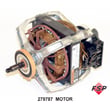
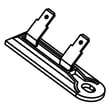
How do I know if my dryer thermistor is bad?
A bad thermistor in your Maytag dryer model MED6230HC0 typically shows up as no heat, overheating, or drying temperatures that swing up and down, which leads to long dry times or clothes coming out too hot. Confirm the symptom pattern first, then test the sensor.
Look for these day-to-day symptoms:
- Dryer runs but heat is inconsistent (cycles between too hot and too cool)
- Clothes take much longer than normal to dry
- Dryer shuts off early with damp clothes (auto cycles end too soon)
- Dryer overheats (very hot cabinet or scorching-hot loads)
- “Check Vent” messages show up more often because the dryer is struggling to control temperature
- Heat never comes on even though the drum tumbles
If you are also seeing a fault code on the display, use the troubleshooting and code information in the MED6230HC0 owner's manual.
Many “thermistor” complaints are actually airflow or power issues. We check these first because they directly affect exhaust temperature.
- Clean the lint screen and make sure it is seated firmly (a clogged screen causes long dry times)
- Inspect the vent run for crushing, kinks, or heavy lint buildup
- Confirm the door closes fully and the cycle is a heated setting (not Air Only)
- If the dryer will not start, verify power and controls are set to run
- If heat is not turning on and you get an L2 code, treat it as a home power supply issue first
The thermistor measures exhaust temperature and sends that information to the control. When it reads wrong, the dryer can underheat, overheat, or stop heating to protect itself.
| Symptom | Most common cause | What we check next |
|---|---|---|
| Long dry times | Restricted airflow | Lint screen, venting, blower wheel |
| No heat but tumbles | Heating circuit problem | Heater, thermal fuse, high-limit thermostat |
| Overheating | Airflow restriction or sensor issue | Venting, thermistor, thermostat |
For this model, the correct replacement sensor is the dryer thermistor WP8577274.
Running with incorrect temperature sensing can damage fabrics, trip safety devices (like a thermal fuse), and make the dryer run longer than necessary. Fixing the root cause restores normal drying performance and helps prevent repeat failures.
Last updated: February 2026
Are sensor dryers worth it?
Yes. For a Maytag MED6230HC0 dryer, sensor (automatic) cycles are worth it because they stop the cycle when clothes are dry, which reduces overdrying, helps protect fabrics, and typically lowers energy use compared with timed drying. For best results, follow the cycle and load guidance in the owner's manual.
- Less overdrying: helps reduce shrinkage, fading, and wear on fabrics.
- More consistent results: adjusts dry time based on moisture level and temperature.
- Lower operating cost: avoids running extra minutes after clothes are already dry.
- Less heat stress on parts: fewer unnecessary heater-on minutes can reduce strain on heating and airflow components.
- Convenience: fewer re-runs and less babysitting of the timer.
Sensor cycles depend on good airflow and correct installation. If airflow is restricted or the dryer is not level, sensor cycles can run long or finish poorly.
Common causes to fix first:
- Lint screen not fully clean or seated correctly (check the screen W10120998).
- Vent duct crushed, too long, or clogged.
- Dryer not level; the manual notes that an uneven floor can affect tumbling and automatic sensor cycle performance.
- Overloaded drum or mixed heavy and light fabrics in the same load.
| Feature | Sensor (automatic) cycles | Timed dry |
|---|---|---|
| Stops when clothes are dry | Yes | No (stops at set time) |
| Best for everyday loads | Yes | Sometimes |
| Best for troubleshooting drying issues | No (can mask airflow problems) | Yes (more predictable) |
| Risk of overdrying | Lower | Higher |
Overdrying wastes energy and can damage clothing. Sensor drying helps your MED6230HC0 match heat and run time to the load, but it only works correctly when airflow, leveling, and load size are right.
Last updated: February 2026
How do I know if my thermostat is bad on my dryer?
A bad thermostat in your Maytag MED6230HC0 dryer usually shows up as no heat, overheating, or the dryer shutting off mid-cycle. The most reliable check is a continuity test with a multimeter after disconnecting power; many dryer thermostats should read closed (continuity) at room temperature.
- Dryer runs but does not heat
- Dryer heats too much (clothes feel overly hot, scorching smell)
- Cycle stops early or heat cuts in and out
- “Check Vent” message appears because the dryer is overheating from restricted airflow (often a venting issue, not the thermostat)
- Thermal safety devices open (for example, a thermal fuse blows) after repeated overheating
- Disconnect power first. Unplug the dryer (electric) or unplug and shut off gas (gas model). Follow the safety guidance in the owner's manual.
- Access the thermostat (location varies by design; commonly on the blower housing or heater housing).
- Pull the wires off the thermostat terminals (note positions or take a photo).
- Set your multimeter to continuity or lowest ohms.
- Touch a probe to each terminal:
- Continuity (beep or near 0 ohms): thermostat is closed at room temp (typical)
- No continuity (open circuit): thermostat is failed open and should be replaced
| Test result at room temperature | What it usually means | What to do next |
|---|---|---|
| Continuity (closed) | Thermostat is not failed open | Check airflow, heater circuit, and sensors |
| No continuity (open) | Thermostat is bad | Replace the thermostat |
On MED6230HC0, these related parts often come up during diagnosis:
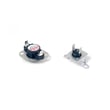
- Dryer high-limit thermostat WP3391914 (safety thermostat that opens if temperatures get too high)
- Thermal fuse W10909685 (one-time safety device; often opens when airflow is restricted)
- Dryer thermistor WP8577274 (temperature sensor used for cycling heat on many models)
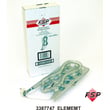
- Element, heater 5400w WP3387747 (electric heat source on electric versions)
A thermostat problem and an airflow problem can look the same. A crushed or blocked vent can overheat the dryer, trigger safety cutoffs, and shorten the life of heating and temperature-control parts. Keeping the lint screen clean and the vent clear prevents repeat failures.
Last updated: February 2026
What's the life expectancy of a Maytag dryer?
A Maytag dryer typically lasts 13 years. With consistent venting and lint maintenance, many Maytag dryers reach 14 to 16 years of service. For your Maytag MED6230HC0, following the care and cleaning intervals in the owner's manual is the best way to hit the upper end of that range.
These items have the biggest impact on how long the motor, heater, and drum support system last:
- Airflow and vent length: long or restricted vents increase heat and run time
- Lint removal: clean the lint screen every load; remove lint buildup in the cabinet and vent on a schedule
- Load size: chronic overloading strains the drive motor, belt, and rollers
- Heat stress: overheating shortens the life of thermostats, thermal fuses, and the heating element
- Noise and vibration: early roller or idler wear can cascade into belt and motor issues
The MED6230HC0 manual calls out routine lint care and periodic deep cleaning. Use this as a practical schedule:
| Task | Frequency | Why it matters |
|---|---|---|
| Clean lint screen | Every load | Keeps airflow strong and drying times normal |
| Check vent for good airflow | Monthly | Prevents long dry times and overheating |
| Remove lint from exhaust vent | About every 2 years | Reduces heat buildup and strain on parts |
| Remove lint inside dryer cabinet | About every 2 years | Protects wiring, motor, and heater area |
If your MED6230HC0 is getting louder, taking longer to dry, or shutting off on heat, these are common wear items to inspect and replace as needed:
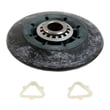
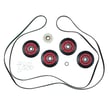
- Dryer drum support roller WPW10314173 (thumping, rumbling)
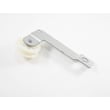
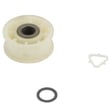
- Dryer idler pulley W10837240 (squealing, belt slack)
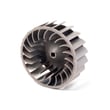
- Dryer blower wheel WP697772 (poor airflow, rattling)
- Thermal fuse W10909685 (no heat or no run in some failures)
- Element, heater 5400w WP3387747 (no heat on electric models)
A dryer can “still run” but lose efficiency when airflow is restricted or wear parts drag. That extra run time increases heat exposure and mechanical load, which is what usually turns a small repair (roller, idler, fuse) into a bigger one (motor, drum, wiring).
Last updated: February 2026