Owner’s manual
 View engine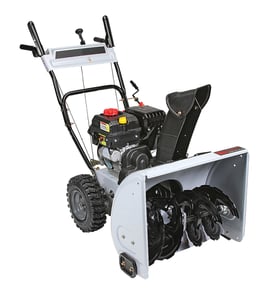



How to find Craftsman snowblower model number?
For a Craftsman snow thrower, the model number is on the snowblower’s ID label (not the engine label). On model 247881720, look for a sticker or metal tag on the frame near the handle supports, the rear of the unit, or the auger housing; then match the full number exactly.
Where to look on the snowblower
Check these common label locations first:
- Rear frame between the wheels (near the axle area)
- Left or right side of the frame near the handle mounting brackets
- Top or side of the auger housing (front bucket)
- Under the belt cover area (after the unit is off and cooled)
- Near the chute base on some builds
Use the diagrams and label callouts in the 247881720 owner’s manual to confirm the exact location and how the tag is formatted.
Model number vs. engine model number (why both matter)
Snowblowers often have two different IDs. Use this quick guide:
| What you’re replacing | Number you need | Where it’s found |
|---|---|---|
| Craftsman snowblower parts (belts, cables, skid shoes, scraper blade, gearbox) | Snowblower model number (example: 247881720) | Snowblower frame ID label |
| Engine parts (carburetor, ignition, recoil starter, gaskets) | Engine model/type code | Engine shroud or stamped on engine |
Tips to avoid ordering the wrong part
- Write down the full model number exactly as shown (include all digits)
- If there’s a serial number, record it too; it helps confirm production run
- Clean the label gently with a damp cloth if it’s dirty; do not scrape it
- If the label is missing, compare your unit’s features (auger housing width, chute style, control panel layout) to the diagrams in the manual
Why it matters
Craftsman snowblower parts can look similar across models, but cable lengths, belt sizes, and hardware can differ. Using the correct model number helps us match the right parts list and avoid fit issues.
Last updated: January 2026
What is the typical lifespan of a gas snowblower?
A gas snowblower typically lasts 10 to 15 years. With consistent maintenance, a Craftsman snow thrower like model 247881720 commonly reaches the high end of that range because wear items (belts, skid shoes, scraper blade, shear pins) can be replaced as they age; see the 247881720 owner's manual for the maintenance schedule.
Typical lifespan ranges
- 10 to 15 years: Normal homeowner use with basic seasonal maintenance
- 15 to 20 years: Light-to-moderate use plus careful storage and timely part replacement
- Under 10 years: Heavy use, poor fuel storage, skipped oil changes, or frequent impacts (ice chunks, gravel)
What shortens lifespan fastest
- Old fuel left in the carburetor over summer (varnish buildup)
- Running low on oil or skipping oil changes
- Hitting curbs, frozen berms, or gravel (auger and gearbox shock loads)
- Operating with worn skid shoes or a worn scraper blade (housing damage)
- Continuing to run after a shear pin breaks (auger damage)
Maintenance that adds years (what we recommend)
- Change engine oil on schedule; check level before each use
- Use fresh fuel and add stabilizer before storage
- Inspect and replace shear pins as needed; keep spares on hand
- Keep the auger and chute clear; shut off the engine before clearing jams
- Lubricate moving points and cables; keep controls adjusted
| Maintenance item | Best time to do it | Why it matters |
|---|---|---|
| Oil change | Start and end of season | Prevents engine wear |
| Shear pin check | Before storms | Protects auger and gearbox |
| Skid shoe and scraper inspection | Mid-season | Prevents housing and pavement damage |
| Belt and cable inspection | Pre-season | Keeps drive and auger engagement reliable |
Why it matters
A snowblower’s “lifespan” is usually limited by neglected fuel and lubrication, not the machine’s age. Replacing normal wear parts, such as the snowblower scraper blade 790-00120-4044 and Craftsman snowblower shear pin 738-04124A, helps protect expensive assemblies like the auger gearbox and engine.
Last updated: January 2026
What is the most common problem with snow blowers?
The most common problem we see on snow blowers (including the Craftsman 247881720) is a no-start or hard-start condition, usually caused by stale fuel, a dirty carburetor, or a worn spark plug. Close behind are clogged chutes and auger or drive issues from broken shear pins or worn belts.
Most common issues and what they point to
- Won’t start / starts then dies: old gas, varnished carburetor, fouled spark plug, water in fuel
- Runs but won’t throw snow well: chute packed with snow, wet/heavy snow, low engine speed
- Auger won’t turn: broken shear pin, loose or stretched auger clutch cable
- Unit won’t drive / weak drive: worn drive belt, friction wheel wear, linkage out of adjustment
- Poor scraping or leaves snow behind: worn scraper blade, skid shoes set too low/high
Quick checks we recommend first (fastest wins)
- Use fresh fuel (and drain old fuel if it smells sour or looks dark).
- Inspect the spark plug and replace if the electrode is worn or heavily carboned; see how to check a snowblower spark plug video.
- Clear the chute safely (engine off, key removed); never use hands.
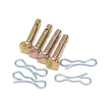
- Check shear pins on the auger; replace any broken pins with the correct type, such as Craftsman snowblower shear pin 738-04124A.
- Check belt condition and tension if the auger or drive feels weak; see how to replace a snowblower belt video.
Symptoms-to-fix guide
| Symptom | Most likely cause | Common fix |
|---|---|---|
| No start | stale fuel, carburetor varnish | drain fuel, clean carburetor, fresh gas |
| Auger stops under load | shear pin broken | replace shear pin |
| Drives slowly or not at all | belt or friction wheel wear | replace belt, inspect friction wheel |
| Leaves a layer of snow | scraper/skid wear or adjustment | replace/adjust scraper and skid shoes |
Why it matters
Catching the “big three” early (fuel quality, spark, and shear pins) prevents bigger repairs like gearbox damage and keeps your Craftsman snow thrower throwing at full distance.
For model-specific maintenance intervals, adjustments, and safety steps, follow the 247881720 owner’s manual.
Last updated: January 2026
Is it worth fixing a snowblower?
Yes, it’s usually worth fixing a Craftsman snow thrower like model 247881720 when the problem is a normal wear item (belt, cable, skid shoes, scraper blade, shear pin) and the repair cost stays well below the price of a comparable new machine. It’s typically not worth it when the engine or gearbox needs major work and the total repair cost approaches half the cost of replacement.
Quick decision checklist
- If it starts and runs well, fix the drive or auger issue first.
- If it won’t start, try basic fuel and ignition checks before buying major parts.
- If the auger stops suddenly after hitting ice or a curb, check shear pins first.
- If it won’t move or slips under load, suspect the drive belt or friction wheel.
- If the housing rides up or leaves snow behind, inspect skid shoes and the scraper blade.
Common “worth it” repairs on this model
These are typical, lower-cost fixes that restore performance fast:
- Replace a worn drive belt: lawn & garden equipment belt 954-04260
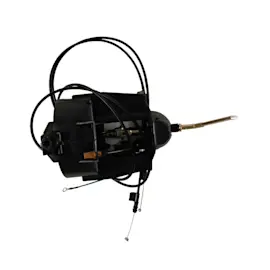
- Replace a stretched or broken auger control cable: snowblower auger clutch cable 946-04230A
- Replace worn skid shoes: mtd snowblower skid shoe 731-06439
- Replace a worn scraper blade: snowblower scraper blade 790-00120-4044
- Replace broken shear pins after an impact: Craftsman snowblower shear pin 738-04124A
When replacement makes more sense
Major component failures usually push costs high:
| Issue | Typical outcome | Usual recommendation |
|---|---|---|
| Engine failure (low compression, severe internal damage) | High parts and labor | Replace machine or engine only if the unit is otherwise excellent |
| Gearbox failure (grinding, seized auger drive) | Expensive, labor-heavy | Replace if overall condition is fair or poor |
| Multiple systems worn (drive + auger + rusted housing) | Repairs add up quickly | Replace |
Why it matters
A snowblower that’s mechanically sound but needs wear parts can be restored for far less than buying new. On the other hand, investing heavily in an engine or gearbox often doesn’t improve the rest of the machine’s condition (controls, bearings, auger housing, wheels), so the value return is lower.
What we recommend you do next
- Use the troubleshooting and adjustment steps in the 247881720 owner’s manual.
- Price the needed parts plus any shop labor.
- Compare that total to about 50% of the cost of a similar new snowblower.
Last updated: January 2026