Owner’s manual


How to force a Kenmore Elite washer to drain?
To force your Kenmore Elite washer model 11044832202 to drain, we recommend using the control-panel drain routine: press PAUSE/CANCEL, select DRAIN/SPIN, then press and hold START for about 1 second to begin draining (see the 11044832202 owner's manual).
- Press PAUSE/CANCEL once to pause.
- If you need to fully stop the cycle, press PAUSE/CANCEL twice.
- Select DRAIN/SPIN.
- Press and hold START for about 1 second.
- Wait for the drain and spin to finish; the door unlocks when it is safe.
A front-load (horizontal-axis) Kenmore Elite washer usually fails to drain because of a restriction in the drain path or a failing pump.
- Check the drain hose for kinks, crushing, or a clog.
- Make sure you did not force excess drain hose into the standpipe; it can restrict flow.
- Confirm the drain hose is installed with an air gap at the standpipe or laundry tub.
- Listen for the drain pump during DRAIN/SPIN; a loud hum with no water movement points to a blockage or pump issue.
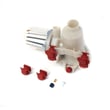
- If the pump is noisy, seized, or leaking, replace the water pump 280187.
| What you notice | Most likely cause | What to do next |
|---|---|---|
| Washer hums but water does not move | Clog in hose or pump | Inspect hose routing; check pump area; run DRAIN/SPIN again |
| Drains slowly | Partial blockage or restricted standpipe setup | Correct standpipe install; avoid excess hose shoved into pipe |
| Will not drain and stops mid-cycle | Pump problem or restriction | Check drain path; consider replacing the pump |
Forcing a proper drain protects the door lock system, prevents standing water odors, and reduces the chance of leaks during service. It also helps you confirm whether the issue is a simple hose restriction or a drain pump failure.
Last updated: January 2026
What is the life expectancy of a Kenmore washer?
Most Kenmore washers last 10 to 15 years with normal household use and basic maintenance. For the Kenmore Elite 11044832202 horizontal-axis washer, consistent care (proper loading, cleaning, and leak prevention) is what most directly determines whether you land closer to 10 years or push beyond it; see the 11044832202 owner's manual for model-specific care and troubleshooting guidance.
A washer’s service life is mainly driven by how hard it works and how well it is maintained.
- Loads per week: more cycles equals more wear on the drive system, pump, and bearings
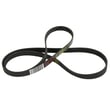
- Overloading: strains the tub, suspension, and drive belt
- Water quality: hard water can increase buildup in the dispenser and hoses
- Drain health: coins, lint, and debris can shorten pump life
- Vibration and leveling: constant shaking accelerates wear on suspension and cabinet parts
On front-load, horizontal-axis washers like this Kenmore Elite, these parts commonly drive repair decisions:
| Symptom | Common wear item | Example part for this model |
|---|---|---|
| Won’t drain, water left in tub | Drain pump or drain path restriction | Water pump 280187 |
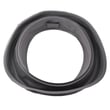
| Leaks at door | Door boot (bellows) | Washer door boot WP8182119 |
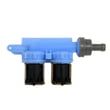
| Won’t fill or fills slowly | Inlet valve or flow sensing issue | Washer water inlet valve WP8181694 |
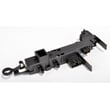
| Door won’t lock or cycle won’t start | Door lock/strike | Door lock WP8182634 |
We recommend these habits to get the longest life from a Kenmore washer:
- Keep loads balanced and within capacity
- Leave the door slightly open between loads to reduce odor and moisture buildup
- Periodically inspect fill hoses and connections for seepage
- Clean the dispenser area and wipe the door boot folds
- Address unusual noise, vibration, or slow draining early (small issues become big ones)
A washer that is maintained tends to fail in predictable, repairable ways (pump, valve, door seal). Neglect often leads to secondary damage such as chronic leaks, corrosion, and excessive vibration that can shorten the overall life of the machine.
Last updated: January 2026
Does my Kenmore Elite washing machine have a filter?
Yes. Your Kenmore Elite washer model 11044832202 uses a drain pump clean-out (often called a pump filter or coin trap) that catches lint and small items before they reach the pump; cleaning it helps prevent no-drain problems and leaks. See the 11044832202 owner's manual for the exact access steps.
On horizontal-axis Kenmore Elite washers like 11044832202, the filter is typically part of the drain system near the bottom front of the cabinet, integrated with the pump housing.
Common signs it needs cleaning:
- Washer will not drain or drains slowly
- Standing water left in the drum
- Rattling or grinding during drain
- Musty odor from trapped debris
- Small leaks during or after drain
Before you open the clean-out, we recommend these basics:
- Unplug the washer (or switch off the breaker)
- Turn off both water faucets
- Have towels and a shallow pan ready for water
- Drain as much water as possible first (spin/drain cycle if it will run)
- Remove debris (coins, hair pins, lint) and rinse the trap
- Reinstall the cap firmly to prevent leaks
If cleaning the trap does not restore normal draining, these parts are the usual next checks:
| Symptom | Most likely area | What to inspect |
|---|---|---|
| Hums but will not drain | Pump or blockage | Pump impeller, debris in housing |
| Drains slowly | Hose restriction | Kinked/clogged tub-to-pump hose |
| Leaks during drain | Seal or loose connection | Hose clamps, pump seal seating |
Model-matched parts we often see used in drain repairs:
- Water pump 280187 (drives draining)
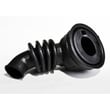
- Washer tub-to-pump hose WPW10467168 (can clog with lint/socks)
- Clamp WP285655 (helps stop seepage at hose connections)
A clogged pump clean-out makes the drain pump work harder, increases cycle times, and can lead to repeated “won’t drain” complaints. Keeping it clear is one of the simplest ways to protect the pump and reduce leaks.
Last updated: January 2026
How to hard reset a Kenmore Elite washer?
To hard reset a Kenmore Elite washer model 11044832202, we power the washer off, fully remove power for at least 1 minute, then restore power and clear the current cycle using PAUSE/CANCEL. This resets the control and often clears a stuck cycle or minor control glitch.
- Press POWER to turn the washer off.
- Unplug the washer (or switch the breaker off) for 60 seconds.
- Restore power.
- Press PAUSE/CANCEL twice to cancel the cycle and power down.
- If you want to restart a cycle: select a cycle, then press and hold START for about 1 second.
For the exact button names and cycle-cancel behavior on this model, follow the 11044832202 owner's manual.
These checks fix the most common “won’t start / won’t reset” situations on a front-load Kenmore Elite:
- Confirm the outlet has power (test with a lamp) and reset the breaker if needed.
- Make sure the door is fully closed and the latch clicks; a failed lock can prevent starting.
- If the tub is full of water, run DRAIN/SPIN after pressing PAUSE/CANCEL.
- If you see an FH (water inlet) type symptom, verify both faucets are fully open and inlet hoses are not kinked.
- If draining is slow or the washer stops mid-cycle, check for a clog; the drain pump is a common cause.
| What you notice | What it usually points to | Related part for 11044832202 |
|---|---|---|
| Won’t drain, water left in tub | Drain pump or drain path restriction | Water pump 280187 |
| Door won’t lock or unlock normally | Door lock or strike issue | Door lock WP8182634 |
| FH or slow fill | Inlet valve, screens, or supply issue | Washer water inlet valve WP8181694 |
A proper reset clears a stalled control state without forcing the door open or interrupting a high-water or high-temperature condition; this helps protect the door lock, pump, and control from unnecessary stress.
Last updated: January 2026