Owner’s manual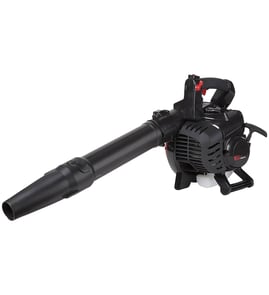





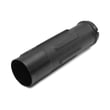
How to find Craftsman leaf blower model number?
Your Craftsman gas blower and vacuum model number is printed on a factory ID label; on model 358794701, it’s typically on the engine housing (motor casing) or on the rear/side of the unit near the handle. Use that exact number to match the right parts and manual.
Check these common label locations first:
- Side of the engine housing (near the starter/recoil area)
- Back of the unit near the handle or trigger
- Near the air filter cover area
- On the underside of the housing (you may need a flashlight)
- On or near the blower tube connection point
Most Craftsman labels include multiple identifiers. Record them exactly as shown.
| Label item | Example | Why you need it |
|---|---|---|
| Model number | 358794701 | Ensures parts diagrams and parts fit |
| Serial number | Varies | Helps with production run identification |
| Engine family/type | Varies | Useful for carburetor and ignition matching |
Use these quick steps to make the number readable:
- Wipe the area with a damp rag and mild soap; dry it fully
- Use a flashlight at an angle to highlight embossed printing
- Take a close-up photo and zoom in
- If the sticker is scratched, look for a second label on the opposite side
Craftsman leaf blowers often have similar housings across different versions, but parts like the carburetor, primer bulb, fuel line, and air filter can vary by model. Using the exact model number helps you avoid ordering the wrong replacement part and speeds up troubleshooting.
For model-specific diagrams and identification details, use the 358794701 owner’s manual.
Last updated: February 2026
What is better, cfm or mph for a leaf blower?
For the Craftsman 358794701 gas blower and vacuum, CFM is better for moving lots of dry leaves across a wide area, while MPH is better for breaking loose wet, stuck, or heavier debris. The best choice depends on whether you need volume (CFM) or force (MPH); many jobs need both.
- CFM (cubic feet per minute) measures how much air the blower moves; higher CFM clears more leaves per pass.
- MPH (miles per hour) measures air speed; higher MPH helps dislodge wet leaves, pine needles, and packed debris.
- High CFM + a good nozzle helps “push” piles efficiently across driveways and lawns.
- High MPH helps “peel” debris off mulch beds, corners, and damp surfaces.
- Technique matters: sweeping side-to-side at a low angle often beats chasing leaves with full throttle.
| Your cleanup situation | Prioritize | Why |
|---|---|---|
| Large, dry leaf piles on lawn | Higher CFM | Moves more material at once |
| Wet leaves on pavement | Higher MPH | Breaks loose stuck debris |
| Mulch beds and landscaping | More MPH (with control) | Lifts debris without needing huge volume |
| General yard cleanup | Balanced CFM and MPH | Handles mixed debris |
- Use the lowest throttle that still moves debris; it improves control and reduces fuel use.
- Keep the nozzle low and angled so you roll debris forward instead of blasting it upward.
- For stubborn starting or inconsistent power (often mistaken for “low CFM/MPH”), check fuel delivery and air flow items like the leaf blower air filter 545146501 and fuel lines.
- If the engine needs repeated priming or will not stay running, the ayp leaf blower primer bulb 530035497 is a common wear item.
Choosing the right spec saves time and wear on your Craftsman 358794701. Higher CFM reduces the number of passes you make, while higher MPH reduces the effort needed to loosen debris; matching the spec to the job also helps avoid over-throttling and unnecessary strain.
For operating tips and model-specific controls, follow the 358794701 owner’s manual.
Last updated: February 2026
What is the gas oil mixture for a Craftsman leaf blower?
For the Craftsman 358794701 gas blower and vacuum, we use a 2-cycle fuel mix: 40:1 (3.2 oz of 2-cycle oil per 1 gallon of gasoline) for most Craftsman handheld blowers of this type. Confirm the exact ratio for your unit in the 358794701 owner's manual before mixing.
- Use fresh, unleaded gasoline (typically 87 octane or higher).
- Use 2-cycle engine oil labeled for air-cooled engines.
- Measure oil first, then add gasoline; cap and shake to blend.
- Mix only what you will use in 30 days.
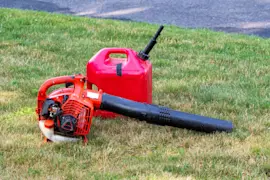
- Store fuel in an approved gas can, away from heat.
| Mix ratio | Oil per 1 gallon gas | Oil per 1 quart gas |
|---|---|---|
| 50:1 | 2.6 oz | 0.64 oz |
| 40:1 | 3.2 oz | 0.80 oz |
| 32:1 | 4.0 oz | 1.0 oz |
The correct gas and oil mixture protects the piston and crankshaft bearings in your 2-cycle engine. Too little oil can cause rapid wear and scoring; too much oil can foul the spark plug, smoke heavily, and reduce power.
Check these common maintenance items:
- Clean or replace the air filter; a clogged filter can mimic fuel problems.
- Inspect the primer bulb for cracks or stiffness; replace if it will not prime.
- Check fuel lines for brittleness or leaks.
- Drain old fuel and refill with a fresh, correctly mixed batch.
Helpful model-matched parts:
- Leaf blower air filter 545146501
- Ayp leaf blower primer bulb 530035497
- Ayp lawn & garden equipment fuel line, large 530069216
Last updated: February 2026
What is the life expectancy of a leaf blower?
A typical leaf blower lasts about 10 years with normal homeowner use and basic maintenance; many gas units reach roughly 1,000 run-hours before major engine wear becomes likely. For your Craftsman 358794701 gas blower and vacuum, fuel care and air filtration do the most to extend life (see the 358794701 owner's manual).
Most owners fall into these ranges depending on use and upkeep:
- Gas blower and vacuum: ~8 to 12 years (often ~500 to 1,000 hours)
- Corded electric blower: ~10 to 15 years
- Battery blower: ~5 to 10 years (battery pack life is usually the limiter)
| Blower type | What usually ends life first | What helps most |
|---|---|---|
| Gas (like 358794701) | Fuel system issues, compression loss | Fresh fuel mix, clean air filter |
| Corded electric | Switch or motor wear | Keep vents clear, avoid overheating |
| Battery | Battery capacity fade | Store batteries correctly, avoid deep discharge |
These are the most common “life reducers” we see on 2-cycle blowers:
- Old fuel or incorrect fuel mix (varnish in carburetor, hard starting)
- Dirty or missing air filter (dust ingestion accelerates engine wear)
- Running with a clogged muffler or spark arrestor (loss of power, overheating)
- Fuel line cracking or air leaks (lean running, surging)
- Long storage without draining or stabilizing fuel
A simple routine prevents most early failures:
- Inspect and replace the air filter regularly; use the correct leaf blower air filter 545146501
- Replace brittle fuel lines to prevent air leaks; use ayp lawn & garden equipment fuel line, large 530069216
- Replace a cracked primer bulb if it will not pull fuel; use ayp leaf blower primer bulb 530035497
- Keep the cooling fins and air intake areas clear of debris
- Use fresh, properly mixed 2-cycle fuel; do not store mixed fuel for long periods
Leaf blowers usually do not “wear out all at once”; they lose performance gradually. Clean air filtration and a tight, leak-free fuel system help your Craftsman 358794701 start easier, run cooler, and avoid expensive carburetor and piston damage.
Last updated: February 2026
Who makes Craftsman leaf blowers?
Craftsman is a brand owned by Stanley Black & Decker; Craftsman leaf blowers (including model 358794701) are typically manufactured for Craftsman by established outdoor power equipment makers, and the exact factory can vary by model and production run. For the most accurate brand and service details, use the Craftsman 358794701 owner’s manual.
Craftsman is the name on the product, but manufacturing is often done by a supplier (an OEM) that builds equipment to Craftsman specifications.
Common takeaways:
- The brand owner is Stanley Black & Decker.
- The manufacturer/OEM can change over time.
- Parts fit is determined by the model number and part ID, not by the OEM name.
- Service procedures and specs are best confirmed in the manual.
We recommend checking the product label and manual information for model 358794701.
Look for:
- A data label on the blower housing or near the starter area
- A manufacturer name or code (sometimes listed as “MFG” or “manufactured for”)
- The engine family information (useful when ordering ignition or fuel system parts)
- Confirm the model number is 358794701
- Match parts by part ID and description
- Use the illustrated parts breakdown in the manual when available
Different production runs can use different carburetors, fuel lines, or air filter setups. Matching by model and part ID prevents returns and repeat repairs.
| What you’re replacing | What to match | Example part for this model |
|---|---|---|
| Fuel delivery hose | Inside diameter and routing | Fuel line, large 530069216 |
| Air intake filtration | Filter shape and cover style | Leaf blower air filter 545146501 |
| Starting fuel prime | Bulb size and mounting | Leaf blower primer bulb 530035497 |
Last updated: February 2026
Why does my Craftsman leaf blower keep dying?
On Craftsman gas blower & vacuum model 358794701, repeated stalling is usually caused by a fuel delivery or air-flow problem, most often old fuel residue restricting the carburetor or fuel lines. Start with fresh fuel mix and quick checks in the 358794701 owner's manual.
- Drain old fuel; refill with fresh, properly mixed 2-cycle fuel (use the ratio listed in the manual).
- Press the primer bulb several times; it should fill with fuel and feel springy (not cracked or collapsed).
- Inspect the fuel line for soft spots, cracks, or loose connections; replace if it looks swollen or brittle.
- Clean or replace a dirty air filter; a restricted filter can make the engine run rich and stall.
- Make sure the choke is moving fully to the RUN position after starting.
If the basics above do not help, these model-matched parts are common fixes:
| Symptom | Most likely area | Model-matched part to consider |
|---|---|---|
| Starts, runs a few seconds, then quits | Fuel not reaching carburetor | Fuel line, large 530069216 |
| Needs constant priming to keep running | Primer not pulling fuel | Primer bulb 530035497 |
| Runs rough, dies when you throttle | Air restriction | Leaf blower air filter 545146501 |
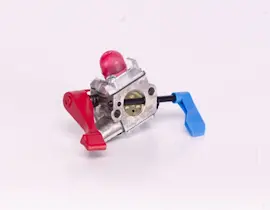
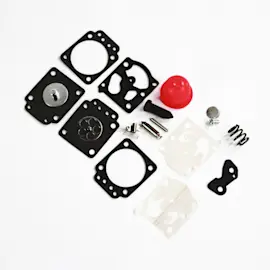
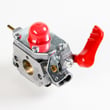
| Won’t stay running even with fresh fuel | Carburetor metering issue | Ayp leaf blower carburetor 545081857 |
A 2-cycle engine needs the right fuel mix, steady fuel flow, and clean airflow. When fuel turns stale or a line leaks air, the carburetor cannot meter correctly, so the engine leans out and stalls, especially when you squeeze the throttle.
- If the unit sat more than 30 days, assume the fuel system needs cleaning and fresh fuel.
- Check the air filter cover is installed and sealed; air leaks around the filter can affect mixture.
- After replacing fuel line or primer bulb, prime until you see fuel moving consistently.
Last updated: February 2026