Owner’s manual



Can I use 10w30 instead of 5W30 in a snowblower?
Yes, you can use 10W-30 in your MTD snow thrower model 31AM2N1C799, but 5W-30 is the better choice for most winter use because it flows faster during cold starts. Use the oil grade and fill procedure listed in the 31AM2N1C799 owner's manual.
Which oil is better for winter starting?
Oil viscosity affects how easily the engine cranks and how quickly it lubricates on startup.
- 5W-30: Best for colder conditions; easier pull-starting and faster lubrication.
- 10W-30: Acceptable in milder winter temperatures; can crank slower in deep cold.
- Synthetic 5W-30: Best overall for very cold storage and frequent cold starts.
- If your snowblower is hard to start when cold, switching back to 5W-30 typically improves starting.
When 10W-30 is a good fit (and when it is not)
Use this quick guide to match oil to conditions.
| Winter conditions | Recommended oil | What you may notice |
|---|---|---|
| Regular sub-freezing starts | 5W-30 (synthetic preferred) | Easier starting, smoother warm-up |
| Mostly above about 0°F | 10W-30 or 5W-30 | Normal starting, normal protection |
| Stored in an unheated shed in extreme cold | 5W-30 synthetic | Less recoil resistance |
Oil change and storage tips that protect the engine
Your manual calls out changing oil as part of proper storage and maintenance. We recommend:
- Stop the engine and let moving parts fully stop before servicing.
- Disconnect and ground the spark plug wire before working around the engine.
- Change oil at the end of the season or before storage longer than 30 days.
- Run the engine dry of fuel for storage, then change the oil.
- Keep the correct oil level; overfilling can cause smoking and plug fouling.
For step-by-step visuals, use how to change snowblower oil video.
Why it matters
Snowblower engines spend a lot of time starting cold. Using 5W-30 (especially synthetic) reduces cold-start wear and makes recoil starting easier, while 10W-30 can feel “thicker” in low temperatures and slow cranking.
You can order maintenance and repair parts for model 31AM2N1C799 from the parts list for this model, or search by model number on Sears PartsDirect.
Last updated: February 2026
What is better, a 2 stage or 3 stage snow blower?
A 2-stage snowblower is the better choice for most homeowners because it handles typical heavy snow and plow-packed driveway snow with strong throwing distance and good control. A 3-stage is better when you regularly face deep, wet, or icy snow and want faster intake and higher clearing speed.
How 2-stage and 3-stage designs differ
Both types are “two-step” machines in the sense that they pull snow in and then throw it out the chute, but the way they feed snow into the impeller is different.
- 2-stage: auger pulls snow in, impeller throws it out
- 3-stage: auger pulls snow in, an accelerator helps feed it faster, impeller throws it out
- Result: 3-stage units typically clear faster in dense snow, but they cost more and weigh more
For operating and control details on your MTD 31AM2N1C799 (auger control, chute angle, and shave plate basics), use the owner's manual.
Quick comparison
| Feature | 2-stage snowblower | 3-stage snowblower |
|---|---|---|
| Best for | Most driveways; frequent storms | Deep, wet, end-of-driveway piles; icy snow |
| Clearing speed | Strong | Faster in heavy snow |
| Weight and complexity | Lower | Higher |
| Cost | Lower | Higher |
| Maintenance | Fewer moving parts | More moving parts |
How to choose for your driveway
Use these practical “tie-breakers”:
- If you often clear 8 to 12 inches at a time, a 2-stage is the best value.
- If you routinely hit 12+ inches, heavy wet snow, or tall plow berms, a 3-stage saves time.
- If storage space and maneuvering matter, 2-stage is easier to handle.
- If you want maximum throughput and you do long runs, 3-stage is the productivity pick.
- If your current machine struggles, first confirm it is tuned and maintained (belt condition, chute control, shave plate height).
Why it matters
Choosing the right stage affects more than speed. It impacts how well the machine “bites” into packed snow, how consistently it feeds the impeller, and how much effort you spend pushing and repositioning.
Parts and upkeep that influence performance
Even a strong snowblower underperforms when wear parts are tired.
- Worn auger belt can reduce auger speed and intake
- Incorrect shave plate height can leave snow behind or cause scraping issues
- Loose hardware can let controls drift out of adjustment
You can order common replacement parts for your MTD 31AM2N1C799 from the parts list for this model, or search by model number on Sears PartsDirect.
Last updated: February 2026
Is it worth fixing a snowblower?
Yes; it’s worth fixing your MTD snow thrower model 31AM2N1C799 when the problem is a normal wear item (belt, scraper blade, carburetor, starter) and the rest of the machine is in good shape. Those repairs typically restore performance for far less than replacing the unit.
Quick decision checklist (repair vs. replace)
We use these checkpoints to decide quickly:
- Repair when the issue is maintenance-related (hard starting, slipping auger belt, worn scraper blade).
- Repair when the fix is a bolt-on part and you can follow the steps in the 31AM2N1C799 owner's manual.
- Repair when the machine has been reliable and this is the first major issue in a while.
- Replace when the engine has clear internal failure symptoms (knocking, heavy smoke, metal in oil).
- Replace when multiple major systems fail at the same time (engine plus drive plus auger).
Common repairs that are usually worth it on 31AM2N1C799
These are frequent, cost-effective fixes for this model:
- Auger hesitates or stops under load: replace the auger drive belt; the manual lists belt issues as a common cause.
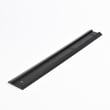
- Poor scraping or rapid wear at the front edge: replace the MTD snowblower scraper blade 731-1033.
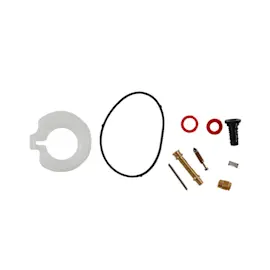
- Hard starting after storage: address stale fuel and carburetor issues; replacing the carburetor assembly 951-12705 is a common solution when cleaning does not restore operation.
- Pull-start problems: replace the recoil starter assembly 951-14151.
Cost-to-value guide
| Situation | Best choice | Why |
|---|---|---|
| Auger belt loose or damaged | Repair | Normal wear item; restores throwing power |
| Won’t start after storage | Repair | Often fuel, choke/primer, or carburetor related |
| Excessive vibration from loose hardware | Repair | Inspection and tightening are straightforward |
| Engine internal failure symptoms | Replace | Major teardown cost outweighs value |
Why it matters
Most “not throwing” and “won’t start” complaints come down to belt condition, fuel quality, and basic adjustments. Fixing those items prevents repeat breakdowns and protects bigger components like the auger assembly.
For parts beyond the items above, order from the model 31AM2N1C799 parts list or search by model on Sears PartsDirect.
Last updated: February 2026