



What is the life span of a KitchenAid dishwasher?
A KitchenAid dishwasher like model KUDC25CHSS1 typically lasts 10 to 12 years with normal use and basic maintenance. Keeping the wash system clean, fixing leaks quickly, and replacing worn wash or drain parts on time helps you reach (and often exceed) that range.
Typical lifespan and what affects it
Most dishwasher lifespan differences come down to water quality, loading habits, and whether key wear items are kept in good shape.
- Hard water and heavy detergent use can speed up mineral buildup
- Overloading can reduce cleaning and strain the pump and spray arms
- Clogged filters or spray arms can make cycles run poorly and longer
- Small leaks can damage components if ignored
- Regular cleaning helps prevent odors and poor wash performance
Quick maintenance checklist (best ROI)
Use this simple routine to extend the life of your KUDC25CHSS1:
- Clean the tub and wash system monthly (especially with hard water)
- Check spray arm holes for debris; clear with a toothpick if needed
- Keep the drain path clear; remove food scraps from the sump area
- Use the right detergent amount; too much can cause buildup
- Inspect for drips under the door and at hose connections
Common “wear items” that shorten lifespan when neglected
If cleaning performance drops, addressing these parts early can prevent bigger failures.
| Symptom | Common cause | Example part to check |
|---|---|---|
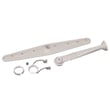
| Dishes not getting clean | Clogged or cracked spray arm | Dishwasher spray arm 675808 |
| Water not filling or fills slowly | Inlet valve issue or supply restriction | Inlet valve W10844024 |
| Not draining well | Kinked/clogged drain hose | Dishwasher drain hose WP3374077 |
Why it matters
A dishwasher that is struggling to wash, fill, or drain often runs longer and hotter than it should. That extra strain accelerates wear on the pump motor, seals, and heating components, which can cut years off the service life.
Last updated: February 2026
How to fix rubber seal on KitchenAid dishwasher?
On KitchenAid dishwasher model KUDC25CHSS1, a “rubber seal” problem is usually a door gasket that has pulled out of the channel or a leak caused by a worn seal around a wash component. Reseating the gasket evenly often fixes the issue; if it’s torn, replace the seal.
Quick checks before you start
- Unplug the dishwasher or switch off the breaker.
- Open the door and inspect the gasket for rips, flattening, or hard spots.
- Check for food debris, detergent buildup, or a twisted section in the gasket channel.
- Confirm the leak location: door edge (gasket) vs. under the tub (hose, clamp, valve).
How to reseat a door gasket (most common “rubber seal” fix)
- Clean the gasket channel with warm water and a mild detergent; wipe dry.
- Starting at the top center, press the gasket into the channel using your fingers.
- Work down both sides evenly; avoid stretching the gasket.
- Close and latch the door for several hours to help the gasket conform.
If the gasket won’t stay seated
Use a small amount of soapy water as a lubricant while pressing it in. If it still pops out, the gasket is typically worn and should be replaced.
If the “rubber seal” is at the spray arm instead
Poor cleaning or leaking inside the tub can come from a worn lower spray arm seal. On this model, check the dishwasher lower spray arm seal WP3376846 for cracking or deformation, and inspect the spray arm mounting for looseness.
| Symptom | Most likely seal area | What to do first |
|---|---|---|
| Water drips from door corners | Door gasket | Reseat gasket, then replace if torn |
| Dishes not clean, spray arm wobbles | Spray arm seal | Inspect/replace spray arm seal |
| Water under dishwasher | Hose/clamp/valve seals | Inspect drain hose, clamps, inlet valve area |
Why it matters
A properly seated gasket and intact seals keep wash pressure where it belongs (better cleaning) and prevent leaks that can damage flooring and cabinets.
Last updated: February 2026
What is the most common problem with a KitchenAid dishwasher?
The most common problem we see on KitchenAid dishwashers like model KUDC25CHSS1 is a drain-related issue: the dishwasher will not drain fully, leaves water in the tub, or stops mid-cycle. Most fixes start with clearing a blockage and confirming the drain path is set up correctly.
What to check first (fast, no-parts steps)
- Cancel the cycle and let the unit try to drain; listen for the drain motor sound.
- Remove standing water (if needed) so you can inspect the bottom of the tub.
- Check for food debris around the sump area and any screens you can access.
- Inspect the drain hose routing for kinks and make sure it has a high loop under the counter.
- If connected to a garbage disposal, confirm the disposal inlet knockout plug was removed.
Common causes and the most likely fix
| Symptom | Most common cause | What usually fixes it |
|---|---|---|
| Water left in bottom after cycle | Clog in hose or sump area | Clear blockage; verify high loop |
| Hums but drains slowly | Partial restriction in drain path | Clean hose/air gap; check disposal port |
| Stops mid-cycle with water | Drain problem triggers a stop | Clear restriction; then restart cycle |
| Drains but dishes are dirty | Poor wash circulation (not just draining) | Check spray arm for clogs/damage |
When a part is the next step
If the drain path is clear and the dishwasher still will not drain, the issue often shifts to a failed component (such as a pump/motor or a restricted internal passage). For cleaning performance complaints that look like a drain issue, we also check wash circulation parts.
- For poor cleaning tied to weak spray, inspect the dishwasher spray arm 675808 for cracks, warping, or clogged jets.
- If you see leaking or looseness at the lower spray arm connection, the dishwasher lower spray arm seal WP3376846 is a common wear item.
- If the dishwasher is not filling correctly (which can mimic wash and drain complaints), the inlet valve W10844024 is a key suspect after you confirm water supply is on.
Why it matters
Drain problems can leave dirty water in the tub, cause odors, and interrupt the wash cycle. Fixing the drain path first prevents unnecessary part replacement and restores normal wash performance faster.
For code-based symptoms, use our KitchenAid he dishwasher error codes guide to match the flashing lights or displayed code to the most likely cause.
Last updated: February 2026
Where are KitchenAid dishwasher parts made?
KitchenAid dishwasher parts for model KUDC25CHSS1 are sourced from multiple manufacturing locations, and the country of origin can vary by the exact component and production run. The most reliable way to confirm where a specific part was made is to check the packaging label or the part marking after you identify the exact replacement you need.
How to confirm the country of origin for your exact part
Country of origin is typically listed on the part carton, bag, or label, and sometimes molded or stamped on the part itself.
- Match the replacement to your exact model KUDC25CHSS1 first (fit matters more than origin)
- Check the part packaging for “Made in …” or “Country of origin”
- Look for molded-in or stamped markings on plastic and metal parts
- Compare the part ID on your order to the marking on the part
- Keep the packaging until the repair is complete in case you need to reference the label
Common examples on this model
Here are a few parts customers often replace on KitchenAid dishwashers; origin can differ by supplier even when fit is correct.
| Part (example) | What it affects | When you would check origin |
|---|---|---|
| Dishwasher spray arm 675808 | Cleaning performance, spray coverage | If dishes are coming out dirty or the arm is cracked |
| Inlet valve W10844024 | Filling, water level | If the dishwasher will not fill or fills slowly |
| Dishwasher drain hose WP3374077 | Draining | If you have standing water after a cycle |
Why it matters (and when it does not)
Country of origin is useful for personal preference and recordkeeping, but for repairs the priority is correct fit and function for KitchenAid KUDC25CHSS1. Using the correct part ID and verifying symptoms (fill, drain, wash, dry) prevents repeat failures and leaks.
Related troubleshooting that helps you pick the right part
If you are diagnosing a problem before ordering, these guides help narrow it down:
- KitchenAid he dishwasher error codes
- KitchenAid microclean he dishwasher error codes
- Dishwasher not cleaning dishes video
- Dishwasher not draining video
Last updated: February 2026







