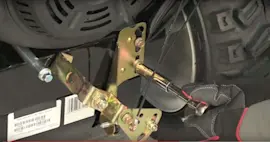
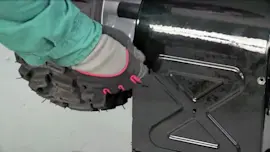
Owner’s manual
 View engine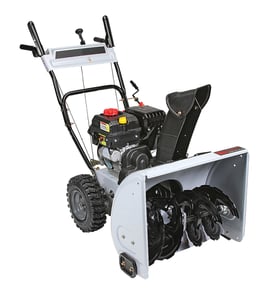


How to find snowblower model number?
On the Craftsman 247889571 24-inch snow thrower, the model number is printed on the product identification label (often called the model/serial tag). We typically see this label on the rear of the unit near the wheels or on the back of the frame; confirm the exact location using the 247889571 operator’s manual.
Where to look on a Craftsman 247889571
Check these common label locations first:
- Rear of the snowblower between the wheels (most common)
- Back of the frame near the axle area
- Lower handle support area near the base of the handles
- Side of the auger housing (near the front bucket)
- Near the engine mounting area (less common)
What to write down (and why)
Record both numbers from the label so you can match parts correctly.
| Label item | What it’s used for | Example format |
|---|---|---|
| Model number | Identifies the exact snowblower version | 247.889571 |
| Serial number | Identifies your specific unit build | Letters/numbers |
Why it matters
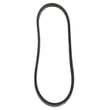
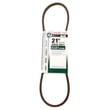
Even within the same Craftsman snowblower family, small design changes can affect belts, decals, and hardware. Using the exact model number helps us show parts that fit your machine, such as the snowblower auger drive belt 256963 when you are servicing the auger drive system.
Quick tips to make the label easier to read
- Brush off packed snow and wipe the label dry
- Use a flashlight at a low angle to highlight faded printing
- Take a close-up photo and zoom in
- If the label is scratched, look for an embossed or stamped plate nearby
Last updated: January 2026
Can I use 5W30 instead of SAE 30 in my snowblower?
Yes. For Craftsman model 247889571, we recommend using 5W-30 because the operator’s manual specifies 5W-30 as the engine oil type; it’s designed to flow better in cold starts while still protecting the engine at operating temperature (use the correct fill amount). See the 247889571 operator’s manual.
What the manual specifies for model 247889571
From the model-specific specs in the manual:
- Engine oil type: 5W-30
- Engine oil capacity: 20 oz (600 ml)
- Oil classification: 4-stroke oil meeting SF/SG (or better)
When SAE 30 is not a good swap
SAE 30 is a single-viscosity oil that can be thicker in cold weather, which can make starting harder and reduce lubrication flow right after startup.
Common issues we see when the oil is too thick for conditions:
- Hard starting or slow cranking
- Rough running until warm
- Increased wear during cold starts
- Spark plug fouling if the engine struggles to run cleanly
Quick oil choice guide
| Condition | Best choice for this model | Why |
|---|---|---|
| Typical snowblower temperatures | 5W-30 | Better cold flow and manual-specified |
| You only have SAE 30 on hand | Not recommended for cold use | Can be too thick for winter starts |
Why it matters
Using the oil viscosity specified for Craftsman 247889571 helps the engine lubricate quickly at startup, reduces wear, and supports reliable winter operation.
Last updated: January 2026
How long should a gas snowblower last?
A gas snowblower like the Craftsman 247889571 typically lasts 10 to 15 years with normal residential use and consistent maintenance. For this specific model, the operator guidance also references an average useful life of 7 years or about 60 operating hours, which is a practical inspection milestone for safety and wear. See the Craftsman 247889571 operator's manual.
What affects lifespan the most
A snowblower’s life is usually determined by engine care, drive system wear, and how often it’s run in heavy, wet snow.
- Oil changes on schedule (first 5 hours, then every season or 50 hours)
- Fresh fuel practices (avoid stale fuel, especially during storage)
- Belt condition and tension (auger and drive belts)
- Shear pins doing their job (protecting the gearbox when you hit ice or debris)
- Storage habits (dry, clean, rust prevention)
Typical lifespan benchmarks (what to expect)
These ranges help you decide when maintenance is enough versus when major repairs may not be worth it.
| Usage pattern | Typical lifespan | What usually wears first |
|---|---|---|
| Light residential (few storms/season) | 12 to 15 years | Belts, skid shoes, scraper bar |
| Average residential | 10 to 12 years | Friction wheel rubber, belts, cables |
| Heavy use (long driveway, wet snow) | 7 to 10 years | Drive system, auger components, engine fuel system |
Maintenance that extends life on model 247889571
We recommend focusing on the items that most often shorten snowblower life.
- Change engine oil at the intervals listed in the manual
- Check and replace the spark plug at the recommended hours/season
- Keep the chute and auger housing clear; never clear clogs by hand
- Inspect belts for glazing, cracking, or slipping; replace when worn
- If the auger stops turning after hitting something, inspect shear pins before forcing operation
Parts that commonly need replacement
If your auger stops throwing snow effectively or you smell rubber, a worn belt is a common cause. A compatible replacement is the snowblower auger drive belt 256963.
Why it matters
A snowblower can still “run” while becoming less safe or less reliable. Using the average-life milestone as a prompt to inspect belts, cables, and auger/drive operation helps prevent mid-storm breakdowns and reduces the chance of damage to major components.
Last updated: January 2026
How to tell if a snowblower auger belt is bad?
On the Craftsman 247889571 24-inch snow thrower, a bad auger belt usually shows visible wear (cracks, fraying, glazing) and causes weak snow discharge because the auger and impeller slip or stop under load. A squeal or hot rubber smell after engagement is also common.
Quick signs the auger belt is failing
- Augers or impeller hesitate, surge, or stop when you squeeze the auger control
- Snow discharge is weak even though the engine runs strong
- Belt looks shiny/glazed, cracked, frayed, or has missing chunks
- Squealing noise or a burning rubber odor after engaging the auger
- Rubber dust or debris under the belt cover
Checks to do on this model before replacing the belt
On model 247889571, an out-of-adjustment auger control cable can mimic a worn belt by letting it slip. Use the engagement and stop-rotation checks described in the 247889571 operator’s manual before you decide the belt is the problem.
- Shut the engine off, remove the key, and let all moving parts stop
- Inspect the belt condition under the front belt cover
- Verify the auger stops completely when you release the auger control
- If the belt slips under load after the cable is adjusted correctly, replace the belt
Belt condition vs. symptoms (fast comparison)
| What you notice | Most likely cause | What to do next |
|---|---|---|
| Belt is shiny/glazed | Slipping from wear or low tension | Check cable adjustment; replace belt if glazed |
| Belt is cracked/frayed | Age/heat damage | Replace the belt |
| Auger won’t turn but belt looks OK | Jam, shear pin issue, or cable adjustment | Clear obstruction; check shear pins and cable |
| Burning rubber smell | Belt slipping on pulley | Stop and inspect; replace belt if worn |
If you need the correct replacement belt
For Craftsman 247889571, the compatible auger belt is the snowblower auger drive belt 256963 (part number 954-04050). Replace it if it’s glazed, cracked, frayed, or continues to slip after the cable is set correctly.
Why it matters
A slipping auger belt reduces throwing distance and can overheat quickly, which accelerates belt failure and can leave the snowblower unable to clear snow when you need it.
Last updated: January 2026