Owner’s manual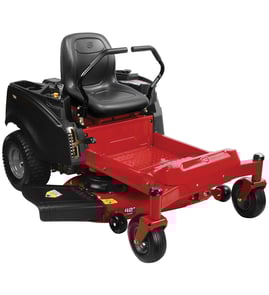




Where can I find my lawn mower engine model number?
On the Craftsman 536270320 mid-engine rider, the mower’s model/serial decal is on the unit, but the engine model number is on the engine itself. We typically see it stamped or printed on a label near the blower housing (engine shroud), near the muffler area, or on the recoil starter housing; see the 536270320 operator’s manual for decal and service-reference guidance.
Where to look on this model
Check these common engine ID locations with the engine cool and the key removed:
- On the engine shroud (blower housing) near the top of the engine
- On sheet metal near the muffler or heat shield area
- On the recoil starter housing (if equipped)
- Near the spark plug area on the engine
- On a valve cover or nearby flat machined surface (stamped)
What the engine number looks like
For this mower, the engine family is commonly identified by a Briggs & Stratton-style model/type/code format. You may see multiple numbers; write them all down.
| What you find | What it’s used for |
|---|---|
| Engine model/type/code | Matching tune-up and internal engine parts |
| Mower model number (536270320) | Matching chassis, deck, steering, and drive parts |
| Serial number | Verifying production run and revisions |
Why it matters
Using the engine model number prevents ordering the wrong ignition, carburetor, air filter, or fuel system parts. Using the mower model number (536270320) ensures the correct deck belt, wheels, and chassis hardware.
Last updated: January 2026
What kind of engine does a Craftsman riding lawn mower have?
For Craftsman model 536270320, the operator’s manual specifies a 13.5 HP gasoline engine (electric start) with a hydrostatic drive mid-engine rider design. The engine family shown in the manual is a Briggs & Stratton single-cylinder engine.
What this means for maintenance and parts
To keep your 536270320 running reliably, match tune-up and service parts to the engine information listed in the 536270320 operator's manual.
- Use the correct spark plug type and gap listed for this model
- Follow the oil type guidance by temperature (SAE 30 above 32°F, SAE 5W-30 below 32°F)
- Keep the air filter and cooling screen clean to prevent power loss
- Use fresh, unleaded regular fuel and store fuel properly in the off-season
- Verify the transmission is in DRIVE (not PUSH) before troubleshooting “won’t move” complaints
Quick spec snapshot (model 536270320)
| Spec | What we use for this model |
|---|---|
| Rated engine power | 13.5 HP |
| Starting | Electric start |
| Drive type | Hydrostatic |
| Fuel tank | 1.1 gallon |
| Spark plug gap | 0.030 in |
If you are trying to identify the exact engine model
On 536270320, the manual references a Briggs & Stratton engine series; the most reliable way to confirm the exact engine model is to check the engine ID label on the engine itself and compare it to the engine section in the 536270320 operator's manual.
Why it matters
Using the correct engine identification helps you choose compatible ignition, fuel, and maintenance parts, and it prevents common issues like hard starting, poor cutting power, and overheating.
Last updated: January 2026
How to find Craftsman model number?
On the Craftsman mid-engine rider model 536270320, the model number and serial number are on a decal attached to the unit. The exact decal placement on this specific model is not identified in the model-specific information we have, so you may need to check a few common ID-decal spots.
Where to check on a Craftsman mid-engine rider
Start with areas that are easy to access and less exposed to debris.
- Under the seat or on the seat deck (lift the seat for access)
- On the frame rails near the seat support area
- Near the battery tray area under the seat
- Around the rear fender or chassis area close to the operator position
- On the underside of the seat pan
What to write down
Record both numbers exactly as shown on the decal.
- Model number (for example, 536.270320 may appear with a dot)
- Serial number
- Any additional code on the decal (sometimes a manufacturing or product ID)
| Item | What it’s used for | Example for this mower |
|---|---|---|
| Model number | Matches the correct parts diagrams and lists | 536270320 (may display as 536.270320) |
| Serial number | Helps confirm production variations | From your decal |
If the decal is dirty or hard to read
- Wipe with a damp cloth and mild soap; avoid harsh solvents
- Use a flashlight at an angle to highlight faded printing
- Take a close-up photo and zoom in to read worn characters
Why it matters
Using the exact model number for your Craftsman 536270320 helps us match the correct mower deck, drive system, and electrical parts so you avoid ordering a similar-looking but incompatible replacement.
For model identification notes and the official model format, see the 536270320 operator's manual.
Last updated: January 2026
How much does it cost to replace a riding mower engine?
Replacing the engine on a Craftsman 536270320 mid-engine rider is usually a high-cost repair; a typical installed total is $800 to $2,500+ when you include the engine, labor, and small parts. Your 536270320 operator’s manual confirms this mower uses a 13.5 HP Briggs & Stratton engine, which helps you match a compatible replacement.
What drives the total cost
- Engine price: varies by horsepower, crankshaft size, and mounting pattern
- Labor time: removal, transferring pulleys/brackets, belt alignment, and test run
- Extra parts: belts, clamps, wiring connectors, and hardware found worn during teardown
- Shop rate: local labor rates can vary a lot
- Condition of the mower: rusted fasteners or damaged pulleys add time and cost
Typical budget ranges
| Cost item | Typical range | What it covers |
|---|---|---|
| Replacement engine | $500 to $1,800+ | Engine only; exact spec match is the biggest variable |
| Labor | $250 to $900 | Often 2 to 6+ hours depending on access and complications |
| Related parts | $50 to $400 | Belts, clamps, wiring repairs, hardware |
Parts commonly replaced during an engine swap
If the mower is already apart, these are common “while you’re in there” items to inspect or replace:
- Deck belt if it’s cracked or glazed: lawn tractor deck belt 37X111MA
- Fuel line and clamps (leaks or loose connections)
- Battery cables and starter circuit connections
- Pulleys and belt guides for wear or misalignment
Why it matters
An engine replacement can approach the value of an older riding mower. Comparing the engine-swap estimate to the mower’s overall condition (deck, transaxle, steering, and electrical system) helps you decide whether repair or replacement makes the most sense.
Last updated: January 2026