 Installation guide
 Owner’s manual
 Error Codes


How to get GE dryer to dry faster?
To help your GE GTDP301EL0WS electric dryer dry faster, we focus first on airflow: a clean lint screen, a straight, short metal vent run, and a properly connected exhaust. Restricted venting is the most common reason drying times get long.
- Clean the lint screen before every load; wash it with warm water and a soft brush if you use dryer sheets (they can leave a film).
- Check the outside vent hood for a stuck flap, lint buildup, or a bird screen that is clogged.
- Replace crushed or foil-style venting with rigid metal or UL-listed semi-rigid metal transition duct.
- Keep the transition duct as straight as possible and avoid kinks behind the dryer.
- Do not push the dryer back so far that it sits on or crushes the flexible exhaust.
The installation guidance for this model recommends rigid metal transition duct for best drying performance and notes that elbows help prevent duct kinking and collapsing. It also calls out that flexible metal duct should not be installed inside walls, ceilings, floors, or other enclosed spaces, and that flexible metal duct length should be kept to 8 feet (2.4 m) or less. See the installation guide.
| Item to check | Best practice | What it improves |
|---|---|---|
| Transition duct type | Rigid metal (best) or UL-listed semi-rigid | Airflow, cycle time |
| Duct routing | Short, straight, minimal elbows | Faster drying |
| Behind-dryer clearance | No crushing or pinching | Prevents restrictions |
If airflow is good but drying is still slow, we typically look at heat and drum movement.
- If the drum is not turning smoothly, inspect the belt and idler system; a slipping belt can reduce tumbling efficiency.
- If heat seems weak or inconsistent, a thermostat or heating circuit issue can extend dry times.
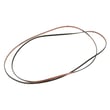
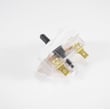
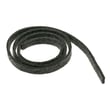
Helpful parts commonly involved in “slow dry” symptoms include the dryer drum belt WE03X29897 and the dryer operating thermostat WE4M216.
Long dry times usually mean poor airflow or weak heat. Fixing airflow helps clothes dry faster, reduces overheating risk, and can lower energy use.
Last updated: January 2026
What brand of dryer has the least problems?
Speed Queen dryers typically have the fewest problems because they are built with simpler, commercial-style designs and fewer failure-prone features. For most homes, Whirlpool and LG also tend to be strong choices for reliability, while GE (like your GE GTDP301EL0WS electric dryer) is a solid, widely serviceable option.
Reliability is mostly driven by heat and airflow management, electrical load, and how complex the controls are.
- Simpler controls usually mean fewer electronic failures
- Strong airflow design helps prevent overheating and long dry times
- Easy-to-source parts can reduce downtime when something does wear out
- Proper installation (especially venting) prevents many “dryer problems” that look like part failures
| Brand | Typical reliability profile | Best fit for | Trade-offs |
|---|---|---|---|
| Speed Queen | Very high durability, fewer issues | Long-term ownership, heavy use | Fewer features, higher upfront cost |
| Whirlpool | Strong overall reliability | Most households, easy repairs | Feature set varies by model |
| LG | Good reliability with modern features | Tech features, sensors, efficiency | More electronics, higher part complexity |
| GE | Good reliability and serviceability | Balanced value, common parts | Performance depends heavily on venting and maintenance |
Many “brand problems” are actually installation or airflow issues. We recommend these basics from the installation guide:
- Use a 4-inch exhaust duct and keep the run within the specified length limits
- Avoid flexible plastic ducting; use UL-listed metal ducting when flexibility is needed
- Do not use an extension cord or adapter plug
- Install where temperatures stay above 50°F for proper control operation
- Confirm the exhaust hood damper opens and closes freely
A dryer that is installed and vented correctly runs cooler, dries faster, and puts less stress on key components like thermostats, the heating element, and the drive system. That directly reduces service calls, regardless of brand.
Last updated: January 2026
What is the lifespan of a GE dryer?
A GE electric dryer like model GTDP301EL0WS typically lasts about 10 years. With consistent lint and vent maintenance, many dryers reach 10 to 15 years because airflow stays strong, heat stays controlled, and wear on the drive system is reduced.
- Vent airflow: long or restricted venting increases drying time and strain on components.
- Lint control: lint buildup raises heat and can shorten the life of thermostats and the heating system.
- Load size: frequent overloading accelerates wear on the drum belt, idler pulley, and drum glides.
- Electrical supply: stable 120/240V (or 120/208V) power on a dedicated 30-amp circuit helps prevent control and motor issues.
- Operating environment: installing where temperatures stay above about 50°F supports normal control operation.
Use these habits as your baseline routine; they are the biggest “life extenders” for an electric dryer:
- Clean the lint screen every load.
- Check airflow at the outside hood; weak airflow usually means a vent restriction.
- Use 4-inch metal ducting and keep the vent run as short and straight as possible.
- Avoid extension cords and ensure proper grounding.
- If you hear squealing or thumping, address it early (glides, belt, idler) before it damages the drum.
| Symptom | Likely wear area | Example part for GTDP301EL0WS |
|---|---|---|
| Drum not turning, motor runs | Belt or idler system | Dryer drum belt WE03X29897 |
| Squealing, scraping, or rough drum rotation | Drum glides or felt seal | Dryer Drum Glide Bearing (green), felt |
| Dryer runs but dries slowly | Venting or airflow path | Exhaust ducting, hood, lint buildup |
A dryer rarely “just wears out” all at once; restricted airflow and ignored noises usually cause overheating and extra mechanical load. Keeping venting within recommended limits and staying ahead of wear parts is what turns a 10-year dryer into a 15-year dryer.
For model-specific safety and installation details (electrical requirements, vent diameter, and duct length guidance), follow the GTDP301EL0WS installation guide.
Last updated: January 2026





