Owner’s manual
 Error Codes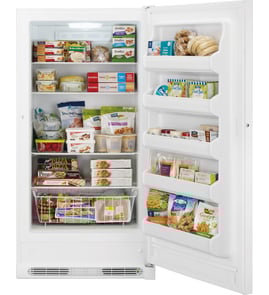


How many cubic feet is my Kenmore refrigerator model 25321041103?
Your Kenmore 25321041103 is an upright freezer; its capacity is about 26 cubic feet of internal storage. For the exact rated capacity and loading guidance for your specific unit, we recommend confirming it in the 25321041103 owner's manual.
How to confirm capacity on the appliance
You can usually verify cubic feet without tools:
- Check the model and serial tag inside the cabinet (often on a side wall).
- Look for a “capacity” line in the specifications section of the 25321041103 owner's manual.
- If your freezer has a data plate with electrical ratings, capacity is sometimes listed there.
- Compare your shelving and basket layout to the diagrams in the manual.
Why cubic feet matters (food loading and performance)
Capacity affects how much fresh food you can freeze at one time and how quickly temperatures recover after loading.
The manual’s loading guidance is based on cubic feet:
- Allow about 4 hours for the freezer to cool down before loading unfrozen food.
- Freeze only about 3 lb of fresh food per cubic foot at one time.
- Distribute packages evenly for better airflow.
- Avoid turning the control colder just to speed freezing; let temperatures stabilize.
Quick reference table
| Item | What to use | Typical value for this model |
|---|---|---|
| Internal capacity | Storage planning | ~26 cu ft |
| Cool-down time before loading unfrozen food | Startup | 4 hours |
| Fresh food freezing limit | Batch loading | 3 lb per cu ft |
Related parts that affect usable space
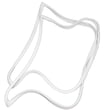
If the door does not seal well, frost buildup can reduce usable capacity and cooling efficiency. If you see gaps, tears, or heavy frost near the door, the freezer door gasket 5304507199 is the seal that keeps warm air out.
Last updated: February 2026
What is the most common problem on a freezer?
The most common freezer problem is a temperature issue: the freezer runs but does not stay at a safe freezing temperature. On Kenmore model 25321041103, this is often tied to warm air leaks at the door, restricted airflow, or a defrost-system problem that lets frost build up and choke cooling.
Most common causes (and what we check first)
- Door not sealing: a misaligned door or worn gasket lets warm, moist air in, which drives frost and warming.
- Freezer not level: if it is not level, the door may not close or seal properly (a common root cause of frost and temperature swings).
- Heavy frost buildup: once frost reaches about 1/4 to 1/2 inch, it is time to defrost and clean.
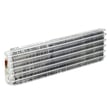
- Defrost system trouble: a failed timer, heater, or thermostat can cause ice buildup on the evaporator.
- Airflow blocked: overpacked shelves or blocked vents reduce circulation and create warm spots.
Quick checks you can do in 10 minutes
- Confirm the door closes easily and stays closed; re-level if needed (the manual recommends setting the front leveling feet so the door closes when left halfway open). See the owner's manual.
- Look for frost thickness; if it is 1/4 to 1/2 inch, plan a manual defrost.
- Make sure packages are not blocking interior vents.
- Listen for the evaporator fan; if airflow seems weak, inspect the fan area for ice.
Common symptoms and likely culprits
| Symptom | Most likely cause | What to do next |
|---|---|---|
| Frost everywhere, door hard to open | Air leak at door | Inspect/replace freezer door gasket 5304507199 |
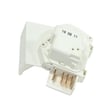
| Warmer temps after a few days, heavy ice on back wall | Defrost system not clearing ice | Check upright freezer defrost timer 5304518034 and freezer defrost heater 216730700 |
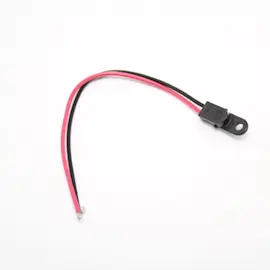
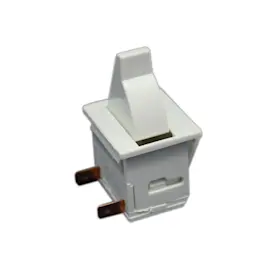
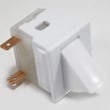
| Light stays on or unit seems to run too long | Door switch issue | Test/replace freezer door switch 216822900 |
Why it matters
Temperature problems usually get worse fast: warm air leaks and frost buildup force the compressor to run longer, increase energy use, and can put food at risk. Keeping the freezer level and the door sealing tightly prevents many “not freezing” complaints.
Last updated: February 2026
Where is the model number on a Kenmore upright freezer?
On a Kenmore upright freezer like model 25321041103, the model number is on the serial plate located on the upper left wall inside the freezer compartment. We recommend recording both the model and serial number for parts lookup and service reference; see the owner's manual.
Quick places to check on an upright freezer
Most Kenmore upright freezers place the ID label inside the cabinet. Check these common spots:
- Upper left interior wall (most common for upright models)
- Side wall inside the freezer compartment
- Ceiling area inside the freezer (some designs)
- Behind the kick plate or lower front grille (some designs)
- Rear exterior panel (less common)
What you are looking for on the label
The serial plate typically includes both identifiers you need.
| Label item | What it’s used for | Example (format) |
|---|---|---|
| Model number | Ensures you get the correct Kenmore parts list | 25321041103 |
| Serial number | Helps match production run details | Letters and numbers |
Why it matters
Using the exact model number prevents ordering the wrong freezer door gasket, thermostat, or defrost parts. Even small model variations can change which components fit and how they mount.
Tip for faster parts matching
Once you find the label, write down the model number exactly as shown (including all digits). If you are troubleshooting cooling or defrost issues, the owner's manual also includes a troubleshooting guide and operating details that can help narrow down which part to test first.
Last updated: February 2026
How long do Kenmore upright freezers last?
Most Kenmore upright freezers, including model 25321041103, typically last 10 to 15 years with normal household use and basic maintenance (good airflow, clean seals, and stable temperatures). Your actual lifespan depends most on compressor run time, door-seal condition, and defrost performance.
Typical lifespan and what to expect
A freezer usually ages in stages; here is what we commonly see:
- 0 to 5 years: Mostly routine upkeep (cleaning, leveling, temperature checks)
- 5 to 10 years: Higher chance of wear items (door gasket, thermostat, door switch)
- 10 to 15 years: More frequent cooling or defrost issues; sealed-system repairs become more common
- 15+ years: Replacement often makes more sense than major sealed-system work
What affects lifespan the most
These factors have the biggest impact on how long an upright freezer runs reliably:
- Door seal quality: A leaking gasket forces longer run times and frost buildup
- Defrost system health: Failed defrost parts can ice up the evaporator and reduce cooling
- Condenser airflow and cleanliness: Poor airflow increases compressor stress
- Room conditions: Hot garages and tight enclosures shorten life
- Power events: Repeated outages or surges can stress electrical components
Quick checks that help your freezer last longer
Use these practical steps to reduce wear and prevent food loss:
- Keep the freezer near 0°F and avoid frequent temperature changes
- Make sure the door closes easily and seals all the way around
- Do not overload shelves so air can circulate
- After a power failure, keep the door closed; many freezers hold temp for about 24 hours when unopened
- Follow the care and safety guidance in the owner's manual
Common “life-extending” parts for this model
If performance is slipping, these parts are often involved:
| Symptom | Common cause | Example part for 25321041103 |
|---|---|---|
| Frost buildup, warm temps | Defrost system problem | Upright freezer defrost timer 5304518034 |
| Door not sealing, heavy frost | Worn gasket | Freezer door gasket 5304507199 |
| Light or fan behavior changes when door opens | Door switch issue | Freezer door switch 216822900 |
Why it matters
A freezer that runs longer than necessary (from air leaks, frost, or poor airflow) puts extra load on the compressor and sealed system. Keeping the defrost system and door seal in good shape is the most direct way to protect cooling performance and extend service life.
Last updated: February 2026
Why is my Kenmore upright freezer not freezing?
If your Kenmore upright freezer 25321041103 is running but not freezing, the most common causes are incorrect temperature control settings, poor door sealing, restricted airflow, or a defrost system problem that lets frost block cooling. Start with the temperature control and door seal checks in the owner's manual.
Quick checks we recommend first
- Confirm the freezer is plugged directly into a wall outlet (no extension cord or adapter plug).
- Set the temperature control colder and wait several hours for temperatures to stabilize.
- Allow a full 4-hour cool-down period after startup before loading unfrozen food.
- Check the door closes and seals fully; a leak can cause warm air intrusion and poor freezing.
- Look for heavy frost buildup (about 1/4 to 1/2 inch); frost can block airflow and reduce cooling.
- Make sure the freezer is level; an unlevel cabinet can prevent the door from sealing correctly.
What “not freezing” usually points to
| Symptom | Most likely area | What to do next |
|---|---|---|
| Runs a lot, weak cooling, heavy frost | Defrost system | Inspect for frost blocking vents; consider the upright freezer defrost timer 5304518034, thermostat 297216600, or freezer defrost heater 216730700. |
| Frost or moisture around door, food soft | Door seal | Inspect for gaps/tears; replace the freezer door gasket 5304507199 if it is warped or not sealing. |
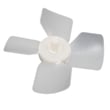
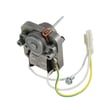
| Warm cabinet, little or no airflow inside | Evaporator fan area | Check for ice blockage; inspect fan blade and motor (for example blade 5308000010 or fan motor 5304436055). |
| Clicking, won’t start, or starts then stops | Compressor start or compressor | A start issue can mimic “not freezing”; use how to replace a freezer compressor start relay as a guide, and consider sealed-system service if needed. |
Why it matters
A freezer that is not freezing is often losing cold air (door seal/leveling) or cannot move cold air (frost blockage or fan issue). Fixing the root cause quickly helps prevent food spoilage and reduces compressor run time.
When parts are commonly involved
- Defrost timer issues can prevent automatic defrosting and lead to ice buildup.
- A failed defrost heater or defrost thermostat can leave the evaporator packed with frost.
- A worn door gasket can continuously leak warm, moist air into the cabinet.
Last updated: February 2026