Error Codes


What is the most common problem with whirlpool washers?
The most common Whirlpool washer problem is a no-spin or weak-spin condition. On the Whirlpool LSQ8220HQ0 (a direct-drive top-load washer), this is often caused by a worn drive coupling, a lid switch issue, or a drain problem that prevents the washer from reaching spin.
Quick checks we recommend first
- Make sure the lid closes firmly; a failed lid switch can stop spin for safety.
- Confirm the washer drains quickly; standing water usually means a drain restriction or pump issue.
- Reduce load size and redistribute items; an off-balance load can stop or slow spin.
- Verify the cycle and water level settings; some settings reduce spin speed.
- Listen for the motor running without basket movement; that points to a drive issue.
Common causes and what they look like
| Symptom | Most likely cause | What you typically notice |
|---|---|---|
| Motor runs, basket does not spin | Motor coupling | Humming or running sound, no agitation/spin movement |
| Won’t spin with lid closed | Lid switch | No spin at all; may stop mid-cycle |
| Won’t spin and won’t drain | Drain pump or clog | Water left in tub; slow or no drain |
| Agitates poorly and clothes stay wet | Agitator wear | Top of agitator slips; poor turnover |
Parts that commonly fix “won’t spin” on LSQ8220HQ0
If symptoms match, these are frequent repair parts for this model:
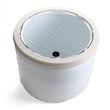
- Coupling 285753A (direct-drive motor-to-transmission connection)
- Switch 3949247V (lid switch that enables spin)
- Washer drain pump WP3363394 (moves water out so spin can start)
- Clutch 285785 (helps the basket ramp up to full spin)
Why it matters
A washer that can’t drain or spin leaves clothes soaking wet and can strain the drive system. Catching the root cause early (coupling, lid switch, or pump) helps prevent bigger repairs like a gear case replacement.
Last updated: January 2026
How big is a 3.8 cubic foot washer?
A “3.8 cubic foot” washer refers to the tub capacity (how much laundry it holds), not the outside dimensions. For a Whirlpool top-load washer like model LSQ8220HQ0, most units with similar capacity are about 27 inches wide, 42 to 44 inches tall, and 25 to 28 inches deep.
What “3.8 cu. ft.” means in real use
Capacity is about load size and basket volume, so it helps you choose cycles and avoid overloading.
- Holds a typical family-size load (mixed clothing) comfortably
- Handles bulky items (like a comforter) better than smaller-capacity tubs
- Overfilling reduces cleaning performance and can cause out-of-balance spinning
- Load size still depends on fabric type (towels and denim take more space)
Typical exterior size ranges (quick reference)
These are common measurements for many 3.8 cu. ft. class top-load washers.
| Measurement | Typical range | What to measure at home |
|---|---|---|
| Width | ~27 in. | Side panel to side panel |
| Height | ~42 to 44 in. | Floor to top of console/lid area |
| Depth | ~25 to 28 in. | Front edge to back panel (exclude hoses) |
How we recommend measuring your washer space
Measure the space first, then measure the washer, and plan for clearance.
- Measure the opening width and compare to washer width
- Measure height to ensure the lid can open under shelves
- Measure depth and add room for hoses and the drain standpipe
- Leave airflow space behind the washer (helps prevent hose kinks)
- Confirm doorways and turns for delivery (hallways, laundry room door)
Why it matters
A 3.8 cu. ft. washer can be a great fit for everyday loads, but the cabinet size and required clearances determine whether it will physically fit your laundry area and connect safely to water and drain lines.
If you are troubleshooting performance issues that feel “size-related” (poor agitation, weak turnover, or slipping during spin), worn drive components can mimic an overloaded washer; a common wear item on this style is the coupling 285753A.
Last updated: January 2026
What are the signs of a bad agitator?
On a Whirlpool LSQ8220HQ0 top-load washer, a bad agitator typically shows up as poor wash action (clothes not moving through the water), unusual rubbing or banging in the tub, or visible damage such as cracks or worn internal drive parts.
Common signs you have an agitator problem
- Clothes come out still dirty because the load barely circulates during wash.
- The agitator moves weakly, only in one direction, or stops intermittently.
- You hear clicking, grinding, or thumping during agitation.
- The agitator wobbles, sits loose, or lifts up more than normal.
- You see cracks, broken fins, or heavy wear on the agitator body.
- The agitator rubs the basket or you see scuff marks inside the tub.
Quick checks we recommend (before buying parts)
- Unplug the washer and remove laundry.
- Try to rotate the agitator by hand; excessive free-spinning or a loose feel points to worn internal drive pieces.
- Inspect the agitator for cracks and check that it is secured; a loose center bolt can mimic a “bad agitator.”
- If the top portion “ratchets” or slips, the internal dogs are a common wear item.
Helpful parts to consider for LSQ8220HQ0:
- Agitator dog 80040 (often fixes slipping or one-way agitation)
- Washer agitator bolt WP358237 (helps if the agitator is loose or lifting)
- Washer agitator WP3951632 (replacement if the agitator is cracked or damaged)
Symptom-to-part guide
| What you notice | Most likely cause | What to check next |
|---|---|---|
| Upper agitator slips or “clicks” | Worn agitator dogs | Inspect/replace dogs |
| Agitator feels loose | Loose or stripped bolt | Tighten/replace bolt |
| Agitator cracked or rubbing tub | Physical damage or misalignment | Replace agitator; check suspension |
| Washer agitates poorly and also struggles to spin | Drive system issue | Check coupling/clutch |
Why it matters
A worn or loose agitator reduces cleaning performance and can lead to extra vibration, basket scuffing, and faster wear on drive components like the motor coupling or clutch.
Last updated: January 2026
How do I reset my Whirlpool auto load sensing washer?
To reset a Whirlpool LSQ8220HQ0 washer, we recommend doing a power reset first: turn the washer off, unplug it (or switch the breaker off) for 1 minute, then restore power and select a new cycle. This clears many temporary control and sensing glitches.
Quick reset steps (most common)
- Turn the cycle selector to Off.
- Unplug the washer (or turn the breaker off).
- Wait 60 seconds.
- Restore power.
- Lift and close the lid once, then choose a cycle and press Start (if your console has a Start control).
If it still will not start, fill, drain, or spin
On a direct-drive top-load washer like the LSQ8220HQ0, “resetting” often means correcting a condition that stops the cycle (lid switch not made, no water flow, or a drain/spin interruption).
- If it won’t fill: confirm both supply valves are fully open and the inlet screens are not clogged; a failed washer inlet valve 285805 can also prevent filling.
- If it won’t drain: check the drain hose for kinks and look for a clog at the pump; a failing washer drain pump WP3363394 can stop draining and spinning.
- If it fills but won’t agitate/spin: a worn motor coupling is common on this style; inspect the coupling 285753A.
What “auto load sensing” means on this washer
Many Whirlpool top-load washers “sense” load size by how the tub moves and how water level changes during the early fill. If the washer is overloaded, off-balance, or the lid switch is intermittent, the sensing portion can stall or restart.
Helpful checks
- Redistribute the load; avoid packing items tightly.
- Use the correct water temperature and cycle for the fabric.
- Make sure the lid closes firmly and the lid strike lines up.
- Reduce detergent; oversudsing can confuse sensing and slow draining.
Symptom-to-fix guide
| What you see | What to do first | Likely part if it persists |
|---|---|---|
| No fill | Check faucets, hoses, screens | Washer inlet valve |
| No drain | Check hose, pump area for blockage | Washer drain pump |
| No agitate/spin | Check for coupling damage | Coupling |
Why it matters
A proper reset and a few quick checks prevent repeated cycle interruptions, protect the drive system, and help you avoid replacing good parts when the real issue is water supply, draining, or an unbalanced load.
Last updated: January 2026