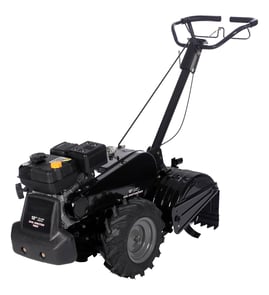



Are rear tine tillers better?
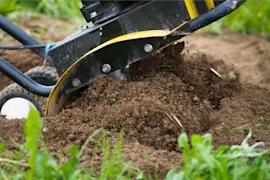
Yes, rear-tine tillers are better for most heavy-duty jobs; on a Snapper RT5 rear-tine tiller, the tine placement and added weight help the machine bite into hard soil, track straighter, and handle rocks or roots more smoothly than many front-tine models.
Rear-tine designs typically outperform front-tine tillers when you need traction and consistent depth.
- Breaking new ground (packed soil, sod, or previously untilled areas)
- Working larger gardens where straight rows and steady depth matter
- Tilling soil with small rocks or light roots
- Mixing in compost or amendments evenly across a wide area
- Reducing operator effort because the machine pulls itself forward more effectively
Front-tine units still make sense for lighter work and tighter spaces.
- Small beds and narrow rows where maneuverability matters most
- Already-loose soil (seasonal re-tilling)
- Lighter weight for easier transport and storage
- Lower cost of ownership for occasional use
| Feature | Rear-tine tiller (like RT5) | Front-tine tiller |
|---|---|---|
| Best for | New ground, tougher soil | Established beds, lighter soil |
| Handling | Tracks straighter, steadier | More “pulling” and steering effort |
| Typical size | Medium to large gardens | Small to medium gardens |
| Operator effort | Usually lower | Usually higher |
Choosing the right tine layout affects how deep you can till, how straight the tiller tracks, and how much fatigue you feel after 30 to 60 minutes of work. For most homeowners expanding a garden or dealing with compacted soil, a rear-tine tiller is the more capable tool.
Even the best rear-tine tiller will start to feel weak if wear items are neglected.
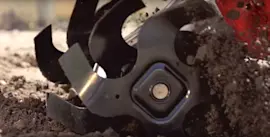
- Keep tines sharp and replace them when rounded or bent
- Check belt condition and tension if drive feels weak
- Inspect wheels and depth stake adjustments for consistent tilling depth
- Clean debris from tine shaft areas after each use
- Address oil or fuel leaks right away
For step-by-step maintenance and repair help, use our DIY resources like rear tine tiller troubleshooting tips wheels and tines and how to replace the tines on a rear tine tiller.
Last updated: February 2026
How deep does a rear tine tiller go?
Most rear-tine tillers, including the Snapper RT5, typically till about 6 to 8 inches deep in average soil; with the depth stake (drag bar) set for maximum bite and multiple passes, many rear-tine units can reach up to around 10 to 12 inches in loosened soil.
Depth depends on soil condition, tine style, and how you set the drag bar.
| Situation | Typical tilling depth |
|---|---|
| First pass in hard, unbroken soil | 2 to 4 inches |
| Normal garden prep (most common) | 6 to 8 inches |
| Deep tilling after multiple passes | 10 to 12 inches |
On a rear-tine tiller like the Snapper RT5, the drag bar (depth stake) controls how aggressively the tines pull the machine forward and how deep they dig.
- Start with the drag bar set shallow so the tiller stays controllable
- Make a first pass to break the surface
- Lower the drag bar one step at a time to increase depth
- Make additional passes until you reach your target depth
- For the deepest results, till in a cross-pattern (second pass at 90 degrees)
- Moistened soil works best; very dry soil resists penetration
- Avoid wet, sticky soil; it clumps and can bog the engine
- Let the tines do the work; forcing the handlebars down reduces control
- Use multiple passes; deep tilling is a process, not a single pass
- Check tine condition; worn tines reduce bite and depth
Tilling too shallow leaves compacted layers that limit root growth; tilling too deep in one pass can make the tiller hard to control and can strain the drive system. A stepped approach gives better soil texture and more consistent depth.
For more rear-tine depth and control tips, use our guide: rear tine tiller troubleshooting tips wheels and tines.
Last updated: February 2026
What are the most common issues with RT5?
The most common issues we see on the Snapper RT5 rear-tine tiller involve starting and fuel problems, drive or tine engagement issues, and poor tilling performance. Most of these come down to routine maintenance items (fuel, spark, belts, tines) and basic adjustments.
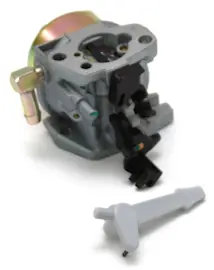
- Engine will not start: old fuel, dirty carburetor, fouled spark plug, clogged air filter, or a stuck safety/stop switch.
- Engine runs rough or misfires: stale fuel, water in fuel, dirty carburetor jets, incorrect choke use, or ignition tune-up needs.
- Oil or gas leaks: loose fuel line/clamp, cracked fuel line, carburetor bowl gasket seepage, or overfilled crankcase.
- Wheels and tines will not turn: drive belt worn or off the pulleys, belt tension out of adjustment, or a seized idler/pulley.
- Tines will not turn but wheels do: tine drive belt, engagement cable/linkage adjustment, or a damaged tine drive component.
- Poor tilling (skipping, shallow tilling, bouncing): worn/bent tines, incorrect depth stake setting, or trying to till too fast in hard soil.
- Fuel and spark: drain old fuel, refill with fresh fuel, check spark plug condition and gap.
- Airflow: clean or replace the air filter; confirm the choke opens fully after warm-up.
- Engagement: verify the drive/tine control levers move smoothly and return fully.
- Belts and pulleys: inspect for glazing, cracking, fraying, and proper belt routing.
- Tines and depth: confirm tines are sharp, installed correctly, and the depth stake is set for the soil.
| Symptom | Most likely causes | What to do next |
|---|---|---|
| Won’t start | Old fuel, dirty carb, bad plug | Follow [tiller engine won't start] |
| Runs rough | Fuel contamination, carb buildup | Follow [tiller engine runs rough or misfires] |
| Leaking | Loose line, gasket seepage | Follow [tiller engine leaking oil or gas] |
| Tines don’t turn | Belt, tension, linkage | Follow [tiller tines won't turn but wheels do] |
| Poor tilling | Worn tines, depth setting | Follow [tiller poor tilling] |
A rear-tine tiller like the Snapper RT5 puts heavy load on belts, pulleys, and tines. Catching belt wear, fuel issues, and tine damage early prevents sudden loss of drive, uneven tilling, and avoidable engine strain.
Last updated: March 2026