Owner’s manual
 Error Codes


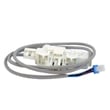

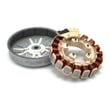
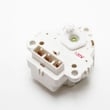
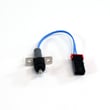
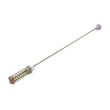
How to fix Samsung DC error code?
On the Samsung WA456DRHDWR washer, a DC (or UE) code points to an out-of-balance condition during spin. We fix it by redistributing the load, correcting leveling, and reducing oversudsing so the tub can spin smoothly; then restart the cycle using guidance in the owner's manual.
Quick fixes to try first
- Pause the cycle and open the lid.
- Remove a few items if the tub is tightly packed.
- Re-load evenly (mix large and small items; avoid one heavy item by itself).
- Run a Spin Only or Rinse + Spin to test.
- If you see lots of foam, rewash with less detergent (oversuds can trigger spin issues).
Check the most common causes
1) Load balance and item type
Bulky items (blankets, towels, rugs) can clump and throw the basket off balance.
2) Washer leveling and floor stability
An unlevel washer makes balancing harder.
- Confirm all feet are firmly on the floor
- Tighten the lock nuts after leveling
- Avoid soft or flexing flooring under the washer
3) Oversudsing (too much detergent)
Your manual notes that “SUd”/“Sd” indicates suds detected during spinning; too many suds can also contribute to poor spin performance. Use HE detergent and reduce the amount.
When a part problem is likely
If DC returns with small, evenly distributed loads and the washer is level, we look for suspension or drive issues.
| Symptom | What it usually points to | Example part for this model |
|---|---|---|
| Tub bangs hard even with normal loads | Worn suspension | Washer damper DC97-16350E |
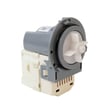
| Won’t reach full spin, drains slowly | Drain restriction or weak pump | Washer drain pump DC31-00054D |
Why it matters
Running repeated unbalanced spins increases vibration, noise, and wear on the suspension and tub components. Fixing the root cause helps protect the spin basket, outer tub, and drive system.
Last updated: February 2026
How to force drain a Samsung washer?
On the Samsung WA456DRHDWR washer, we force a drain by powering the washer off and back on, selecting Spin only, then pressing Start/Pause. This runs the drain pump without a wash fill so the tub water pumps out.
Fast ways to force-drain (try in this order)
- Spin-only drain: Power Off, then On; select Spin only; press Start/Pause.
- Stop a stuck cycle, then drain: Press Power to stop; power back on; run Spin only.
- Check the lid: Close the lid firmly; this model will not spin (and may not complete draining steps) with the lid open.
- Fix simple hose issues: Straighten the drain hose and remove kinks or crushing.
If it still will not drain
A forced drain fails when the drain path is restricted, the standpipe backs up, or the pump cannot move water.
- Make sure the drain hose is not kinked, pinched, or shoved too far down the standpipe.
- Confirm the household drain is flowing (no backup in the laundry tub or standpipe).
- Reduce oversudsing; use HE detergent and the correct amount.
- If the pump hums, is noisy, or does not move water, inspect the pump area for debris and replace the pump if needed.
Common drain-related parts for this model
| What you notice | What to check | Part that commonly relates |
|---|---|---|
| Washer won’t drain or drains very slowly | Drain pump operation and obstructions | Washer drain pump DC31-00054D |
| Debris repeatedly blocks draining | Coin trap area (if equipped on your configuration) | Washer pump coin trap DC61-03385A |
Child Lock (CL) and draining
Child Lock can prevent Start/Pause from working. On WA456-series washers, the manual also describes a compulsory drain condition when the lid is opened while the tub water level is above the reset level; the display can show CL during this forced drain.
- To deactivate Child Lock: press and hold Spin and Soil Level for 3 seconds.
Why it matters
Forcing a drain removes standing water quickly, which prevents odor and lets you safely troubleshoot a drain hose restriction, pump problem, or control issue.
For the exact button sequence details and CL behavior for WA456DRHDWR, use the owner's manual.
Last updated: February 2026
Is the Samsung WA456DRHDWR front load washer any good?
The Samsung WA456DRHDWR is a top-load washer (not a front-load), and it is a strong choice when you want large-capacity washing with features aimed at thorough cleaning and reduced vibration. For the best day-to-day results, follow the cycle and care guidance in the WA456DRHDWR owner's manual.
What’s “good” about this model
This washer is designed around performance and convenience features called out in the manual:
- Large capacity for bulky loads like bedding
- AquaJet water action to help dissolve detergent and rinse more thoroughly
- Direct-drive digital inverter motor (beltless) for efficient, quieter operation
- VRT (vibration reduction technology) to help minimize noise and vibration
- Pure Cycle tub-cleaning cycle to help reduce residue buildup
What to watch for (and how to prevent issues)
Most complaints on high-capacity top-load washers come from setup, loading habits, or maintenance.
- Vibration or “walking”: level the cabinet and keep loads balanced
- Wrinkling: avoid overfilling and use appropriate spin settings for fabrics
- Odor or residue: use HE detergent, measure carefully, and run tub-clean cycles
Quick setup and use checklist
- Confirm all leveling legs are firmly planted; re-level if the washer rocks
- Wash heavy items with similar items (towels with towels, jeans with jeans)
- Use HE detergent only; reduce amount for soft water or small loads
- Run Pure Cycle regularly and wipe the top rim and tub ring area
Top-load vs front-load: fit check
| Item | WA456DRHDWR (top-load) | Typical front-load washer |
|---|---|---|
| Loading style | Lid on top | Door on front |
| Odor risk | Lower overall | Higher if door seal stays damp |
| Vibration sensitivity | Higher when unbalanced | Lower when properly installed |
Why it matters
If you expect a front-load experience (door seal care, pedestal height, different loading), you may be disappointed. When used as intended as a top-load washer, WA456DRHDWR delivers the capacity, cleaning action, and vibration control it was built for.
Last updated: February 2026
What is the most common problem with Samsung washing machines?
The most common issue we see with Samsung washers is poor spinning or not finishing the spin properly, which leaves clothes wet. On the Samsung WA456DRHDWR, this is usually tied to load balance, excess suds, or a drain problem that prevents the washer from reaching full spin.
Quick checks that fix most “won’t spin out” complaints
- Redistribute the load; bulky items (blankets, towels) can throw the tub off balance.
- Run a smaller load; overfilling makes balancing harder.
- Use less HE detergent; too many suds can trigger “SUd/Sd” behavior and reduce spin performance.
- Make sure the lid closes firmly; a lid-related issue can interrupt spin.
- Confirm the washer is level; adjust feet if the cabinet rocks.
Common root causes and what they look like
| Symptom | Most likely cause | What to do first |
|---|---|---|
| Wet clothes, water still in tub | Drain restriction or weak pump | Check for clogs; inspect the washer pump coin trap DC61-03385A and drain path |
| Loud banging, heavy shaking | Unbalanced load or worn suspension | Level the washer; inspect dampers like washer damper DC97-16350E |
| Stops mid-cycle with suds message | Too much detergent | Reduce detergent; run a rinse and spin |
| Slow fill, long fill, or fill errors | Water supply or inlet valve issue | Check hoses/screens; consider Samsung washer water inlet valve DC97-15459G |
Why it matters
A washer that cannot drain or balance correctly often cannot reach high spin speed. That means longer dry times, more wear on the drive system, and more vibration. Your WA456DRHDWR includes VRT (vibration reduction) and a direct-drive inverter motor, so persistent shaking or weak spinning is a strong sign something needs attention.
Where to confirm error codes and model-specific steps
Use the owner's manual for the exact error code meanings, cycle behavior, and the recommended loading and detergent guidance for the WA456DRHDWR.
Last updated: February 2026