



Is a 3 stage snow blower better than a 2 stage?
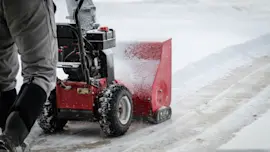
A 3-stage snow blower is better than a 2-stage when you regularly tackle deep, heavy, or icy snow and end-of-driveway plow piles; the extra “accelerator” stage feeds snow faster for higher throughput. For typical residential snowfall, a 2-stage is usually the better value and easier to handle.
What changes from 2-stage to 3-stage
Both designs use an auger to collect snow and an impeller to throw it. A 3-stage adds a fast center accelerator that helps chew through compacted snow and move it into the impeller more aggressively.
- 2-stage: good all-around performance for most driveways and sidewalks
- 3-stage: best for frequent heavy, wet, or icy conditions and large areas
- Tradeoff: 3-stage units typically cost more and can be heavier and more complex
Which is “better” for a Murray 629104X6A
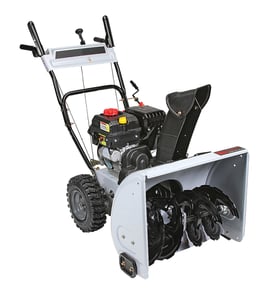
Your Murray 629104X6A is a 29-inch, 10-hp ultra snow thrower, which is already in the heavy-duty category. In many cases, a strong 2-stage machine like this clears effectively as long as the auger, impeller, belts, and skid shoes are in good condition.
- If you want maximum speed in plow-packed snow, 3-stage can be an upgrade
- If you want reliable clearing with simpler maintenance, 2-stage is the practical choice
- If your machine struggles, it is often a wear/adjustment issue, not the number of stages
Quick comparison
| Feature | 2-stage | 3-stage |
|---|---|---|
| Best for | Most residential snow | Deep, dense, icy snow; plow banks |
| Clearing speed | Moderate to fast | Fastest in tough snow |
| Complexity | Lower | Higher |
| Typical weight | Lighter | Heavier |
Why it matters
Choosing the right stage affects how quickly you clear snow, how well the machine handles icy piles, and how much maintenance you take on over time. If you already own the 629104X6A, keeping it tuned often delivers more real-world improvement than switching designs.
Parts and maintenance tip
If you are troubleshooting performance or doing a rebuild, order model-matched replacement parts from the parts list for your Murray 629104X6A, or search by model on Sears PartsDirect. One example part listed for this model is the screw 33329H, which may be used in the electric starter assembly depending on your engine configuration.
Last updated: February 2026
Should I spray my snowblower with WD-40?
Yes; for a Murray 629104X6A 29-inch 10-hp snow thrower, we recommend spraying a light coat of a slick protectant on the inside of the discharge chute and impeller housing to reduce snow sticking and clogging. Keep any spray off belts, friction drive parts, and hot engine surfaces.
Where it’s OK to spray (and where it’s not)
Use a light coat only on clean, dry metal or plastic surfaces that contact snow.
Good places
- Inside the chute and chute deflector
- Impeller housing (the round area behind the auger)
- Auger housing interior (not the drive components)
Avoid these areas
- Belts, pulleys, and any rubber friction disc or drive plate surfaces
- Engine, muffler, and hot surfaces
- Electrical connectors and switches (unless you are using an electrical-contact-safe product)
- Tires and traction surfaces
Best practice: prep, apply, and reapply
- Shut the snowblower off and let it cool.
- Brush out packed snow and wipe moisture away.
- Apply a thin, even coat; overspray just makes a mess.
- Reapply as needed during wet, heavy snow conditions.
Quick comparison of common anti-stick options
| Option | How it performs in wet snow | Mess level | Notes |
|---|---|---|---|
| WD-40 type water-displacing spray | Good short-term | Medium | Can drip; keep off drive parts |
| Silicone spray | Very good | Low | Typically lasts longer on chutes |
| Nonstick cooking spray | Fair to good | Medium | Can attract dirt; reapply often |
Why it matters
Wet snow clogs reduce throwing distance and can overload the auger and impeller, which increases wear on shear pins, belts, and the drive system. Keeping the chute slick helps the machine throw consistently and reduces strain.
If you’re already working on the chute or starter area
If you’re removing covers or servicing the electric starter assembly, replace missing or damaged fasteners with the exact hardware listed for your model, such as the screw 33329H. You can also search your model on Sears PartsDirect to match parts by diagram.
Last updated: February 2026
What is the typical lifespan of a gas snowblower?
A typical gas snowblower like the Murray 629104X6A (29-inch, 10-hp class) lasts 10 to 20 years when it’s maintained and stored correctly; 12 to 15 years is a common real-world range for many homeowners.
What most affects lifespan
- Oil changes and correct oil level every season
- Fresh fuel practices (drain or stabilize fuel before storage)
- Shear pins, belts, and scraper bar replaced when worn
- Rust prevention (cleaning and drying after use)
- Proper off-season storage (dry, covered, and rodent-protected)
Quick “repair vs. replace” guide
If your snowblower still starts reliably and throws snow strongly, repairs usually make sense. If it struggles with basic snow, needs frequent major repairs, or has severe rust in key areas, replacement becomes more practical.
| What you’re seeing | What it usually means | Typical next step |
|---|---|---|
| Hard starting, weak spark | Ignition or fuel issue | Tune-up, fuel system check |
| Poor throwing distance | Belt wear, auger/impeller issue | Inspect belts, auger drive |
| Excess vibration/noise | Loose hardware, worn bearings | Tighten, inspect rotating parts |
| Won’t crank with electric start | Starter circuit or hardware issue | Check wiring, starter components |
Why it matters
A snowblower’s lifespan is mostly about engine health and drivetrain wear. Small maintenance steps prevent expensive failures and keep your Murray 629104X6A clearing at full capacity.
Parts that can extend service life
Keeping fasteners and starter-related hardware in good shape prevents vibration damage and electrical-start problems. If you’re servicing the electric start system, match hardware exactly to your parts list, such as the screw 33329H. You can also search by model number on Sears PartsDirect if you need additional Murray 629104X6A parts.
Last updated: February 2026
Is it worth fixing a snowblower?
Yes, it’s worth fixing a Murray 629104X6A gas snowblower when the problem is a normal wear item or a simple adjustment and the machine is otherwise solid; if repairs are repeated, expensive, or the engine has low compression, replacement usually makes more sense.
Quick rule of thumb we use
A repair is typically worth it when:
- The snowblower starts reliably (or only needs basic fuel/ignition service)
- The auger and drive systems work with normal wear (no grinding or severe slippage)
- The repair cost is clearly less than about half the cost of a comparable replacement
- The frame, auger housing, and chute are not rusted through or cracked
- You can get the needed replacement parts for your model
Signs it’s a good candidate to repair
These issues are usually cost-effective on a 29-inch, 10-hp class snow thrower like the 629104X6A:
- Worn belts, shear pins, skid shoes, scraper bar, or friction disc
- Carburetor cleaning or a fuel line/primer bulb refresh
- Ignition tune-up (spark plug, switch, wiring checks)
- Electric start circuit troubleshooting (if equipped)
If you’re chasing an electrical no-start, a simple first step is checking for loose connections and damaged wiring; for common fasteners used in starter assemblies, see the screw 33329H.
When replacement is the smarter move
We typically recommend replacing instead of repairing when you see:
- Engine compression problems (hard starting even with fresh fuel and spark)
- Major gearbox or auger drive damage (metal noise, seized auger shaft)
- Repeated failures every season (repair cycle never ends)
- Severe rust-through on the housing or structural damage
Cost and decision checklist
| What you’re deciding | Repair makes sense when | Replace makes sense when |
|---|---|---|
| Total repair cost | Under ~50% of replacement | Near or over ~50% |
| Reliability | One clear root cause | Multiple recurring issues |
| Parts availability | Parts are easy to source | Key parts are discontinued |
Why it matters
A well-maintained snowblower can run for many seasons, but once you’re paying for major engine or drivetrain work, you often spend more and still end up with an older machine that’s less reliable in heavy snow.
You can order model-matched replacement parts from the parts list for Murray 629104X6A, or search by model number on Sears PartsDirect.
Last updated: February 2026
Who manufactures Murray snow blowers?
Murray snow blowers are sold under the Murray brand, and the actual manufacturer and component suppliers can vary by production year and model series. For your Murray model 629104X6A, the most reliable way to identify the maker behind key systems is to match parts by the snowblower model tag and the engine identification label.
How to identify who made the major components
Use the machine tags to separate the snowblower chassis from the engine and electrical system.
- Check the Murray model tag for 629104X6A to match auger housing, drive, and control parts.
- Check the engine shroud or valve cover label for the engine brand and model to match carburetor, ignition, and fuel parts.
- Look at the starter motor and wiring layout to identify the starter style used on your unit.
- Use the parts diagrams for model 629104X6A to confirm the exact part callouts before ordering.
Parts and ordering tip for model 629104X6A
If you are servicing the electric start hardware, one example part listed for this model is the screw 33329H, which is used with an electric starter application. Order parts from the list for model 629104X6A, or search by model number on Sears PartsDirect if you are cross-checking additional assemblies.
| What to check | Where to find it | What it tells you |
|---|---|---|
| Snowblower model number (629104X6A) | Model tag on the frame | Which Murray chassis parts fit |
| Engine brand and model | Engine label/shroud | Which engine parts fit |
| Starter configuration | Starter housing, wiring, plug | Which starter-related parts fit |
Why it matters
Murray snow blowers can share similar names across years, but parts compatibility is driven by the exact model number and the engine identification. Matching those two items prevents ordering the wrong auger, drive, or starter components.
Last updated: February 2026