Error Codes


How do I force a dishwasher to drain?
To force-drain a KitchenAid dishwasher model KUDS01FKPA0, cancel the cycle (or reset power), then remove standing water and clear the drain path so the pump can push water out through the hose. Most “won’t drain” problems come from a clog, kinked hose, or a blocked sink/disposal connection.
Quick steps to force a drain
- Press Cancel/Drain (or Cancel) and close the door to start the drain pump.
- If the controls are unresponsive, turn power off at the breaker for 1 minute, then restore power and try Cancel/Drain again.
- If water remains, scoop/bail water into a bowl; use towels for the last bit.
- Check the sink/disposal inlet where the dishwasher drain connects; clear any blockage.
- Inspect the drain hose for kinks, crushing, or a clog; replace it if it is damaged.
What to check if it still will not drain
A forced drain only works if the drain path is open and the pump can move water.
| Symptom | Most likely cause | What we recommend |
|---|---|---|
| Hums but no water leaves | Clog in hose or sink/disposal inlet | Remove clog; inspect/replace hose |
| Drains slowly | Partial blockage or restricted hose routing | Straighten routing; clear restriction |
| No sound during drain | Control issue, door not latched, or motor problem | Verify latch, reset power, then troubleshoot |
Drain hose and clamp checks
- Make sure the hose has a smooth route with a high loop under the counter (helps prevent backflow).
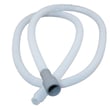
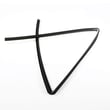
- If the hose is brittle, split, or permanently kinked, replace it with the correct part for this model: dishwasher drain hose 8269144A.
- If you remove the hose, reinstall it securely with the correct fastener: clamp WP596669.
Why it matters
Standing water can cause odors, poor cleaning, and can trigger leak protection behavior. Clearing the drain path protects the pump and helps the next cycle start and finish normally.
Helpful DIY video
If you need a visual walkthrough for common drain failures, use: dishwasher not draining video.
Last updated: February 2026
How do I find the dimensions of my dishwasher?
To find the dimensions of your KitchenAid KUDS01FKPA0 dishwasher, we measure the opening and the dishwasher itself: height (floor to underside of countertop), width (side-to-side), and depth (front of cabinet to back wall). Use a tape measure and record measurements to the nearest 1/8 inch.
What to measure (and where)
Measure in three places for the most accurate fit, especially if your cabinet opening is slightly out of square.
- Height: from the finished floor to the underside of the countertop (measure left, center, right)
- Width: inside the cabinet opening, left-to-right (front and back)
- Depth: from the back wall to the front edge of the cabinet opening (then compare to dishwasher depth)
- Door clearance: confirm the door can open without hitting a rug, toe-kick, or adjacent cabinet
- Hose and cord space: allow room behind/alongside for the drain hose and wiring
Quick measuring checklist
- Turn off power at the breaker if you will pull the dishwasher out.
- Remove the toe-kick panel if needed to access leveling legs.
- Measure the cabinet opening first, then measure the dishwasher.
- Write down all three height readings; use the smallest one.
Typical dishwasher size ranges (helpful for comparison)
Most built-in dishwashers like the KitchenAid KUDS01FKPA0 fit a standard opening, but always confirm your actual measurements.
| Measurement | Typical range for built-in dishwashers | What to record |
|---|---|---|
| Width | About 24 inches | Opening width (front and back) |
| Height | About 34 to 35 inches | Smallest floor-to-counter height |
| Depth | About 24 inches (plus door/handle) | Cabinet depth and dishwasher depth |
Why it matters
Accurate dimensions prevent installation problems like a dishwasher that will not slide in, a door that rubs the floor, or kinked drain lines. If you are replacing or reinstalling, confirm the drain routing and condition of the dishwasher drain hose 8269144A so the unit can sit fully back in the opening.
Last updated: February 2026
How to get KitchenAid replacement parts?
For your KitchenAid dishwasher model KUDS01FKPA0, we recommend ordering replacement parts by matching your model number to the exact part listing, then confirming the part name and ID before checkout. This helps ensure fit and avoids ordering a similar looking part for a different KitchenAid design.
Step-by-step: how we recommend ordering parts
- Find your model number on the dishwasher (typically on the tub frame near the door) and use KUDS01FKPA0 for all searches.
- Identify the failed part by symptom (leak, no drain, poor cleaning, won’t start).
- Match the part by part name and part ID (not just a photo).
- Compare your old part to the listing details before ordering.
- If you’re unsure between two similar items, replace related wear items at the same time (for example, a hose clamp with a drain hose).
Common replacement parts customers order for KUDS01FKPA0
These are examples of parts available for this model that customers often need:
| Symptom | Part to check | Example part anchor |
|---|---|---|
| Dishwasher won’t drain | Drain hose, clamps, pump | Dishwasher drain hose 8269144A |
| Poor wash or grinding noise | Chopper, pump and motor | Dishwasher chopper assembly W10083957V |
| Leaks at the door | Door seal or gaskets | Gasket W11196317 |
| Not cleaning well | Spray arm and seals | Dishwasher spray arm WPW10320510 |
If you’re ordering because of a specific problem
Using the symptom to guide the part choice is the fastest way to get the right KitchenAid replacement part.
- For error or blinking light patterns, use KitchenAid he dishwasher error codes.
- For a unit that has power but won’t run, use dishwasher wont start video.
- For standing water issues, use dishwasher not draining video.
Why it matters
Dishwasher parts can look interchangeable across KitchenAid and Whirlpool-built platforms, but small differences in mounts, seals, and electrical connectors can prevent proper fit. Matching by KUDS01FKPA0 plus the exact part ID keeps the repair straightforward.
Last updated: February 2026
How to reset error code on KitchenAid dishwasher?
To reset an error code on your KitchenAid KUDS01FKPA0 dishwasher, we recommend canceling the cycle and letting the unit run its short drain and self-check sequence. In many cases, the control clears the code after the reset routine finishes and you restart a new cycle.
Quick reset steps (most common)
- Press Cancel/Drain (or Cancel) once; close the door and let it run.
- Wait until the dishwasher stops on its own (often a few minutes) and the drain sound ends.
- Turn power off at the breaker for 1 minute, then turn it back on.
- Start a normal cycle and watch for the code to return.
- If the code comes back immediately, troubleshoot the underlying issue instead of repeating resets.
If the error is related to draining
A drain-related fault often returns if water cannot leave the tub. Check these basics first:
- Make sure the sink drain or garbage disposer is not clogged.
- Inspect the drain hose for kinks, crushing, or a low loop problem.
- Clear the air gap (if your setup has one).
- If the hose is brittle, split, or blocked internally, replace it with the correct dishwasher drain hose 8269144A.
Use the code to pinpoint the fix
KitchenAid dishwashers use error codes to point to a system (drain, fill, heating, wash motor, door). Use our code list to match the displayed code to the most likely cause and next checks:
| What you see | What it usually means | What to do next |
|---|---|---|
| Code clears after Cancel/Drain | Temporary interruption | Run a full cycle and monitor |
| Code returns during drain | Drain restriction or drain circuit issue | Check hose, sink/disposer, air gap |
| Code returns early in wash | Wash system or sensing issue | Check spray arms, filters, loading |
Why it matters
Resetting clears the control so you can confirm whether the problem was a one-time glitch or a real failure. If the code returns, fixing the root cause prevents repeat stoppages and helps protect the pump and motor.
Last updated: February 2026
What's the average lifespan of a KitchenAid dishwasher?
Most KitchenAid dishwashers, including model KUDS01FKPA0, typically last 10 to 14 years with normal household use. Lifespan depends most on water quality, how often it runs, and whether wear items (seals, hoses, and pump components) are replaced when symptoms first show up.
What affects dishwasher lifespan the most
- Hard water and scale buildup (can shorten pump, heater, and valve life)
- Heavy daily use (more cycles equals more wear on moving parts)
- Drain and wash performance (standing water and poor cleaning strain the motor)
- Door sealing and leaks (water intrusion can damage wiring and controls)
- Maintenance habits (cleaning, correct detergent, and prompt repairs)
Maintenance that helps you reach the high end of the range
- Run a monthly cleaning cycle using a dishwasher cleaner or approved descaler.
- Keep spray arm holes clear; remove debris that blocks water flow.
- Check for slow draining and correct it before it stresses the pump.
- Inspect the door area for drips; replace worn seals early.
- Avoid overloading; proper loading improves cleaning and reduces rewash cycles.
Common “wear items” and what they usually indicate
| Symptom | Most likely area | Example part for this model |
|---|---|---|
| Water on floor near door | Door seal or vent gasket | Gasket W11196317 |
| Not draining well | Drain path or drain hose | Dishwasher drain hose 8269144A |
| Loud grinding or weak wash | Pump/motor or chopper area | Dishwasher pump and motor assembly W10782773 |
Why it matters
A dishwasher that is cleaned regularly and repaired at the first sign of leaking, poor draining, or weak spray usually avoids secondary damage (like control issues or motor overload). That is what most often separates a 10-year dishwasher from a 14-year dishwasher.
Last updated: February 2026
What is the most common problem with a KitchenAid dishwasher?
For the KitchenAid KUDS01FKPA0 dishwasher, the most common problems we see are poor cleaning (food left on dishes) and draining trouble (water left in the tub). These issues usually trace back to restricted water flow through spray components or a partial blockage in the drain path.
Most common symptoms and what they usually mean
- Dishes still dirty or gritty: spray arm holes blocked, chopper area clogged, or weak circulation
- Standing water after the cycle: drain hose restriction, drain path blockage, or pump issue
- Leaks at the door: worn door seal or vent gasket
- Won’t start or stops mid-cycle: control or keypad input issue, or a blown safety fuse
Quick checks we recommend first (no parts guessing)
- Cancel and drain, then check for standing water in the bottom.
- Inspect the drain hose routing for kinks and high-loop/air-gap issues.
- Remove and rinse the filters/screens (if equipped) and clear visible debris.
- Spin the spray arms by hand; confirm they move freely and holes are not plugged.
- If the unit is dead or intermittent, check the house breaker first, then consider the dishwasher’s internal fuse.
Parts that commonly solve these problems on KUDS01FKPA0
| Problem area | What fails | Example part for this model |
|---|---|---|
| Not draining | Clogged or split drain line | Dishwasher drain hose 8269144A |
| Poor cleaning | Debris in chopper area | Dishwasher chopper assembly W10083957V |
| Leaking | Door sealing surface worn | Gasket W11196317 |
| No power | Safety fuse open | Fuse 8193762 |
Error codes can speed up diagnosis
If your display is flashing codes or the cycle lights indicate a fault, use our KitchenAid code references to narrow the cause before replacing anything: KitchenAid he dishwasher error codes.
Why it matters
Cleaning and draining problems often start as simple restrictions. Clearing the drain path and restoring strong spray action prevents repeat clogs, reduces odor, and helps protect the pump and motor assembly from strain.
Last updated: February 2026
Does the KitchenAid dishwasher have a lifetime warranty?
No. For the KitchenAid KUDS01FKPA0 dishwasher, the warranty coverage is not a lifetime warranty; it is typically a limited warranty with a defined time period (commonly one year for full coverage of parts and labor for defects).
What warranty coverage usually includes
Most KitchenAid dishwashers of this type include coverage like:
- A set coverage period (not lifetime)
- Replacement parts for defects in materials or workmanship
- Repair labor during the full-warranty period when installed, operated, and maintained correctly
- Exclusions for normal wear, misuse, and installation issues
Quick comparison: lifetime vs limited-term warranty
| Warranty type | What it means | What to expect |
|---|---|---|
| Lifetime warranty | Coverage for as long as you own the product | Rare on dishwashers; usually limited to specific components only |
| Limited-term warranty | Coverage for a stated period (example: 1 year) | Most common; may cover parts and labor during the full-warranty window |
If you are troubleshooting a problem during the warranty period
If your KUDS01FKPA0 is leaking, not draining, or not washing well, fixing the root cause quickly helps prevent secondary damage. Common repair-related parts customers check include:
- Dishwasher drain hose 8269144A (drain problems, sink backup, disposal connection issues)
- Dishwasher pump and motor assembly W10782773 (no wash action, loud grinding, weak spray)
- Dishwasher vent gasket WP8269259 (moisture around the vent area, poor drying)
Why it matters
A lifetime warranty changes how you plan repairs; a limited-term warranty means it is important to confirm the exact coverage dates and what is included (parts, labor, and specific components) before paying for service or ordering parts.
Last updated: February 2026
What are the commonly replaced parts in a dishwasher?
In a KitchenAid dishwasher like model KUDS01FKPA0, the most commonly replaced parts are the wash and drain components (spray arm, pump/motor, drain hose), leak-prevention seals and gaskets, and wear items such as racks and baskets. These parts typically fail from clogs, leaks, corrosion, or normal wear.
Most common dishwasher parts that get replaced
- Wash system parts that clog or wear (spray arm, chopper, pump and motor)
- Drain parts that kink, crack, or plug (drain hose)
- Door sealing parts that leak (door seal, vent gasket)
- Rack and loading parts that rust or break (lower rack, tine row, silverware basket)
- Electrical protection parts that open during a fault (fuse)
Model KUDS01FKPA0 examples we see replaced often
These are common replacements for this model when symptoms match:
| Symptom | Likely part area | Example part for KUDS01FKPA0 |
|---|---|---|
| Not draining, water left in tub | Drain path | Dishwasher drain hose 8269144A |
| Poor cleaning, weak spray | Wash circulation | Dishwasher pump and motor assembly W10782773 |
| Grinding, debris not clearing | Food chopping/filtering | Dishwasher chopper assembly W10083957V |
| Leaks at door or steam venting | Sealing/venting | Gasket W11196317 or dishwasher vent gasket WP8269259 |
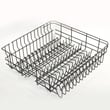
| Rusted/broken rack parts | Racks and loading | Lower rack W10728159 or dishwasher silverware basket W10840140 |
Quick checks before you buy a part
- Clean the sump area and remove debris that can block the chopper or pump.
- Inspect the drain hose routing for kinks and confirm the sink/disposer connection is clear.
- Check the door seal for tears, flattening, or gaps at the corners.
- Spin the spray arm by hand to confirm it turns freely and the holes are not plugged.
- If the dishwasher is dead, verify the house breaker and then check the internal fuse.
Why it matters
Replacing the correct part the first time prevents repeat leaks, poor wash performance, and drain backups. On KUDS01FKPA0, wash performance complaints often trace back to circulation (pump/chopper) while leaks usually trace back to door and vent sealing.
For electronic or flashing-light issues, use our KitchenAid he dishwasher error codes guide to narrow the failure to a specific circuit or component.
Last updated: February 2026