Owner’s manual



Is Kenmore Elite high end?
Yes. Kenmore Elite is Kenmore’s higher-end line, and the Kenmore Elite dryer model 79680518900 is built around premium convenience features such as sensor-based drying and specialized cycles designed to improve results and fabric care (see the 79680518900 owner's manual).
What “high end” means for this Kenmore Elite dryer
On this model, “Elite” typically shows up as better automation, more cycle options, and more attention to performance consistency.
- Sensor Dry cycles adjust drying time based on detected moisture to help prevent over-drying.
- Manual Dry cycles let you set time and temperature when you want full control.
- A Sanitize cycle is included (NSF certification is referenced in the manual).
- The control panel limits incompatible settings to help protect garments.
- Maintenance reminders and airflow monitoring (such as a CHECK VENT indicator) support safer, more efficient drying.
Quick comparison: Elite vs basic dryers
| Feature area | Kenmore Elite 79680518900 | Basic dryer (typical) |
|---|---|---|
| Drying control | Moisture-sensing automatic cycles | More timer-based drying |
| Cycle variety | More specialized cycles and options | Fewer cycles |
| Fabric protection | More built-in limits on incompatible settings | Fewer safeguards |
| Efficiency support | Airflow alerts and maintenance guidance | Less feedback |
Why it matters
A higher-end dryer usually saves time and reduces re-drying by managing heat and run time more precisely. On model 79680518900, the sensor-driven cycles and venting alerts also help you avoid long dry times caused by restricted airflow.
How to keep “Elite” performance over time
The manual’s care guidance is a big part of getting the premium results you paid for.
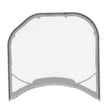
- Clean the lint filter before every load.
- Deep-clean the lint filter periodically with hot soapy water and a stiff brush; reinstall only when fully dry.
- Vacuum lint and dust from around and under the dryer regularly.
- Check and clean vent ductwork at least once per year.
- If drying slows down or the CHECK VENT indicator lights, inspect the exhaust system right away.
Last updated: February 2026
Where is the model number on a Kenmore Elite dryer?
On the Kenmore Elite dryer model 79680518900, the model number is printed on the identification plate inside the dryer door opening. Open the door and look along the cabinet frame; the same label typically lists the serial number as well (see the 79680518900 owner's manual).
Where to look first
Check these common label locations on Kenmore Elite dryers:
- Inside the door opening on the cabinet frame (most common)
- Along the top edge of the door opening
- Along the left or right side of the door opening
- On the inside surface of the door (less common)
What you should write down
We recommend recording these details exactly as shown on the label:
- Model number (for example, 79680518900)
- Serial number
- Date of purchase (if available)
Why it matters
The model number is what we use to match the correct Kenmore Elite dryer parts, diagrams, and troubleshooting information. Even small differences in model numbers can change which heating, drum, or sensor parts fit.
Quick reference
| Item | Where it’s found | What it’s used for |
|---|---|---|
| Model number | Identification plate inside the dryer door | Ordering correct parts and manuals |
| Serial number | Same identification plate | Production details and service reference |
Last updated: February 2026
How much does it cost to replace a heating element in a Kenmore dryer?
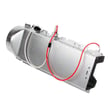
For the Kenmore Elite dryer model 79680518900, replacing the heating element typically costs $250 to $600 total: about $150 to $350 for the part (more if it’s sold as a complete heater housing/assembly) plus $150 to $300 in labor if you hire service. Confirm the exact heater style and access steps in the 79680518900 owner's manual.
What drives the total cost
- Part style: some dryers use a bare element; others use a heater assembly with housing and sensors.
- Electric vs. gas: electric models rely on a heating element; gas models heat with an igniter and burner.
- Airflow problems: restricted venting can overheat and shorten heater life, adding extra repair items.
- Service call minimums: many companies charge a diagnostic fee even if you proceed with the repair.
- Extra parts: a worn belt or idler can be discovered during teardown and add cost.
Typical price ranges (parts and labor)
| Scenario | Parts cost | Labor cost | Typical total |
|---|---|---|---|
| DIY element replacement (electric) | $150 to $350 | $0 | $150 to $350 |
| Pro replaces element (electric) | $150 to $350 | $150 to $300 | $300 to $650 |
| Heat issue caused by vent restriction (cleaning plus repair) | $0 to $150 | $150 to $350 | $150 to $500 |
Before you buy a heating element
We recommend these quick checks first because they often explain “no heat” or long dry times:
- Verify the dryer is on a proper 240 VAC circuit (electric models will run on 120 V but not heat correctly).
- Clean the lint screen and check the exhaust airflow at the outside vent hood.
- Inspect vent ductwork for lint buildup; the manual calls for checking and cleaning at least once per year.
- If the drum is not turning, address the drive system first; a heater can be fine but clothes will not dry.
Parts that are commonly involved
If the drum turns but there’s no heat, the heater circuit can include the element and safety controls. For this model, a common heat-related replacement is the dryer heating element 5301EL1001J.
Why it matters
A failed heating element is only one cause of poor drying. Correct power supply and good venting protect the heater and thermostats, improve drying performance, and help prevent repeat failures.
Last updated: February 2026
What are the codes for Kenmore Elite dryer?
Kenmore Elite dryer error codes are the letters and numbers shown on the display when the dryer detects a problem. On model 79680518900, common codes include PF (power failure) and several F-codes that point to a control, keypad, heater relay, or temperature-sensing issue; use the code to guide the next check.
Common Kenmore Elite dryer codes (what they usually mean)
- PF: Power failure or power interruption
- F:01: Main electronic control board problem
- F:02: Keypad or user interface problem
- F:20: Heater relay problem
- F:22 / F:23: Outlet thermistor problem
- F:24 / F:25: Inlet thermistor problem
What to do first (quick checks that solve many code events)
- Reset power: unplug the dryer (or switch the breaker off) for 1 minute, then restore power.
- Confirm correct power supply: an electric dryer can run but not heat if one leg of power is missing.
- Check airflow: clean the lint screen and make sure the vent is not crushed or clogged.
- If the code points to temperature sensing, inspect wiring connections at the sensor and control.
- If the dryer overheats or shuts down, stop using it until airflow and thermostats are checked.
Code-to-part troubleshooting (typical matches)
| Code family | What it points to | Parts commonly involved on 79680518900 |
|---|---|---|
| PF | Power interruption | House breaker, outlet, cord/terminal block |
| F:20 | Heater relay/heating circuit | Dryer heating element 5301EL1001J, wiring, control |
| F:22–F:25 | Temperature sensing | Dryer thermistor AGM30045804, wiring, control |
Why it matters
Using the error code prevents guesswork. For example, thermistor-related codes often cause no-heat, overheating, or cycle time problems, while PF events can look like a “random” shutdown but trace back to power supply stability.
For model-specific display behavior, diagnostic steps, and cycle details, follow the 79680518900 owner's manual.
You can also cross-check code definitions in our Kenmore elite dryer error codes guide.
Last updated: February 2026