Owner’s manual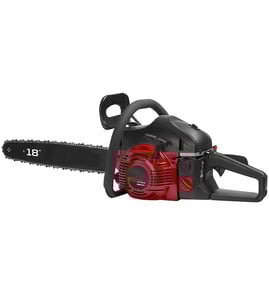





Can I scrap a chainsaw?
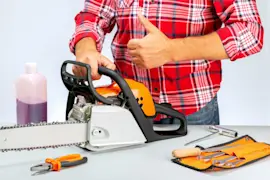
Yes, you can scrap a Craftsman gas chainsaw like model 358360150; most of the saw is metal and can be recycled as scrap once you remove fluids and separate any non-metal parts.
- Drain the fuel tank completely; run the engine briefly (outdoors) to help empty the carburetor.
- Empty the bar and chain oil tank.
- Remove the bar and chain for safer handling.
- Wipe off heavy oil and sawdust so the recycler can process it more easily.
- Separate obvious non-metal pieces (plastic covers, rubber parts) if your recycler requires it.
| Item | Typical handling | Notes |
|---|---|---|
| Engine, crankcase, handle frame | Scrap metal | Mostly aluminum/steel components |
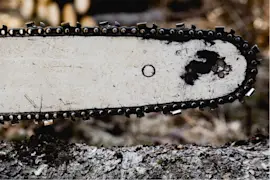
| Guide bar and chain | Scrap metal | Often accepted with other steel scrap |
| Plastic housings, grips | Trash or plastics recycling | Depends on local rules |
| Fuel and bar oil | Household hazardous waste | Do not pour into drains or onto soil |
- Work in a ventilated area away from ignition sources; gasoline vapors ignite easily.
- Store drained fuel and oil in approved containers and take them to a local disposal site.
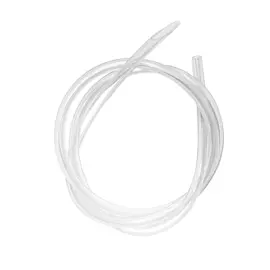
- If the saw is leaking fuel, replace the leak source before transporting it; a common culprit is a cracked fuel line such as the ayp lawn & garden equipment fuel line, large 530069216.
Properly draining fuel and bar oil prevents spills, reduces fire risk, and helps the scrap yard accept the chainsaw without delays.
For model-specific component locations (fuel tank, oil tank, bar/chain removal), follow the 358360150 owner's manual.
Last updated: January 2026
Should I use 40 1 or 50 1 fuel for a chainsaw?
For the Craftsman 358360150 gas chainsaw, use the fuel-to-oil ratio specified by the manufacturer; that is the safest way to protect the engine and avoid plug fouling or piston scoring. In general, 50:1 is common for many modern 2-cycle engines, while 40:1 adds more oil for extra lubrication.
- If your 358360150 owner's manual specifies 50:1, run 50:1 with quality 2-cycle oil.
- If it specifies 40:1, run 40:1.
- If you are unsure, check the fuel cap area, starter housing decal, or the manual before mixing.
A richer oil mix (40:1) increases lubrication but can increase smoke and carbon; a leaner oil mix (50:1) burns cleaner but depends more on using the correct 2-cycle oil.
| Mix ratio | Oil per 1 gallon gas | Typical result |
|---|---|---|
| 50:1 | 2.6 oz | Cleaner running, less smoke |
| 40:1 | 3.2 oz | More lubrication, more deposits possible |
- Use fresh, ethanol-free gas when possible.
- Use air-cooled 2-cycle oil (not marine TC-W3).
- Mix in an approved fuel can; add oil first, then gas, then shake.
- Only mix what you will use in 30 days (or use a fuel stabilizer).
- If the saw has been sitting, drain old fuel and inspect fuel lines for cracking; the ayp lawn & garden equipment fuel line, large 530069216 is a common replacement when fuel delivery issues show up.
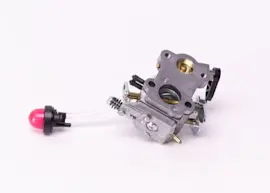
The wrong mix ratio can cause hard starting, poor acceleration, spark plug fouling, overheating, and long-term engine wear. Using the correct ratio plus clean fuel helps the carburetor, primer bulb, and fuel system stay reliable.
If your saw is hard to start after changing fuel mix, follow tips for a hard to start chainsaw to check priming, choke use, and fuel delivery.
Last updated: January 2026
Where is the model number on a chainsaw?
On the Craftsman chainsaw model 358360150, the model number is typically printed on the product identification label or ID tag on the saw body. Common locations include the rear handle area, the starter housing, or near the oil and fuel caps.
Check these spots first (wipe off oil and sawdust so the tag is readable):
- Rear handle or top handle (outside surface)
- Starter/recoil housing (near the pull cord cover)
- Side of the engine housing near the bar mount studs
- Near the fuel tank or oil tank area
- Underside of the saw body (less common)
If the label is dirty, faded, or scratched, these steps usually help:
- Clean gently with a damp rag and mild soap; avoid harsh solvents
- Use a flashlight at an angle to make stamped or embossed text stand out
- Take a close-up photo and zoom in to read worn characters
- Write down the full model number exactly as shown (for example, 358360150)
Using the correct model number ensures we can match the right Craftsman chainsaw parts and diagrams, especially for fuel system and ignition components.
| What you need | Why it matters | Example for this model |
|---|---|---|
| Model number | Identifies the exact parts list | 358360150 |
| Part ID | Identifies the exact replacement part page | 530069216 |
| Part name | Confirms you are ordering the right item | Fuel line, large |
Chainsaws often have multiple versions that look similar; the model number is what separates the correct carburetor, fuel line routing, chain brake parts, and other fit-critical items.
For model-specific labeling details and diagrams, use the 358360150 manual.
Last updated: January 2026