Owner’s manual
 Error Codes


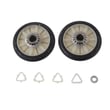
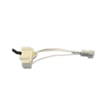
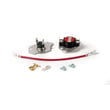
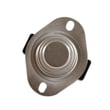
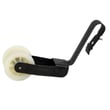
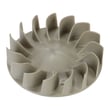
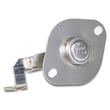
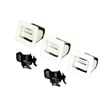
How do I know if my Kenmore dryer thermal fuse is blown?
On a Kenmore electric dryer model 11062722100, a blown thermal fuse (or thermal cut-off) commonly shows up as a dryer that runs but does not heat, or a dryer that will not run at all. The sure way to know is to unplug the dryer and test the fuse for continuity with a multimeter using the steps in the 11062722100 owner’s manual.
Quick symptoms to look for
These signs point to a failed safety fuse or an overheating-related shutdown:
- Dryer tumbles but clothes stay cold and damp (no heat)
- Dryer will not start even though the door is closed and controls are set
- Heat stops mid-cycle after the dryer has been running
- You find restricted airflow issues (lint screen or venting) at the same time
Confirm it with a continuity test (best method)
Before testing, disconnect power at the breaker and unplug the cord.
- Access the fuse or thermal cut-off on the blower housing or heater housing (location varies by design)
- Remove at least one wire from the fuse terminal so you do not backfeed the circuit
- Set your multimeter to continuity or the lowest ohms setting
- Touch a probe to each terminal
- Good fuse: continuity (beep) or near 0 ohms
- Blown fuse: no beep or OL/infinite resistance
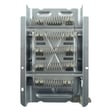
If the fuse is blown, we replace it and correct the overheating cause. On this model, a common repair is installing the dryer thermal cut-off fuse kit 279816.
Why it matters (and what usually causes it)
A thermal fuse is a one-time safety device; it opens when the dryer overheats. Overheating is most often caused by restricted airflow, which also leads to long dry times.
| What you notice | Most common cause | What we do next |
|---|---|---|
| Runs, no heat | One house fuse/breaker tripped (electric dryers can run but not heat) | Check both fuses/breakers, then test heating circuit |
| Long dry times | Lint screen or vent restriction | Clean lint screen, clear venting, confirm strong airflow |
| No run | Open safety circuit (thermal fuse, door switch) | Test safety devices, then replace failed part |
Airflow checks that prevent repeat failures
Use these checks before and after replacing any heat-safety part:
- Clean the lint screen before every load
- Inspect the vent hose for kinks or crushing
- Check airflow at the outside exhaust hood (strong, steady flow)
- Remove lint buildup in the exhaust ducting
- Avoid plastic venting; use rigid or flexible metal venting
Last updated: February 2026
What does F mean on a Kenmore dryer?
On Kenmore dryer model 11062722100, an “F” code means a failure (fault) was detected. The exact meaning depends on the full code shown (for example, F1/F01 points to an electronic sensing or control problem), so we use the code plus symptoms to choose the right fix. See the 11062722100 owner's manual for your model’s troubleshooting section.
What to do first (quick checks)
- Unplug the dryer (or switch off the breaker) for 1 minute, then restore power and try a cycle again.
- Confirm the door closes firmly; a bad door switch can stop operation.
- Make sure the cycle is selected and you press Start (the manual lists these as common “won’t run” causes).
- Check the house fuses or breakers; electric dryers commonly need a full 240V supply.
- If the dryer runs but does not heat, verify you did not select an air-only cycle.
Common “F” code causes on electric dryers
Many Kenmore electric dryers use “F” codes for control or sensor-related faults. These are common repair paths:
| What you notice | Likely area to check | Common next step |
|---|---|---|
| Beeps, stops, shows F1/F01 | Control sensing circuit (often thermistor input) | Inspect wiring connections; replace failed component if tests fail |
| Dryer will not start | Door circuit, power supply, timer/control | Test door switch; verify power; check timer/control |
| Runs but no heat | Heating circuit safety devices | Test thermal cut-off and high-limit thermostat |
Parts that often solve the underlying problem
If your troubleshooting points to a specific failed component, these parts are commonly involved on this model:
- Dryer door switch WP3406107 if the dryer thinks the door is open
- Dryer thermal cut-off fuse kit 279816 if the heater circuit is shut down for safety
- Dryer high-limit thermostat WP3977767 if overheating protection is tripping
- Dryer element 279838 if the dryer tumbles but never heats
Why it matters
An “F” code is the dryer’s way of preventing damage or unsafe heating. Clearing the cause (power issue, door circuit, airflow restriction, or a failed sensor/control input) restores normal drying and helps prevent repeat shutdowns.
Last updated: February 2026
What model Kenmore dryer do I have?
If you’re on the Kenmore dryer parts page for model 11062722100, your dryer’s model is 11062722100. To confirm on the appliance itself, match the model number on the model and serial number plate to the number you’re using to look up parts and the 11062722100 owner's manual.
Where to find the model number plate
On Kenmore electric dryers like 11062722100, the model and serial number are printed on a dedicated plate. Common places to check include:
- Inside the dryer door opening (door jamb area)
- On the back panel of the dryer cabinet
- Near the lint screen housing area (depending on the exact console and cabinet style)
- On the cabinet frame just behind the door
How to read Kenmore model numbers (quick guide)
Kenmore model numbers are the key to getting the right parts (like a heating element, belt, or door switch) and the correct wiring and troubleshooting info.
- Use the full model number exactly as shown on the plate (all digits matter)
- The prefix can indicate the manufacturing source (for many Kenmore dryers, 110 is common)
- The remaining digits identify the specific design and component set
- The serial number helps identify production details if you ever need service history or exact configuration
| What you’re looking at | Example | Why it matters |
|---|---|---|
| Model number | 11062722100 | Ensures correct part fit and diagrams |
| Serial number | (varies) | Helps confirm production run details |
Why it matters
Parts and procedures can vary even between similar-looking Kenmore dryers. Using the exact model number helps us match the correct components, such as the dryer door switch WP3406107 or dryer drum belt 341241, and avoid ordering a part that does not fit.
Last updated: February 2026