Owner’s manual
 Error Codes


Are bottom mount fridges better?
A bottom-mount refrigerator like the Kenmore 79571092111 is better for many kitchens because the fresh-food section sits at eye level, so you reach everyday items more easily and bend less. It is a strong choice when you use the refrigerator compartment more often than the freezer.
When a bottom-mount fridge is the better choice
- You want fresh food (produce, drinks, leftovers) at a comfortable height.
- You prefer wider refrigerator shelves for meal prep and storage.
- You do not want to bend down multiple times a day to access the fridge section.
- Your household uses the freezer less frequently than the refrigerator.
- You like the organization of a pull-out freezer drawer (common on bottom-mount designs).
When it might not be “better” for your household
- You use frozen foods daily and want the freezer at eye level.
- You want the simplest layout and lowest upfront cost (top-freezer models often win here).
- You prefer a swing-door freezer instead of a drawer.
Quick comparison
| Feature | Bottom-mount refrigerator | Top-freezer refrigerator |
|---|---|---|
| Most-used items | Fresh food at eye level | Freezer at eye level |
| Bending | Less for fridge items | More for fridge items |
| Freezer access | Pull-out drawer (common) | Swing door (common) |
| Best for | Fresh-food focused households | Frozen-food focused households |
Why it matters
Layout affects daily comfort and how well you keep food organized. If you are constantly in the fresh-food section, bottom-mount designs reduce strain and make it easier to see what you have, which can cut down on wasted food.
Helpful model-specific resources
- For features, storage layout, and care tips specific to your Kenmore 79571092111, use the owner's manual.
Last updated: February 2026
What are the most common problems with Kenmore refrigerators?
For Kenmore model 79571092111 bottom-mount refrigerators, the most common issues we see are weak or no cooling, ice maker or dispenser problems, water leaks, frost buildup, unusual noises, and intermittent control or light issues. Start with airflow, door sealing, and basic cleaning before replacing parts; see the owner's manual.
Most common symptoms and what usually causes them
- Not cooling or warm temperatures: dirty condenser coil, blocked vents, failed fan, or sealed-system/compressor issues
- Ice maker not making ice: low water supply, clogged filter, frozen fill tube, or a failing ice maker
- Water leaking: clogged drain tube, cracked water tubing, or a leaking inlet valve
- Frost buildup: door not sealing, frequent door openings, or defrost system problems
- Noisy operation: fan blade hitting ice, worn fan motor, or vibration from the cabinet/lines
- Lights or door alarm acting up: faulty door switch
Quick checks we recommend first (before buying parts)
- Confirm the temperature settings; typical targets are 0°F freezer and 37°F fresh food.
- Make sure vents inside the compartments are not blocked by food packages.
- Clean dust from the condenser area; restricted airflow is a top cause of poor cooling.
- Check door closing and gasket contact; a poor seal drives frost and temperature swings.
- If water or ice is slow, replace the filter and flush several gallons through the dispenser.
Common parts that fix these problems on 79571092111
| Problem | Likely part to check | Example part on this model page |
|---|---|---|
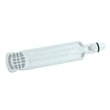
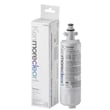
| Slow water, bad taste, low ice output | Water filter or bypass plug | Genuine Kenmore refrigerator water filter 9690 AGF80300801 or refrigerator water filter bypass ABN73019101 |
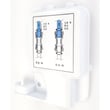
| Ice maker not cycling or not filling | Ice maker assembly, inlet valve | Refrigerator ice maker assembly AEQ73110205 or lg refrigerator water inlet valve AJU72992601 |
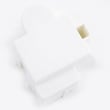
| Interior light or door alarm issues | Door switch | Refrigerator door switch 6600JB1010A |
| Leaks under/behind unit | Drain tube, water tubing | Refrigerator drain tube 5251JA3003D or refrigerator water tubing MJU62070602 |
Why it matters
Catching airflow, sealing, and water-supply problems early prevents food spoilage, reduces frost and leaks, and helps the compressor run less, which extends the life of the refrigerator.
Helpful DIY guides
- Use Kenmore 795 model bottom freezer refrigerator error codes if your display is showing an error.
- Follow how to replace the water filter in a Kenmore refrigerator for the correct filter change and flushing steps.
Last updated: February 2026
What to store in a refrigerator door?
In your Kenmore 79571092111 bottom-mount refrigerator, the door shelves run warmer than the interior, so we recommend storing stable, high-salt or high-sugar items there (condiments, jams, pickles) and keeping milk, eggs, and raw meat in the colder main compartment. See the owner's manual for your model’s storage and temperature guidance.
Best items to store in the door
- Condiments: ketchup, mustard, mayo, salad dressings
- Pickles, olives, relishes, and other brined foods
- Jams, jellies, and nut butters
- Pasteurized juices and bottled drinks
- Sparkling water, soda, and beer
What to avoid storing in the door
- Milk and cream (temperature swings shorten freshness)
- Eggs (keep in the carton on an interior shelf)
- Raw meat, poultry, or seafood (store on the lowest interior shelf to reduce leak risk)
- Leftovers you want to keep very cold
- Medications or probiotics that require tight temperature control
Quick guide: door vs. interior shelves
| Food type | Best spot | Why |
|---|---|---|
| Condiments and sauces | Door | More tolerant of warmer temps |
| Milk, yogurt, eggs | Interior shelf | More consistent cold temperature |
| Raw meat/seafood | Lowest interior shelf | Coldest area; helps contain drips |
| Drinks | Door (or interior if you want colder) | Door is convenient; interior is colder |
Why it matters
The refrigerator door is opened often, so that area sees the biggest temperature fluctuations. Using the door for foods that are less temperature-sensitive helps your Kenmore refrigerator keep perishables safer and fresher longer.
Last updated: February 2026
Why is the bottom of my Kenmore refrigerator leaking water?
Water at the bottom of your Kenmore 79571092111 bottom-mount refrigerator is usually caused by a clogged or frozen defrost drain, a loose or leaking water line, or a problem in the ice maker or water inlet valve area. We recommend checking the drain path first because it is the most common cause.
Quick checks that fix most leaks
- Unplug the refrigerator before inspecting parts.
- Look for ice buildup on the freezer floor; that points to a frozen defrost drain.
- Check the drain tube for blockage and flush it with warm water.
- Inspect the water tubing behind the unit for kinks, cracks, or a loose connection.
- If the leak happens only when dispensing water or making ice, focus on the valve and tubing.
Most common causes (and what to do)
| What you notice | Likely cause | What to do next |
|---|---|---|
| Water pooling under crisper drawers | Defrost drain clogged | Clear the drain opening and flush the drain tube; confirm water flows to the drain pan |
| Sheet of ice on freezer bottom, then water later | Defrost drain frozen | Melt the ice, then clear and flush the drain so it does not refreeze |
| Leak only during ice making or water dispensing | Water inlet valve or tubing leak | Inspect connections; replace damaged tubing or a leaking valve |
| Drips near the door area | Door left ajar or gasket not sealing | Make sure doors close fully; reduce frost that can overwhelm the drain |
Parts that commonly relate to bottom leaks
If you find a cracked line or a valve seep, these model-matched parts are common fixes:
- Refrigerator water tubing MJU62070602 for splits, pinholes, or loose fittings
- Lg refrigerator water inlet valve AJU72992601 if the valve body or fittings seep
- Refrigerator drain tube 5251JA3003D if the drain line is damaged or will not clear
Why it matters
A small leak can turn into floor damage and can also create ice buildup that restricts airflow, leading to warm temperatures in the fresh food section. Fixing the drain or water supply leak restores normal defrosting and helps the refrigerator cool consistently.
Model-specific tip
Use the defrost drain and water line routing diagrams in the owner's manual for Kenmore 79571092111 to locate the drain opening, drain tube path, and water line connections before disassembly.
Last updated: February 2026