Owner’s manual
 Error Codes


What is the most common problem with Samsung refrigerators ice?
The most common ice issue we see on Samsung refrigerators like model RF28HFEDBWW is ice maker freezing and ice buildup that leads to clumps, jams, slow ice production, or no ice. The usual root causes are restricted water flow, moisture leaking in around doors, or an ice maker compartment that is not sealing or defrosting correctly.
What you will typically notice
- Ice cubes clump together in the bin
- Ice stops dispensing but the auger motor sounds like it is trying
- Small or hollow cubes (low water fill)
- Frost or ice around the ice chute or ice room
- Water dripping at the dispenser or under the ice bin
Quick checks that fix many ice problems
- Replace the water filter on schedule; a clogged filter can reduce flow and cause small cubes and freezing issues. Use the correct refrigerator water filter DA29-00019A.
- Confirm strong water flow at the dispenser; weak flow points to a supply or valve issue.
- Inspect the ice chute area for gaps or frost; warm air leaks drive icing.
- Make sure doors close tightly; a poor seal adds humidity that freezes in the ice room.
- Empty the ice bin and break up clumps; then allow 24 hours to see if production stabilizes.
Parts that commonly solve ice maker icing or no-ice symptoms
| Symptom | Common cause | Part to consider |
|---|---|---|
| Small/hollow cubes, slow fill | Restricted water flow | Refrigerator water filter DA29-00019A |
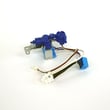
| No ice, weak fill, dispenser weak | Water valve not opening fully | Refrigerator water inlet valve DA62-04027A |
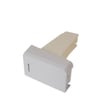
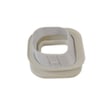
| Ice clumps, frost near chute | Warm air leaking at chute | Refrigerator dispenser ice chute cap and gasket assembly DA97-12594A |
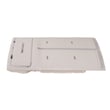
| Ice room not moving cold air well | Fan or airflow issue | Samsung refrigerator fresh food evaporator cover assembly DA97-12608A |
Why it matters
Ice buildup is more than an inconvenience; it can force the auger to jam, strain dispenser components, and create recurring freeze-ups. Fixing water flow and air leaks early helps keep ice production steady and prevents repeat icing.
For model-specific operating tips (including control settings and ice maker use), follow the RF28HFEDBWW owner's manual.
Last updated: February 2026
What is the difference between force defrost RD and FD?
On Samsung model RF28HFEDBWW, RD is a refrigerator-only defrost that focuses on the fresh food evaporator, while FD (forced defrost) is a broader defrost mode used to melt heavier ice buildup that can affect multiple cooling areas (including the freezer and ice maker). For exact button sequences and display behavior, use the owner's manual.
RD vs FD: what each mode is for
- RD (refrigerator defrost): Targets the fresh food section evaporator area; use it when the refrigerator compartment has frost or airflow issues but the freezer is otherwise normal.
- FD (forced defrost): Runs a more aggressive, system-wide defrost routine; use it when you have symptoms like a frozen fan, repeated ice buildup, or ice maker area icing.
When to use each mode (quick guide)
- Use RD when:
- Fresh food section is warming but freezer temps look normal
- You hear a fan rubbing or buzzing behind the refrigerator rear panel
- Frost is localized to the refrigerator evaporator cover area
- Use FD when:
- Ice maker area is freezing up or ice clumps keep returning
- Airflow is weak in both compartments
- You suspect a heavier ice blockage affecting multiple zones
What to expect during forced defrost
Forced defrost modes often include alarms or beeping and can create meltwater.
- Remove and empty the ice container if needed
- Place towels in the bottom of the fresh food section to catch drips
- Keep doors closed as much as possible during the cycle
- After defrost, allow time for temperatures to stabilize
Related parts that commonly tie to icing and defrost symptoms
If icing keeps returning, we typically look at airflow and defrost components:
| Symptom | Common area to check | Example part for this model |
|---|---|---|
| Frost buildup, warm fridge | Defrost heat and drainage | Refrigerator defrost heater DA47-00244U |
| Water under crisper, refreezing | Drain path and drain tube | Refrigerator drain tube kit DA97-04049E |
| Fan noise, weak airflow | Evaporator fan area | Refrigerator ice maker evaporator fan DA97-12540A |
Why it matters
Using RD for a localized refrigerator frost issue can save time and reduce meltwater, while FD is the right choice when ice buildup is severe enough to affect cooling performance, fan operation, or ice production.
Last updated: February 2026
Is it okay to use a generic water filter in a Samsung refrigerator?
Yes, it’s okay to use a generic water filter in your Samsung RF28HFEDBWW if it’s made for the same filter style and seals correctly; a poor-fit filter can leak or restrict water flow and cause dispenser or ice maker problems. Use the RF28HFEDBWW owner's manual for the correct filter location and replacement steps.
What to check before you install a generic filter
- Compatibility statement for your exact Samsung model and filter style (not “universal fit”)
- NSF/ANSI certification that matches your needs (42 for taste and odor; 53 for health-related contaminants)
- New, undamaged O-rings and a clean filter head (no grit or scale)
- Filter locks in smoothly and feels solid (no wobble)
- Normal dispenser flow after installation
When to skip the generic and use the correct replacement
If any of these happen, replace it with the correct filter immediately:
- Drips or moisture around the filter housing
- Very slow water flow or sputtering that doesn’t clear after purging
- Ice maker stops filling or makes hollow cubes
- Filter will not seat, lock, or release normally
A reliable replacement option is the refrigerator water filter DA29-00019A.
Quick purge and leak check
- Install the filter and dispense several cups of water to purge air.
- Wipe the filter area dry; check again after 5 minutes.
- Recheck after 1 hour and after the first full ice harvest.
| Symptom | Likely cause | Next step |
|---|---|---|
| Drips at filter head | Seal or fit issue | Reinstall once; if it still drips, replace filter |
| Slow dispenser flow | Clogged filter or low supply | Fully open supply valve; try a new filter |
| Ice maker not filling | Restricted flow or air | Purge more water; confirm flow returns |
Why it matters
The filter is part of the sealed water path. A filter that doesn’t seal can leak into the cabinet, and a restrictive filter can starve the water dispenser and ice maker.
Last updated: February 2026