 Owner’s manual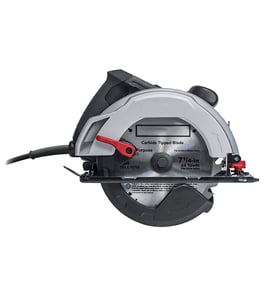

How do I know what size blade my circular saw is?
For your Craftsman 315108420 circular saw, the correct blade size is 7-1/4 in. (184 mm) with a 5/8 in. (16 mm) arbor. We list these specs in the owner's manual, and your saw is designed for a maximum 7-1/4 in. blade.
Quick ways to confirm blade size
- Check the blade label or laser etching for diameter (7-1/4 in.) and arbor (5/8 in.).
- Measure across the blade from edge to edge (diameter) with a tape measure.
- Measure the center hole (arbor) with a ruler or calipers.
- Confirm the blade is not so thick that the outer washer cannot seat properly.
- Verify the blade clears the upper and lower blade guards before powering on.
Blade fit specs for Craftsman 315108420
| Spec | What to look for | This model uses |
|---|---|---|
| Blade diameter | Overall blade size | 7-1/4 in. (184 mm) |
| Arbor size | Center hole size | 5/8 in. (16 mm) |
| Blade thickness | Plate/kerf thickness | Must allow washers to clamp securely |
Why it matters
Using the correct diameter and arbor keeps the blade properly clamped on the spindle, maintains guard clearance, and helps prevent binding or loss of control. A larger blade can hit the guards; an overly thick blade can keep the blade screw from securing the blade.
Safety checks before you swap or measure a blade
- Unplug the saw before measuring, adjusting, cleaning, or changing the blade.
- Make sure the lower blade guard moves freely and returns automatically.
- Wait for the blade to stop completely before setting the saw down.
Last updated: February 2026
What size circular saw will cut a 2x4 board?
A 7-1/4 inch circular saw is the standard size for cutting 2x4 lumber, and it is exactly what your Craftsman model 315108420 uses. In our manual specs, this saw cuts up to 2-3/8 inches deep at 0° bevel, which cleanly handles a 2x4 (about 1-1/2 inches thick).
What to check before you cut
- Set the depth so the blade teeth extend about 1/4 inch below the board.
- Confirm the lower blade guard moves freely and returns automatically.
- Support the 2x4 on sawhorses so the cutoff can drop without pinching the blade.
- Use a straight edge guide for rip cuts to keep the cut accurate.
- Keep the cord clear of the cut path and hold the saw by insulated gripping surfaces.
Quick spec guide for model 315108420
| Item | Spec (from the manual) | What it means for a 2x4 |
|---|---|---|
| Blade diameter | 7-1/4 in. (184 mm) | Common framing blade size |
| Max depth at 0° | 2-3/8 in. (60 mm) | More than enough for a 2x4 |
| Max depth at 45° | 1-13/16 in. (46 mm) | Still enough for a 2x4 bevel cut |
| Arbor size | 5/8 in. (16 mm) | Blade must match this arbor |
Why it matters
Using the right blade diameter and setting the correct depth reduces binding and kickback risk, and it helps the lower guard protect you as the blade coasts down after you release the trigger. For model 315108420, the 7-1/4 inch platform gives you the depth you need for framing cuts without stepping up to a heavier saw.
For the full cutting-depth chart and safety rules (including lower guard guidance), use the owner's manual.
Last updated: February 2026
How to change an old Craftsman circular saw blade?
To change the blade on your Craftsman circular saw model 315108420, unplug the saw, lock the spindle, remove the blade screw and washers, swap the blade, then reinstall the washers and screw securely. Follow the exact washer order shown in the 315108420 owner's manual.
Blade change steps (model 315108420)
- Unplug the saw before touching the blade or guard.
- Remove the blade wrench from its storage spot on the saw.
- Press and hold the spindle lock button to keep the spindle from turning.
- Use the wrench to loosen the blade screw (turn it counterclockwise to remove).
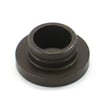
- Remove the spring washer and the outer blade washer ("D" washer).
- Retract the lower blade guard using the guard handle, then slide the old blade off.
- Install the new blade, then reinstall the washers and blade screw; tighten firmly while holding the spindle lock.
Washer and hardware order (what goes where)
The washer order matters because the blade must clamp flat and stay centered.
| Part you handle | Where it goes | What to watch for |
|---|---|---|
| Outer blade washer ("D" washer) | Outside of blade, under the screw | Flat and fully seated |
| Spring washer | Between "D" washer and blade screw | Provides tension so the screw stays tight |
| Blade screw | Threads into spindle | Tighten securely with spindle lock held |
Safety checks before you plug it back in
- Confirm the lower blade guard moves freely and snaps back over the blade.
- Spin the blade by hand (with saw unplugged) to ensure it does not rub the guard.
- Verify the blade is installed in the correct rotation direction (match the arrow on the blade to the saw’s rotation).
- Use only recommended accessories for this model.
Why it matters
A blade installed with the wrong washer order or a sticking lower guard can lead to blade wobble, binding, and kickback. Keeping the guard working smoothly and the blade clamped correctly helps the saw cut straighter and safer.
Last updated: February 2026
What is a 140 tooth circular saw blade used for?
A 140-tooth circular saw blade is used for ultra-smooth, low tear-out cuts in thin sheet goods and trim, where the finished edge matters more than fast cutting. On a Craftsman 315108420 circular saw (7-1/4 inch blade, 5/8 inch arbor), it is best for fine crosscuts in plywood, paneling, and veneers; not for heavy ripping.
Best uses for a 140-tooth blade
Use a high tooth-count blade when you want a clean, splinter-free edge:
- Plywood and veneered panels (cabinet sides, shelves)
- Paneling and thin lumber for finish work
- Melamine or laminated sheet goods (with the right blade style)
- Crosscuts in hardwood trim (base, casing) when supported well
- Cuts where you want minimal sanding afterward
When a 140-tooth blade is the wrong choice
A 140T blade cuts slower and can overheat or burn wood if you push too hard. Switch to a lower tooth count for:
- Ripping thick lumber (with the grain)
- Framing and construction cuts where speed matters
- Wet, dirty, or pitchy wood that gums up teeth quickly
- Deep cuts near the saw’s max depth (more load on the motor)
Quick tooth-count guide (7-1/4 inch blades)
| Tooth count | Typical cut quality | Best for |
|---|---|---|
| 18 to 24T | Fast, rough | Ripping, framing |
| 40 to 60T | Smooth | General purpose, crosscuts |
| 80T+ (including 140T) | Ultra-smooth | Finish cuts in sheet goods |
Why it matters
Using the right tooth count helps prevent tear-out, burning, and kickback. Our Craftsman 315108420 manual also stresses that dull or dirty blades increase load and kickback risk; keeping blades clean and sharp improves safety and cut quality. See the 315108420 owner's manual for blade size, arbor fit, and safe operating guidance.
Last updated: February 2026
Should a beginner use a circular saw?
Yes. A beginner can use the Craftsman 315108420 circular saw safely and successfully as long as they follow the core safety rules in the owner's manual, keep the blade guard working properly, and practice controlled, supported cuts to reduce kickback risk.
Beginner safety rules we follow every time
- Keep both hands on the saw (main handle and auxiliary handle or motor housing) while cutting.
- Keep your body to either side of the blade, not in line with it (this helps if kickback occurs).
- Check that the lower blade guard closes freely before each use.
- Never reach underneath the workpiece while the blade is moving.
- Do not use the saw if parts are missing or the tool is damaged; service it before using.
Setup tips that make a circular saw easier for beginners
- Support the work: Use sawhorses or a stable bench so the cut-off piece can fall away without pinching the blade.
- Set blade depth correctly: A shallow, controlled depth reduces binding and kickback.
- Use a sharp, clean blade: Dull or gummed-up blades increase load and kickback risk.
- Use a straightedge guide: Clamp a straight board or guide for cleaner, straighter cuts.
Quick spec check for this model (helps set expectations)
| Spec | Craftsman 315108420 |
|---|---|
| Blade diameter | 7-1/4 in. (184 mm) |
| Arbor size | 5/8 in. (16 mm) |
| Max depth at 0° | 2-3/8 in. (60 mm) |
| Max depth at 45° | 1-13/16 in. (46 mm) |
| Power | 13A, 120V AC |
Why it matters
Most beginner injuries happen from poor support, reaching under the cut, or a guard that does not return smoothly. Following the manual’s guard and hand-position rules, plus using a sharp blade and stable setup, prevents the most common kickback and contact hazards.
Last updated: February 2026
