Installation guide
 Owner’s manual


Does my Kenmore top load washer have a filter?
Your Kenmore 41744102300 is a front-load washer (Tumble Action style), and it does not use a removable lint filter like many top-load washers. Instead, lint is flushed out with the wash water, and the main “filtering” maintenance is keeping the drain pump area and hoses clear per the 41744102300 owner's manual.
What to check when you suspect a “clogged filter”
If you are seeing slow draining, standing water, or wet loads after spin, we focus on the drain path and water flow items that commonly act like a filter.
- Check the drain hose for kinks or crushing behind the washer
- Confirm the standpipe or laundry tub drain is not backing up
- Listen for the drain pump running during drain; unusual rattling can indicate debris
- Reduce oversudsing (too much detergent can slow draining and leave residue)
- Redistribute the load if the washer stops or spins poorly due to imbalance
Parts that commonly solve drain and “filter” complaints
These are the most common service parts for drain-related symptoms on this model.
| Symptom | Most likely area | Example part for this model |
|---|---|---|
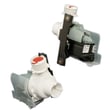
| Won’t drain or drains slowly | Drain pump or blockage | Washer drain pump 137108000 |
| Leaks during drain | Drain hose connection or split hose | Washer drain hose 134592700 |
| Water left in dispenser compartments | Normal siphoning action | Clean and drain dispenser drawer (maintenance) |
Why it matters
A true drain restriction can leave clothes too wet after spin, cause odors, and strain the motor. The manual’s “avoid service checklist” also points to simple fixes like straightening a kinked drain hose and correcting an unbalanced or overloaded load.
Quick safety reminder
Before any user maintenance, disconnect power. Turning the controls to OFF does not disconnect power; follow the safety guidance in the 41744102300 owner's manual.
Last updated: February 2026
How to hard reset kenmore washer?
A hard reset for the Kenmore 41744102300 washer is a simple power reset: unplug the washer (or switch off the breaker) for 5 minutes, restore power, then start a cycle. This clears many control glitches without changing any mechanical settings.
Hard reset steps (power reset)
- Press the cycle selector knob in to stop the washer.
- Turn the washer controls to OFF.
- Unplug the power cord from the outlet (or turn OFF the circuit breaker).
- Wait 5 minutes.
- Restore power (plug in or turn the breaker ON).
- Select a cycle and pull out the cycle selector knob to start.
For model-specific operating details and control behavior, use the 41744102300 owner's manual.
If the washer still will not start after resetting
The manual’s “Washer does not start” checklist points to a few common items that look like a control problem but are not.
- Confirm the outlet has power; reset the house breaker or replace a blown fuse.
- Make sure the plug fits tightly in the outlet.
- Turn on both water supply faucets.
- Close the washer door completely.
- Close the dispenser drawer completely.
- If the motor overheated, wait up to 30 minutes for it to cool and restart.
Quick checks table
| What you see | What it usually means | What to do next |
|---|---|---|
| No lights, no response | No power to washer | Check outlet, breaker/fuse, cord fit |
| Powers on but won’t run | Door or dispenser not closed | Reseat door, close drawer fully |
| Stops mid-cycle, then later runs | Motor overload protector tripped | Let it cool up to 30 minutes |
When a “reset” is really a door lock issue
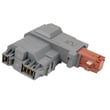
On this front-load design, the door locks during the cycle and may take 1 to 2 minutes to release after stopping. If the door will not latch or the lock light behavior seems wrong, inspect the latch area and consider replacing the door catch 131763256 if it is cracked, loose, or not engaging.
Why it matters
Resetting correctly helps you avoid unnecessary part replacement. It also confirms whether the issue is power, a safety interlock (door/dispenser), or an overheating motor condition before you move on to deeper troubleshooting.
Last updated: February 2026
How to identify a Kenmore washer model?
Your Kenmore washer model number is printed on the identification plate at the top, inside of the door opening on model 41744102300. Use that full model number (and the serial number) when ordering parts or looking up troubleshooting steps in the 41744102300 owner's manual.
Where to look on the washer
For Kenmore front-load washers like 41744102300, the model and serial number are typically found here:
- Top, inside of the door opening (identification plate)
- Around the door opening frame (near the hinge or latch area)
- On the cabinet edge behind the door (visible when the door is open)
What the model number looks like
Kenmore model numbers are usually a long string of numbers and sometimes include a prefix pattern by product line. For this washer series, you will commonly see:
- A full model number similar to 41744102300
- A shorter series indicator like 417. on the label (the full number is what you need)
- A separate serial number on the same plate
| What you see | What it means | What to use for parts |
|---|---|---|
| 417. | Series identifier | Not enough by itself |
| 41744102300 | Full model number | Use this |
| Serial number | Production identifier | Helpful for service |
Why it matters
We use the exact model number to match the correct Kenmore parts and diagrams because small design changes can affect fit and wiring. For example, door-lock and drain components can vary by model revision.
Quick tips before you order parts
- Write down the full model number and serial number exactly as shown
- Take a clear photo of the identification plate for reference
- If you are diagnosing a door that will not latch, check the door catch 131763256 as a common wear item
Last updated: February 2026
What is the average lifespan of a Kenmore washer?
Most Kenmore washers last 10 to 15 years with normal household use and basic maintenance. For the Kenmore 41744102300 front-load washer, consistent care (proper loading, correct detergent, and routine cleaning) is what typically gets you to the upper end of that range; see the 41744102300 owner's manual for model-specific care steps.
What affects washer lifespan the most
- Load size and balance: frequent overloading and unbalanced loads increase wear on the tub, shocks, and bearings.
- Water quality: hard water can speed up valve and dispenser buildup.
- Detergent choice: too much detergent can cause residue, odors, and extra strain during rinsing.
- Drain performance: slow draining makes the pump work harder and can leave standing water.
- Vibration control: an unlevel washer increases stress on suspension components.
Maintenance that helps you reach 15 years
- Run a monthly cleaning cycle (or hot wash) to reduce residue and odor.
- Leave the door slightly open between loads so the bellows can dry.
- Check pockets and avoid washing heavy, waterlogged items that throw the load off balance.
- Inspect hoses for bulges, cracks, or leaks and replace as needed.
- Keep the washer level; recheck after moving or flooring changes.
Common “wear-out” parts and what they do
| Symptom | Likely system | Example part for this model |
|---|---|---|
| Door won’t latch or won’t start | Door lock/latch | Door catch 131763256 |
| Excessive shaking or banging | Suspension | Level shock 5304485917 |
| Won’t drain or drains slowly | Drain system | Washer drain pump 137108000 |
Why it matters
A washer that is maintained and kept level runs with less vibration and better draining, which reduces stress on high-wear components and helps prevent early failures that shorten overall service life.
Last updated: February 2026
What is the capacity of the Kenmore 400 Series washer?
The Kenmore 41744102300 is a front-load tumble action washer; most Kenmore 417-series front-load models are in the mid-size range (about 3.0 to 3.5 cu. ft.). For the exact capacity for your specific unit, we recommend confirming it in the 41744102300 owner's manual.
How to confirm capacity on your exact washer
Capacity is usually listed in the specifications section, sometimes under “features” or “product data.”
- Check the specifications page in the 41744102300 owner's manual
- Look for terms like “capacity,” “tub volume,” or “cu. ft.”
- If your washer is installed in a tight space, compare the spec section with the rough-in diagram in the 41744102300 installation guide
- Match the model number on your rating label to 41744102300 (this avoids mixing specs from other Kenmore 400/417 variations)
Typical capacity guidance (when you need a quick estimate)
Here is a practical way to think about common front-load capacities:
| Capacity range (cu. ft.) | Typical load examples |
|---|---|
| 2.8 to 3.1 | 8 to 10 bath towels, or a small mixed load |
| 3.2 to 3.5 | 10 to 12 bath towels, or a medium mixed load |
| 3.6+ | Larger mixed loads, bulkier items fit more easily |
Why it matters
Using the right capacity helps prevent overloading, which reduces out-of-balance spinning, improves rinsing, and can extend the life of wear parts like the door seal (bellows) and drain system.
Last updated: February 2026