Owner’s manual
 View engine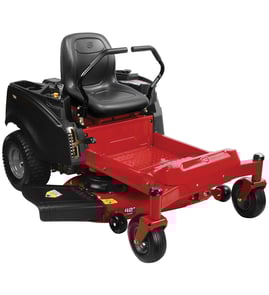





What is the advantage of a rear engine mower?
A rear-engine riding mower like Craftsman model 10727790 gives you seated comfort and faster mowing than a walk-behind, while staying compact and easy to maneuver. It is a practical choice when you mainly want efficient grass cutting rather than pulling heavy tow-behind attachments (see the 10727790 owner's manual).
Key advantages of a rear-engine rider
- More comfort, less fatigue: You sit while mowing, which reduces strain compared to pushing.
- Faster coverage: Wider cutting decks than most walk-behind mowers help you finish sooner.
- Good maneuverability: Compact size makes it easier to turn around trees and landscaping.
- Simple, purpose-built design: Great for routine mowing without needing lots of add-ons.
- Easier deck access for service: The manual outlines clear steps for deck removal and installation on a hard, level surface.
What to expect (typical vs. model-specific)
Rear-engine riders commonly have cutting widths in the high-20 inch to low-30 inch range. For the exact cutting width, deck setup, and operating details for Craftsman 10727790, use the specifications and diagrams in the 10727790 owner's manual.
| Feature | Rear-engine riding mower | Walk-behind mower |
|---|---|---|
| Operator position | Seated | Walking/pushing |
| Typical mowing speed | Faster for larger lawns | Slower for larger lawns |
| Maneuverability | Good in tighter yards | Very good, but more effort |
| Best use | Routine grass cutting | Small lawns, tight spots |
Why it matters
Choosing the right mower type affects how long mowing takes and how consistent the cut looks. The manual also notes that uneven cutting can be caused by issues like improper tire pressure or a deck that needs leveling, so the right platform plus correct setup helps you get a cleaner, more even finish.
Last updated: January 2026
How to read Craftsman model number?
For Craftsman rear-engine riding mowers, the model number identifies the exact mower configuration (engine and deck size) so you can match the correct parts and procedures. For model 10727790, the operator documentation lists it as a ZTS 7500 zero-turn rear engine rider with a 24HP Briggs & Stratton engine and 50-inch mower deck; use the ID tag under the seat to confirm the numbers. See the 10727790 owner's manual.
Where to find the model and serial numbers
The fastest way to confirm what you have is to read the identification tag.
- Park on a level surface, set the parking brake, and remove the key
- Tilt the seat forward
- Locate the identification tag on the underside of the seat area
- Record the model name/number and the unit serial number
- Also record engine model/type and engine code/serial (helpful for engine parts)
What the model number tells you (10727790 example)
On this Craftsman ZTS 7500 series, the model number is tied to a specific build.
| Model number | Series | Engine | Mower deck |
|---|---|---|---|
| 10727790 | ZTS 7500 | 24HP Briggs & Stratton | 50 in |
Common mix-ups (and how to avoid them)
A lot of confusion comes from mixing up different numbers on the mower.
- Model number: identifies the mower platform and configuration
- Unit serial number: identifies your specific mower for service history
- Engine numbers: identify the engine for carburetor, starter, and ignition parts
- Date codes: may appear on components but do not replace the model/serial tag
Why it matters
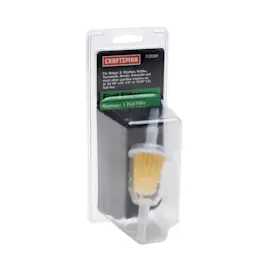
Using the correct model number prevents ordering the wrong blades, belts, fuel line, or electrical parts. For example, if you are chasing a fuel leak, matching the correct fuel line routing and size helps you choose the right replacement such as the hose fuel 11 791766 when it applies to your build.
Last updated: January 2026
Is it worth replacing a lawn mower engine?
Yes, replacing the engine on your Craftsman rear-engine riding mower model 10727790 is worth it when the mower deck, transmission, and chassis are still solid and you want more years from the machine; it is usually not worth it when the total repair cost approaches about half the price of a comparable new mower.
Quick decision checklist
- The deck shell is not rusted through and the spindles turn smoothly (no grinding).
- The transmission drives consistently (no slipping, no loss of drive when hot).
- You can do the work (or pay for labor) without the total cost getting too close to a replacement mower.
- You want to keep your current setup (seat, controls, attachments) instead of starting over.
- Safety items and adjustments can be restored to proper operation after the repair.
Cost and effort: what to compare
Engine swaps can be straightforward, but they still involve fuel, electrical, and belt linkages. Use this table to decide where your money goes.
| Option | Best when | Typical downside |
|---|---|---|
| Replace engine | Rest of mower is in good shape | Highest parts cost; moderate labor |
| Short block swap | Top end is damaged but accessories are reusable | Still labor-intensive; requires careful transfer |
| Buy a new mower | Multiple major systems are worn | Higher upfront cost; new setup learning curve |
What to inspect before you commit
The 10727790 manual emphasizes keeping hardware tight, not tampering with safety devices, and never making adjustments with the engine running. Use that same mindset to evaluate the mower before investing in an engine.
- Drive and belts: If the rider will not drive or belts slip, confirm the drive system is healthy before spending on an engine.
- Deck condition: Check for excessive vibration, bent pulleys, and loose blade mounting bolts.
- Fuel system: Look for cracked or leaking fuel line; a simple fix like replacing the hose fuel 11 791766 can solve “won’t run” complaints that look like engine failure.
- Safety and maintenance: Verify guards, labels, and safety devices can be returned to proper working order.
Why it matters
An engine replacement only pays off when it restores a reliable mower. If the deck, belt drive, or transmission is already near end-of-life, a new engine can leave you with the same performance problems and more money invested.
For model-specific maintenance and troubleshooting guidance, follow the 10727790 owner's manual.
Last updated: January 2026