Installation guide
 Owner’s manual


How big is the Kenmore Elite HE3 dryer?
Kenmore model 40299032011 is not an Elite HE3 platform; it is a different Kenmore dryer design, so HE3 dimension callouts (like 27 x 38 x 31.5 inches) do not apply. For the exact height, width, and depth, use the dimension diagram and clearance chart in the 40299032011 installation guide.
How to get the correct dimensions for model 40299032011
Use the installation guide because it shows the cabinet outline and the space you need for venting, power, and door swing.
- Measure width at the widest cabinet points (side to side)
- Measure height from the floor to the top of the control panel (include leveling feet)
- Measure depth from the front of the cabinet to the back (then add space for the exhaust connection)
- Add clearance for the door to open fully
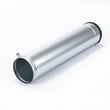
- Plan room for rigid or semi-rigid metal duct (avoid crushing the duct)
Space planning checklist (what to confirm)
These items affect whether the dryer fits even when the cabinet dimensions look right.
| What you are planning for | What to check | Where to confirm |
|---|---|---|
| Closet or alcove fit | Minimum clearances on sides, rear, and top | 40299032011 installation guide |
| Depth behind the dryer | Space for duct elbow and wall clearance | 40299032011 installation guide |
| Door clearance | Door swing and front clearance | Measure in your laundry area |
| Electrical and gas (if applicable) | Outlet location, cord reach, shutoff access | 40299032011 installation guide |
Why it matters
Using the correct model-specific dimensions prevents crushed ducting, restricted airflow, and installation problems that can cause long dry times and overheating.
Last updated: February 2026
How do I know if my Kenmore dryer thermal fuse is blown?
A blown thermal fuse on your Kenmore dryer model 40299032011 usually shows up as a dryer that will not start or runs but will not heat. The sure way to confirm is a continuity test with a multimeter after unplugging the dryer; an open reading means the fuse has blown.
Quick symptoms to look for
- Dryer will not start (no motor run)
- Drum tumbles but there is no heat
- Cycle starts then stops quickly (some setups)
- You recently had poor airflow (lint buildup, crushed vent, long vent run)
- Dryer felt unusually hot before the failure
How we test the thermal fuse (safe, reliable method)
- Unplug the dryer (and shut off gas if you have a gas model).
- Access the fuse (commonly on the blower housing or exhaust duct area).
- Pull at least one wire off the fuse terminal.
- Set your multimeter to continuity or ohms.
- Touch probes to the fuse terminals.
Expected result:
- Good fuse: continuity (beep) or near 0 ohms
- Blown fuse: no beep, OL, or infinite resistance
For access steps and panel removal guidance specific to this dryer, use the 40299032011 owner's manual.
Why the fuse blew (fix the cause, not just the part)
A thermal fuse is a one-time safety device; it opens when the dryer overheats. Overheating is most often caused by restricted airflow.
Airflow checks that prevent repeat failures
- Clean the lint screen and the lint screen housing
- Inspect the vent duct for crushing, kinks, or heavy lint
- Keep the transition duct as short as possible
- Use rigid or semi-rigid metal duct (avoid foil or vinyl)
- Confirm the outside vent hood damper opens freely
The installation instructions for this model emphasize using rigid or semi-rigid metal ducting and keeping the venting in good condition; follow the venting limits and setup details in the installation guide.
Symptom-to-likely-cause comparison
| What the dryer does | Common airflow-related cause | What to do next |
|---|---|---|
| Won’t start | Fuse opened from overheating | Test fuse, then correct vent restriction |
| Runs, no heat | Fuse opened or heat circuit issue | Test fuse first, then check thermostats/sensors |
| Long dry times | Restricted venting | Clean/shorten vent run, check outside hood |
Why it matters
Replacing a blown thermal fuse without correcting venting problems can lead to another overheat condition, repeated shutdowns, and poor drying performance.
Last updated: February 2026
How long is WE12M29?
WE12M29 is a GE dryer belt part number; it is not the belt specified for Kenmore dryer model 40299032011. For this Kenmore model, use the belt listed for 40299032011 so the length, rib profile, and width match the drum and idler system; see the 40299032011 installation guide for safe access and setup steps.
What belt to use on Kenmore 40299032011
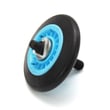
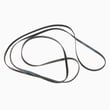
For model 40299032011, choose the drum belt that is listed under this model’s parts. One belt shown for this model is Samsung dryer drum belt 6602-001655.
- Match the belt by model number, not by a cross-brand part number
- Replace the belt if it is cracked, glazed, stretched, or leaving black dust
- Check the idler pulley and drum support rollers for drag that can break a new belt
- Keep the belt routed exactly as shown for proper tension
Quick symptoms that point to a worn or broken belt
- Motor runs but the drum does not tumble
- Drum turns easily by hand with little resistance
- Thumping or squealing that changes as the drum turns
- Burning rubber smell at startup
Belt “length” vs. correct fit
Even if you find a length for WE12M29 elsewhere, length alone is not enough to ensure fit on 40299032011.
| What must match | Why it matters | Best practice |
|---|---|---|
| Length | Sets tension range | Use the model-listed belt |
| Rib profile/count | Affects grip and tracking | Match the exact belt design |
| Width/thickness | Impacts wear and alignment | Avoid “close” substitutions |
Why it matters
Using the correct belt for Kenmore 40299032011 prevents slipping, noise, poor drying from low drum speed, and repeat belt failures caused by misfit or incorrect routing.
Last updated: February 2026
How much does it cost to replace a heating element in a Kenmore dryer?
For a Kenmore dryer like model 40299032011, replacing a heating element typically costs $20 to $100+ for the part (more if it’s sold as a complete heater housing assembly) and about $100 to $350 total when professional labor is included. Confirm the exact heater style and access steps in the 40299032011 owner's manual.
Typical cost breakdown
- Heating element (part only): $20 to $100+
- Element assembly with housing (part only): $80 to $200+ (common on some designs)
- Service labor (if hired): often 1 to 2 hours
- Common add-ons: vent cleaning supplies, clamps, or a short section of rigid metal duct
| Scenario | What you pay for | Typical total |
|---|---|---|
| DIY element swap | Part only | $20 to $200+ |
| Pro repair | Part + labor | $100 to $350 |
| “No-heat” but not the element | Diagnostics + different part | Varies by failure |
What to check before you buy a heating element
A “no heat” complaint is often caused by airflow or safety thermostats, not the heater itself. We recommend these quick checks first:
- Clean the lint screen and confirm strong airflow at the outside vent hood
- Inspect the vent run for crushing, kinks, or lint buildup (rigid or semi-rigid metal duct is best)
- Run the built-in heater check described in the installation guide
- If the dryer overheated previously, test safety devices such as the thermal cut-off and high-limit thermostat
- If the drum turns but heat is inconsistent, check temperature sensing components
If you’re troubleshooting heat on this model, these model-matched parts are commonly involved:
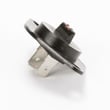
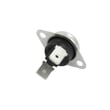
- Dryer thermal cut-off thermostat DC47-00016A
- Dryer high-limit thermostat DC47-00017A
- Dryer thermistor DC32-00007A
Why it matters
Replacing the wrong part can cost more than the repair itself. Verifying airflow and running the heater check helps you avoid repeat failures (overheating from restricted venting is a common reason new heat parts fail early).
Last updated: February 2026
How to hard reset a Kenmore dryer?
To hard reset your Kenmore dryer model 40299032011, unplug it (or switch the breaker off) for 5 minutes, then restore power and press POWER to reinitialize the control. This clears many temporary control glitches and some display issues.
Hard reset steps (safe, works for most Kenmore dryers)
- Turn the dryer OFF.
- Unplug the power cord (or turn the dryer circuit breaker OFF).
- Wait 5 minutes (this lets the control board fully discharge).
- Restore power.
- Press POWER, select a cycle, and press START/PAUSE.
- If the panel is still unresponsive, repeat once and then move to the checks below.
What to check if the reset does not fix it
A reset only clears the symptom; it does not correct airflow, heat, or safety shutdown problems.
- Airflow restriction: clean the lint screen and confirm the vent is clear and not crushed.
- Wrong vent material: use rigid or semi-rigid metal duct (avoid vinyl or foil).
- Overheating protection trip: a failed thermal device can stop heat or stop the dryer.
- Door not registering closed: inspect the door strike and latch alignment.
- Drive system issue: a broken belt can prevent tumbling on many designs.
Quick “does it heat?” check after resetting
The installation instructions describe a simple heater check: start a heated cycle (such as Normal), run about a minute, then open the door and feel for heat. If there is no heat after about 2 minutes, follow the troubleshooting guidance in the 40299032011 owner's manual.
Common symptoms and the most likely next step
| Symptom after reset | Most likely cause | Best next action |
|---|---|---|
| Runs but no heat | Airflow problem or heating safety device | Verify venting, then test thermostats/sensors |
| Will not start | Door not closed, control lock, or power issue | Confirm door closes, verify outlet/breaker |
| Stops mid-cycle | Overheating from blocked vent | Clean vent path and outside hood |
| Loud thumping/squeal | Worn drum support parts | Inspect rollers and belt |
Why it matters
Resetting is a fast first step, but dryers often act up because of venting problems. The installation guide stresses keeping the exhaust duct within recommended length and using proper metal ducting; good airflow prevents overheating shutdowns and long dry times. Review venting and electrical details in the 40299032011 installation guide.
Last updated: February 2026
What are the things inside a dryer called?
Inside your Kenmore 40299032011 dryer, the main components are typically called the drum, drive system, airflow system, heating system, and controls. These parts work together to tumble clothes, move air through the cabinet, add heat, and safely regulate temperature and cycle time.
Common internal dryer parts (what they do)
- Drum: holds and tumbles the load.
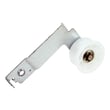
- Drive system: turns the drum (belt, motor, idler, rollers).
- Airflow system: pulls air in, moves it through the drum, and exhausts it (blower wheel, ducting, vent).
- Heating system: warms the air (electric heater or gas burner components).
- Safety temperature controls: prevent overheating (thermistors, high-limit thermostat, thermal cut-off).
- Door and switch components: allow operation only when the door is closed.
Parts you may see listed for this model
These are examples of internal parts commonly replaced when a dryer is noisy, not heating, or not tumbling:
| System | Example part name | What a failure can look like |
|---|---|---|
| Drive | Drum belt | Drum will not turn, motor runs or hums |
| Drum support | Roller | Thumping, squealing, rumbling |
| Airflow | Blower wheel | Poor airflow, longer dry times, rattling |
| Heat safety | High-limit thermostat / thermal cut-off | No heat or heat shuts off early |
Why it matters
Knowing the correct names helps you match symptoms to the right section of the parts diagram and order the correct replacement. For example, a “noisy drum” complaint usually points to drum support parts, while “no heat” often points to temperature controls or airflow restrictions.
Where to confirm the exact component names
- Use the exploded views and terminology in the 40299032011 owner's manual.
- For setup-related components (venting, power cord, gas hookup), use the 40299032011 installation guide.
Last updated: February 2026
Where to find model number on Kenmore dryer?
On a Kenmore dryer, the model number is printed on the appliance ID label; for model 40299032011, we most often see that label on the door opening (inside the door) or on the cabinet frame near the door.
Most common places to check
- Inside the dryer door opening: on the cabinet lip or door frame
- On the cabinet frame just behind the door
- Back of the dryer: near the top edge of the rear panel
- Side panel: near the rear (less common)
- Behind the lower access panel (some designs)
What the label looks like
The label typically includes:
- Model number (for example, 40299032011)
- Serial number
- Electrical rating (volts/amps) and sometimes gas type (for gas models)
| Location | How to access | Best for |
|---|---|---|
| Door opening | Open the door and inspect the frame | Fastest check before ordering parts |
| Back panel (top area) | Pull dryer forward and look near the top | When the door label is missing |
| Side panel | Look along the side near the rear | Secondary confirmation |
Why it matters
We use the exact model number to match the correct Kenmore dryer parts and installation details. Even small model-number differences can change the drum belt, thermostats, or door components that fit.
Helpful next steps
- Write the model number down exactly as shown (all digits, no spaces).
- If the label is worn, take a clear photo and zoom in.
- For model-specific diagrams and specs, use the 40299032011 owner's manual.
- If you are installing or reconnecting the dryer, follow venting and hookup requirements in the 40299032011 installation guide.
Last updated: February 2026