Owner’s manual


What is the capacity of the LG dle5955w dryer?
The LG DLE5955W dryer has a 7.3 cu. ft. drum capacity, which is considered an ultra-capacity size for handling larger loads like towels, bedding, and mixed laundry. For model-specific specs and features, refer to the DLE5955W user manual.
What this capacity means in real use
A 7.3 cu. ft. dryer drum is designed to dry bulky items more efficiently because there is more room for airflow and tumbling.
- Fits larger loads (comforters, blankets, bath towels)
- Helps reduce overdrying by allowing better moisture sensing
- Can shorten dry times when the venting is clear
- Works best when you avoid packing the drum tightly
Tips to get the best drying performance
Even with a large-capacity drum, performance depends heavily on airflow and load size.
- Clean the lint screen before every load
- Do not overload; clothes need room to tumble
- Use the correct cycle for fabric type (sensor dry vs. time dry)
- Keep the exhaust duct run short with minimal elbows
- If dry times increase, check for vent restrictions and lint buildup
Quick reference
| Item | For LG DLE5955W |
|---|---|
| Drum capacity | 7.3 cu. ft. |
| Best for | Large loads, bulky items |
| Most common performance limiter | Restricted venting / clogged lint screen |
Why it matters
Capacity affects how much you can dry at once, but it also impacts drying quality. When the drum is overloaded, airflow drops and clothes can come out damp, wrinkled, or unevenly dried.
Last updated: January 2026
Are LG ventless dryers any good?
LG ventless dryers can be a very good choice when you cannot vent outdoors because they save space and avoid exterior ducting; however, the LG DLE5955W is a vented dryer that is designed to exhaust air through 4-inch metal ductwork, so “ventless” pros and cons do not apply to this specific model. See the DLE5955W user manual for venting requirements and airflow guidance.
How the DLE5955W differs from ventless LG dryers
The DLE5955W uses a traditional exhaust system; it relies on proper airflow to dry efficiently and safely.
- Requires outdoor venting (especially critical for gas dryers)
- Uses 4-inch (10 cm) metal ducting
- Drying time and performance depend heavily on duct length, elbows, and lint buildup
- Includes a duct blockage sensing feature (FlowSense) to help detect restricted airflow
If you are shopping ventless: what “good” usually means
Ventless (typically heat pump or condenser) dryers are often considered “good” when your priorities match their strengths.
- Best for: apartments, interior laundry rooms, tight remodels, no exterior wall access
- Tradeoffs: longer cycle times, more routine filter and condenser cleaning
- Comfort factor: less hot air dumped outside, but more maintenance discipline is needed
Quick comparison: vented vs ventless
| Feature | Vented dryer (like LG DLE5955W) | Ventless dryer (heat pump/condenser) |
|---|---|---|
| Installation | Needs exterior duct | No exterior duct |
| Drying speed | Typically faster | Typically slower |
| Maintenance | Lint filter + vent cleaning | Lint filters + condenser/heat exchanger cleaning |
| Efficiency | Good | Often higher |
Why it matters
Choosing the wrong style can lead to frustration: a ventless dryer can feel “slow” if you expect vented performance, and a vented dryer like the DLE5955W can perform poorly if the exhaust duct is long, crushed, or clogged.
Last updated: January 2026
Why does an LG dryer take so long to dry?
For the LG DLE5955W dryer, long dry times are most often caused by restricted airflow (lint screen, exhaust duct, or outside vent hood), an overloaded load, or sensor-dry issues. Start with airflow checks and a duct condition test, then move to moisture-sensing and temperature-control parts if needed.
Fast checks that fix most “takes forever” complaints
- Clean the lint screen before every load; a partially blocked screen can add a lot of time.
- Confirm the exhaust is 4-inch metal ducting and not crushed, kinked, or excessively long.
- Check the outside vent hood for a stuck damper, lint buildup, or bird screen blockage.
- Dry similar fabrics together; heavy items mixed with light items can keep the cycle running.
- Try a smaller load size; clothes need room to tumble for proper airflow.
Use the built-in duct blockage sensing features (model-specific)
Your DLE5955W includes LG FlowSense and a duct condition test that can help confirm an airflow restriction. Follow the steps in the DLE5955W user manual to run the duct condition test and interpret the bar display.
What the results usually mean
| What you notice | Most likely cause | What to do next |
|---|---|---|
| Clothes still damp, cycle keeps extending | Vent restriction | Clean/shorten duct, clear outside hood |
| Dryer runs but heat seems weak | Heating system or temperature control issue | Check thermostats/thermistor, then heater (electric) |
| Sensor cycles end wrong or take too long | Moisture sensor not reading correctly | Clean sensor bars, inspect sensor parts |
Parts that commonly affect dry time on this model
If airflow is good and loads are sized correctly, these DLE5955W parts are common suspects:
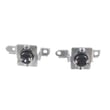
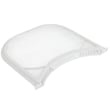
- Dryer lint filter 5231EL1003B: A torn or warped screen can let lint bypass and clog the housing or blower path.
- Dryer moisture sensor 6500EL3001A: If the sensor bars are dirty or the sensor is failing, sensor-dry cycles can run long.
- Dryer thermistor AGM30045804: A bad thermistor can cause incorrect temperature feedback and poor drying performance.
- Dryer high-limit thermostat 6931EL3003D: If it is tripping early, heat output can be reduced.
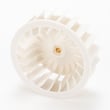
- Dryer blower wheel 5835EL1002A: A loose or damaged wheel can reduce airflow even with a clear vent.
Why it matters
The DLE5955W relies on strong airflow and accurate moisture and temperature sensing to end cycles on time. When airflow is restricted, the dryer cannot move moist air out efficiently, so drying time increases and energy use goes up.
Last updated: January 2026
What is the most common problem with LG dryers?
For the LG DLE5955W electric dryer, the most common problems are long dry times (almost always airflow restriction from lint or venting) and noisy tumbling (typically wear in drum support and belt-drive components). Start with the venting and maintenance guidance in the DLE5955W user manual.
Most common symptoms and what they usually point to
- Long dry times or damp clothes: clogged lint screen, restricted exhaust duct, blocked outside vent hood
- No heat or weak heat (electric dryer): heating circuit issue, temperature sensing problem, or overheating protection tripping from poor airflow
- Rumbling or thumping: worn drum support roller(s) or drum support surfaces
- Squealing: idler pulley wear or belt-related friction
- Stops mid-cycle: overheating from restricted venting, or a door switch interruption
Quick checks we recommend first
- Clean the lint screen before every load and make sure it seats fully
- Confirm strong airflow at the outside vent hood while the dryer runs
- Inspect the vent run for crushed ducting, lint buildup, or too many elbows
- Run a timed heat cycle for 3 minutes; exhaust air should feel warm
- If it is noisy, note whether the sound is rhythmic (once per drum turn) or constant
Parts that commonly relate to these problems on DLE5955W
| Symptom | What to inspect | Example compatible part |
|---|---|---|
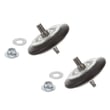
| Rumbling or thumping | Drum support roller(s) | Dryer drum support roller 4581EL2002L |
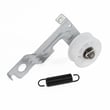
| Squealing | Idler pulley | Dryer idler pulley 4560EL3001A |
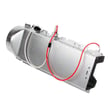
| No heat or weak heat | Heating element | Dryer heating element 5301EL1001J |
| Poor drying from lint issues | Lint screen fit and condition | Dryer lint filter 5231EL1003B |
Why it matters
On the DLE5955W, restricted venting is the top cause of slow drying and can also lead to overheating-related shutdowns that stress thermostats, sensors, and the heating circuit.
Last updated: January 2026