Owner’s manual



What is the most common problem with the Samsung washing machine?
For the Samsung WF50K7500AW washer, the most common customer-reported problems are draining failures and out-of-balance spinning (shaking, stopping mid-cycle). In many cases, the fix is basic maintenance (cleaning the drain filter) or correcting load size and leveling; failed drain or suspension parts are the next most common.
Most common symptoms (and what they usually mean)
- Won’t drain / water left in tub: clogged drain pump filter, blocked drain hose, or a failing drain pump motor
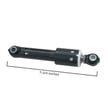
- Shakes or bangs during spin: unbalanced load, washer not level, or worn shock absorbers
- Stops mid-cycle with an error code: often tied to drain or balance conditions
- Door won’t lock / won’t start: door lock switch issue or a latch/door alignment problem
- Slow fill or no fill: inlet screens clogged or a failing water inlet valve
Quick checks we recommend first
Use these steps before replacing parts; they solve a large share of drain and spin complaints.
- Run a small test load (3 to 5 items) to confirm the symptom repeats
- Redistribute heavy items (towels, jeans, bedding) and avoid mixing one heavy item with light items
- Confirm the washer is level and stable on the floor (no rocking)
- Clean the drain pump filter and check the drain hose for kinks
- If you see a drain-related code, follow the steps in the WF50K7500AW owner’s manual
Parts that commonly fix these problems
If the quick checks don’t correct the issue, these are the parts most often involved on front-load washers like this Samsung model.
| Symptom | Most likely part area | Example part for this model |
|---|---|---|
| Won’t drain / ND-type behavior | Drain pump system | Washer drain pump motor DC31-00178D |
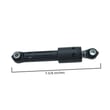
| Excessive shaking / DC-type behavior | Suspension | Samsung washer shock absorber DC66-00470A |
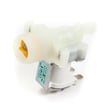
| Won’t fill / NF-type behavior | Water inlet | Washer water inlet valve DC62-30314K |
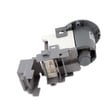
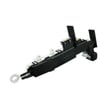
| Won’t lock / won’t start | Door lock | Washer door lock switch DC64-00519D |
Why it matters
Drain and balance problems are the issues most likely to stop a cycle, leave water in the tub, or cause repeated vibration. Addressing them early helps prevent secondary damage (like leaks at the door boot or strain on the tub and frame).
Related troubleshooting guides
- Samsung front load washer nd error code
- Samsung front load washer dc error code
- Samsung wi-fi front load washer error codes
Last updated: February 2026
What is the capacity of the WF50K7500AW A2?
The Samsung WF50K7500AW (WF50K7500AW/A2) washer has a 5.0 cu. ft. capacity, which is considered a large-capacity, high-efficiency front-load size. For cycle-by-cycle loading guidance and recommended fill levels, use the WF50K7500AW owner’s manual.
What 5.0 cu. ft. means for everyday loads
A 5.0 cu. ft. drum is designed to handle bulky items and fewer total loads per week.
- King/queen bedding typically fits more comfortably than in 4.0 to 4.5 cu. ft. washers
- Large towel loads usually wash better when you avoid packing the drum tight
- High-efficiency washers clean best when items can tumble freely
- Overloading can increase vibration and out-of-balance spinning
Quick capacity comparison (typical front-load ranges)
| Washer capacity | Typical use case | What you’ll notice |
|---|---|---|
| 4.0 to 4.5 cu. ft. | Medium households | More loads for bulky items |
| 5.0 cu. ft. | Families, bulky loads | Fewer loads, easier bedding |
| 5.2+ cu. ft. | Extra-large loads | More room, but still avoid overfilling |
Tips to get the best results from a large-capacity drum
These habits help cleaning performance and reduce wear on parts like the door boot and suspension.
- Load loosely; keep items below the top of the drum and don’t compress them
- Mix item sizes (small plus medium) to improve tumbling and balance
- Use HE detergent and measure carefully to reduce oversudsing
- Run periodic cleaning cycles to help prevent odor and residue
Why it matters
Capacity affects cleaning, rinse performance, and spin balance. Using the right load size helps the WF50K7500AW wash efficiently and can reduce stress on components such as shock absorbers and the door boot.
Last updated: February 2026
Why is my Samsung WF50K7500AW not filling with water?
If your Samsung WF50K7500AW washer is not filling, the most common causes are a closed water supply valve, kinked inlet hoses, clogged inlet screen filters, or a failed water inlet valve. Start with the supply and hose checks before moving to electrical testing.
Quick checks we recommend first
- Confirm both hot and cold shutoff valves are fully open.
- Straighten any kinks; make sure the hoses are not crushed behind the washer.
- Verify strong water flow at the wall by briefly aiming each hose into a bucket (water off before disconnecting).
- Clean the inlet screen filters at the washer connection (sediment can block filling).
- Make sure the door fully latches; a door lock issue can prevent filling.
Parts that commonly fix a no-fill problem
If water supply and screens are good, the inlet valve or door lock circuit is often next.
| Symptom | Most likely area | What we do next |
|---|---|---|
| No water at all (hot and cold) | Water supply, inlet screens, inlet valve | Check supply flow, then test valve coils |
| Only hot or only cold fills | One side of inlet valve, hose/screen | Clean screen, test that valve solenoid |
| Fills briefly then stops | Inlet screens, control sensing, valve | Recheck screens; inspect valve wiring |
| Won’t fill and door won’t lock | Door lock switch | Check latch alignment; test door lock |
Helpful model-matched parts to consider:
- Washer water inlet valve DC62-30314K
- Washer water inlet valve DC62-00214M
- Washer door lock switch DC64-00519D
How we confirm the water inlet valve is bad
- Unplug the washer and turn off both water valves.
- Access the valve and inspect wiring connectors for corrosion or a loose fit.
- Use a multimeter to check each solenoid coil for continuity.
- If a coil is open (no continuity) or the valve is leaking internally, replace the valve.
Why it matters
A restricted fill can cause long cycle times, poor cleaning, and error codes. Fixing the water supply or replacing a failed inlet valve restores proper water level sensing and normal wash performance.
For model-specific access steps and safety notes, use the WF50K7500AW owner's manual.
Last updated: February 2026
Is the Samsung Model WF50K7500AW stackable?
Yes. The Samsung WF50K7500AW is a front-load washer designed to be installed as a standalone unit or stacked with a compatible Samsung dryer when you use the correct stacking kit and follow the WF50K7500AW owner's manual.
What “stackable” means for this washer
Stacking means the dryer sits on top of the washer using a manufacturer-approved stacking kit so the pair is stable and properly supported.
- Use a Samsung stacking kit made for your washer and dryer series
- Keep the washer on a solid, level floor before stacking
- Do not stack without the kit (never “free stack”)
- Confirm the dryer model is approved to stack with WF50K7500AW
- Route drain hose and water lines so they do not kink or rub
Quick compatibility checklist
Use this checklist before ordering a kit or scheduling installation.
| Item to confirm | What to look for | Why it matters |
|---|---|---|
| Dryer type | Samsung front-load dryer | Matching footprint and mounting points |
| Stacking kit | Samsung-approved kit for your pair | Prevents shifting and vibration |
| Space | Enough height plus rear clearance | Avoids crushed venting/hoses |
| Leveling | Washer leveled on all feet | Reduces walking and noise |
Installation tips that prevent vibration and “walking”
A stacked laundry pair amplifies vibration if the washer is not stable.
- Level the washer first, then re-check level after the dryer is mounted
- Avoid soft or flexing floors when possible
- Do not overload; heavy, unbalanced loads increase movement
- If you see excessive shaking, inspect suspension parts such as the Samsung washer shock absorber DC66-00470A
Why it matters
Stacking saves floor space, but stability is critical. Using the correct stacking kit and a properly leveled WF50K7500AW helps prevent excessive vibration, noise, and premature wear on suspension and cabinet components.
Last updated: February 2026
What is the lifespan of a Samsung front load washer?
A Samsung front load washer like model WF50K7500AW typically lasts 10 to 15 years in normal household use. Reaching the high end depends most on routine cleaning, correct loading, and fixing early symptoms (leaks, draining issues, vibration) before they damage major components; see the WF50K7500AW owner's manual for the maintenance schedule.
What affects lifespan the most
- Load habits: Avoid chronic overloading; it strains the tub, bearings, and suspension.
- Detergent use: Use HE detergent and avoid oversudsing (suds can cause poor draining and odors).
- Moisture control: Leave the door ajar between loads to reduce mildew and boot deterioration.
- Drain system care: Clean the pump filter and check pockets for coins, screws, and hairpins.
- Vibration control: Keep the washer level; persistent shaking shortens the life of shocks and the spin system.
Common wear items that can shorten life (and what they look like)
| Symptom | Likely area | What to do first |
|---|---|---|
| Loud banging, walking, heavy vibration | Suspension | Confirm leveling; inspect shocks and mounting points |
| Water at the front of the washer | Door seal area | Inspect the door boot for tears and clamp fit |
| Won’t drain, slow drain, grinding noise | Drain pump / filter | Clean filter; check for debris; test pump |
| Door won’t lock or cycle won’t start | Door lock | Check latch alignment; test lock switch |
Model WF50K7500AW parts that often come up in these repairs include the washer drain pump motor DC31-00178D and the washer door boot DC64-02174F.
Why it matters
A front load washer’s most expensive failures usually happen after long periods of vibration, leaks, or poor draining. Addressing those early helps you avoid secondary damage to the tub, control board, and wiring harness.
Quick maintenance routine (simple and effective)
- Run a monthly tub-clean cycle (or hot wash) as recommended in the manual
- Wipe the door boot folds dry after laundry day
- Clean the drain pump filter every 1 to 3 months (more often with pet hair)
- Check inlet hoses yearly for bulges or seepage
- Re-level the washer if you notice new vibration
Last updated: February 2026
Is the Samsung 4.5 front load washer any good?
Yes. Samsung 4.5 cu. ft. front-load washers like model WF50K7500AW are a strong choice when you want large capacity, efficient cleaning, and quieter operation than many top-load designs. The main tradeoffs are that they demand good leveling and routine care to prevent vibration, odors, and moisture issues (common to front-load washers).
What “good” usually means for this washer type
Front-load washers in this class are typically rated highly by owners because they combine capacity with efficiency and fabric care.
- Large 4.5 cu. ft. capacity handles bulky loads (bedding, towels) more easily
- High-speed spin extracts more water, which can shorten dryer time
- Gentle tumbling action helps reduce wear compared to agitator-style washers
- More cycle options (including quick cycles on many Samsung models)
- Lower water use than traditional top-load washers
Common complaints and what to check first
Most “not good” experiences trace back to installation, load balance, or maintenance rather than a single failed part.
- Vibration or walking: confirm the washer is level, on a solid floor, and loads are not overpacked
- Wet clothes after spin: reduce load size, avoid mixing heavy items with light items, and re-run spin
- Odor or mildew: leave the door ajar between loads and run regular tub-clean cycles
- Drain issues: clean the pump filter and check for kinked drain hose
Quick decision guide
| If you care most about… | This 4.5 cu. ft. Samsung front load style is usually… | Best practice |
|---|---|---|
| Capacity and efficiency | A good fit | Use HE detergent and correct dosing |
| Quiet operation | A good fit | Level the cabinet carefully |
| Low maintenance | More demanding | Do routine cleaning and ventilation |
| Vibration-free spinning | Good when installed right | Balance loads and avoid overloading |
Why it matters
A front-load washer can clean extremely well and save water, but it is less forgiving about leveling, load balance, and moisture control. Getting those basics right is what makes a “good washer” feel great long-term.
Helpful references for WF50K7500AW
Use the WF50K7500AW owner’s manual for cycle guidance, detergent recommendations, and care routines.
Last updated: February 2026