Owner’s manual



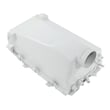
Do LG washers have a filter that needs to be cleaned?
Yes. LG washers like model WM3875HVCA use a drain pump filter (coin trap) that should be cleaned regularly to prevent slow draining, standing water, and drain-related error codes. We recommend checking it about once a month, or sooner if you wash linty items or find debris.
Where the filter is and what it does
On most LG front-load washers, the drain pump filter sits at the lower front of the cabinet behind a small access door/panel. It catches coins, hair pins, lint, and small items before they reach the drain pump.
- Protects the drain pump from jams and damage
- Helps the washer drain and spin properly
- Reduces odors caused by trapped debris
- Prevents leaks caused by a poorly seated filter cap
For model-specific access details, follow the steps in the WM3875HVCA owner's manual.
How to clean the drain pump filter (safe, quick checklist)
- Unplug the washer.
- Place a shallow pan and towels under the access area.
- Drain water from the small drain hose (if equipped), then re-cap it.
- Unscrew the filter cap slowly; remove debris.
- Rinse the filter and wipe the housing clean.
- Reinstall the filter cap firmly (hand-tight) and close the access door.
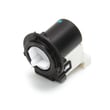
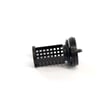
If the filter is cracked, stripped, or missing, replace it with the correct part for this model: washer drain pump filter 383EER2001A.
What you’ll notice when the filter needs cleaning
| Symptom | What it usually means | What to do first |
|---|---|---|
| Slow drain or water left in tub | Filter partially blocked | Clean the drain pump filter |
| Loud humming during drain | Pump struggling against blockage | Clean filter; check for small items |
| Drain-related error codes | Drain flow restricted | Clean filter; inspect hoses |
Why it matters
A clogged filter forces the drain pump to work harder, which can lead to longer cycle times, poor spinning, and premature pump wear. Keeping the filter clean is one of the simplest ways to protect the drain system.
If you’re troubleshooting an unbalanced load message instead, use our LG front load washer ue error code guide.
Last updated: February 2026
What is the average lifespan of an LG washer?
Most LG washers, including the LG WM3875HVCA, typically last 10 to 15 years with normal household use and basic maintenance. Keeping the tub clean, avoiding chronic overloading, and fixing small issues early (like draining or door-lock problems) helps you reach the high end of that range.
What affects washer lifespan the most
- Load size and balance: frequent overloading and heavy, unbalanced loads increase wear
- Maintenance habits: routine cleaning reduces odor, residue, and corrosion
- Water quality: hard water can accelerate scale buildup on internal components
- Drain health: coins, lint, and debris strain the pump and can cause slow drains
- Door seal care: keeping the boot clean and dry helps prevent leaks and mold
Simple maintenance that adds years
Use these habits for WM3875HVCA and most LG front-load washers:
- Run a monthly cleaning cycle (or hottest empty cycle) and wipe the door glass afterward
- Leave the door slightly open between loads to dry the drum and boot
- Use HE detergent and measure carefully (too much detergent leaves residue)
- Check pockets to prevent debris from reaching the drain system
- Clean the drain pump filter periodically; follow the steps in the WM3875HVCA owner's manual
Common wear items and what they usually cause
| Symptom | Common area involved | What to check first |
|---|---|---|
| Won’t drain or drains slowly | Drain system | Drain pump filter, then pump |
| Door won’t lock or cycle won’t start | Door lock system | Latch alignment, then lock |
| Leaks at the door | Door boot/seal | Boot condition, clamp tension |
If you’re seeing repeated drain issues, the washer drain pump filter 383EER2001A and the drain pump assembly are common service points on this model.
Why it matters
A washer that is draining correctly, sealing correctly, and staying clean runs with less strain on the motor and control system. That reduces breakdowns and helps your LG washer reach its expected 10 to 15 year lifespan.
Last updated: February 2026
What is the capacity of the Wm3875hvca?
The LG WM3875HVCA washer has a 4.2 cu. ft. capacity, which is a common size for a full-size front-load washer and works well for everyday mixed loads, towels, and bedding. For cycle-specific load guidance, use the WM3875HVCA owner's manual.
What 4.2 cu. ft. means for real-world loads
A 4.2 cu. ft. drum is designed for medium-to-large household laundry needs. To get the best cleaning and spin performance, we recommend:
- Load items loosely; don’t pack the drum tight
- Keep the top of the load below the door opening area
- Wash bulky items (comforters, blankets) one at a time when possible
- Balance heavy items (for example, add a few towels with a blanket)
- Use HE detergent and measure carefully to reduce oversudsing
Typical load examples (quick reference)
These examples help you visualize what fits comfortably in a 4.2 cu. ft. LG front-load washer.
| Load type | Typical fit in 4.2 cu. ft. | Best practice |
|---|---|---|
| Everyday mixed laundry | Medium to large load | Leave room for tumbling |
| Towels | Several bath towels | Avoid overpacking for better rinsing |
| Bedding | Many sheet sets; some comforters | Wash bulky items alone if needed |
Why it matters
Capacity affects cleaning, rinsing, and vibration. Overloading can lead to poor wash results, longer cycle times, and out-of-balance spinning (often tied to UE-type symptoms). For LG-specific guidance, see LG front load washer error codes.
Last updated: February 2026
What is the most common problem with LG washers?
The most common problems we see with LG washers (including model WM3875HVCA) are drain and spin-related issues: slow or no draining from a clogged pump filter or failing drain pump, plus out-of-balance loads that trigger vibration and spin errors. See the WM3875HVCA owner's manual for your model’s specific error-code meanings and maintenance steps.
Most common issues (and what they look like)
- Drainage problems: water left in the tub, long drain times, cycle stops mid-cycle
- Unbalanced load / vibration: banging, walking, repeated rebalancing, reduced spin speed
- Door lock problems: won’t start, won’t unlock, or stops with a door/lock-related error
- Fill problems: slow fill, no fill, or overfilling symptoms tied to inlet valves or pressure sensing
- Odor or mold on front-loaders: musty smell, residue on the door boot
Quick checks you can do first
- Power off and unplug the washer.
- If there’s standing water, focus on the drain path: check the pump filter area and drain hose routing.
- Run smaller, balanced loads; avoid mixing one heavy item with light items.
- Confirm the washer is level and firmly on the floor.
- If the door won’t lock/unlock reliably, inspect the latch area and wiring connections.
Common symptoms and likely causes
| Symptom | Most likely cause | Parts often involved |
|---|---|---|
| Won’t drain or drains slowly | Clogged filter or weak pump | Washer drain pump filter 383EER2001A, washer drain pump assembly 4681EA2001T |
| Loud shaking, won’t spin fast | Load balance or leveling issue | (Usually not a part) |
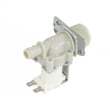
| Won’t fill or fills slowly | Supply restriction or valve issue | Washer water inlet valve 4769ER4001B, LG washer single-solenoid water inlet valve 5220FR2006H |
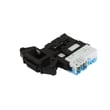
| Won’t start due to door | Door lock failure | LG washer door lock assembly EBF49827801 |
Why it matters
Drain and balance problems are the top causes of incomplete cycles and water left in the tub. Catching them early helps prevent repeat error codes, wet laundry, and extra strain on the pump, motor, and door lock.
Helpful LG troubleshooting resources
Last updated: February 2026
Why are LG parts so expensive?
LG parts for the WM3875HVCA washer often cost more because they are engineered to tight fit and performance tolerances, sold through controlled distribution, and priced to support warranty, inventory, and model-specific compatibility. Higher-cost assemblies (like pumps, valves, and door locks) also bundle multiple components into one replacement.
What drives the price up
- Model-specific design and testing: Parts are built to match the WM3875HVCA’s exact electrical connectors, mounting points, and water-flow specs.
- Assembly-level replacements: Many repairs require a full assembly instead of a small sub-part.
- Supply chain and availability: Stocking less-common parts for older models can raise per-unit cost.
- Electronics and sensors: Modern LG washers use more controls, sensors, and molded components than older machines.
- Compatibility risk: Correct parts reduce repeat failures and installation issues.
Examples on this model (what you are really buying)
| Part type | Example part on WM3875HVCA | Why it can cost more |
|---|---|---|
| Drain system | Washer drain pump assembly 4681EA2001T | Motor, housing, seals, and mounting in one unit |
| Door safety | LG washer door lock assembly EBF49827801 | Switches and locking mechanism tied to control logic |
| Water fill | LG washer single-solenoid water inlet valve 5220FR2006H | Solenoid valve calibrated for flow and leak control |
How we recommend saving money without risking the repair
- Confirm the symptom first (drain, fill, no-spin, door won’t lock) before ordering.
- Use the exploded views and part lists in the WM3875HVCA owner’s manual to match the correct component.
- Start with maintenance items when relevant (clogs, filters, hoses) before replacing major assemblies.
- Compare the cost of a small part versus an assembly when both options exist for the same failure.
- If the washer is leaking, prioritize seals, clamps, and hoses before replacing tubs or panels.
Why it matters
Using the correct LG part for the WM3875HVCA helps prevent leaks, error codes, and repeat breakdowns. A cheaper “close match” can fit poorly, cause vibration, or trigger control and sensor faults.
Last updated: February 2026