Owner’s manual
 View engine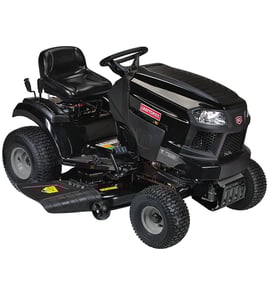



How do I tell what year my Craftsman mower is?
For your Craftsman riding mower model 247204440, the most reliable way to identify the build year is to read the serial number/date code on the mower’s ID tag and decode it. On many Craftsman and MTD-built tractors, the date is embedded in the first digits of the serial number; confirm the exact format for your unit in the 247204440 owner’s manual.
On tight turn riding lawn mowers like model 247204440, the ID tag is commonly located in one of these spots:
- Under the seat pan or on the seat bracket
- On the frame rail near the engine
- Near the rear axle/transaxle area
- Under the hood near the dash tower
- On the mower deck shell (less common for the primary ID tag)
Craftsman tractors often use one of these common date-code patterns:
- 6-digit date code:
MMDDYY(example:071294= July 12, 1994) - Year embedded in a longer serial: the first 6 digits may still represent
MMDDYY, followed by additional production numbers
| Code format | What to look for | What it tells you |
|---|---|---|
MMDDYY |
First 6 digits | Month, day, and 2-digit year |
| Long serial starting with 6 digits | First 6 digits only | Build date, then sequence numbers |
Use these practical options to narrow it down:
- Check the engine model/type/code stamped on the engine (often includes a date or build code)
- Compare your mower’s deck size and drive system to the parts diagrams for model 247204440
- Match key wear items you replace (belts, blades, cables) to the correct listings for your model
The manufacturing year helps us match the correct parts diagrams and avoid ordering the wrong belt, blade, or electrical part when Craftsman made mid-year changes.
Last updated: February 2026
What are the most common issues with 247204440?
The most common issues we see on the Craftsman 247204440 tight turn riding lawn mower involve drive and deck belt wear, blade engagement problems, starting or no-crank complaints, and uneven cutting. These problems usually trace back to routine wear parts, safety interlocks, or belt and pulley alignment covered in the owner's manual.
- Mower will not move or slips under load: worn or stretched ground drive belt, idler pulley wear, or linkage adjustment.
- Blades will not engage: electric clutch issue, blade drive belt wear, or a safety interlock not closing.
- No crank or intermittent starting: weak battery connections, starter solenoid failure, or an interlock switch problem.
- Uneven cut or poor bagging/mulching: dull/bent blades, deck buildup, or incorrect deck leveling.
- Excess vibration: damaged blade, loose fasteners, or a worn mandrel/pulley assembly.
If symptoms match, these are frequent replacement items for the 247204440:
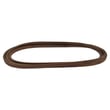
- Lawn tractor ground drive belt, 1/2 x 89-3/4-in 954-05027b (loss of drive, slipping)
- Mtd lawn tractor blade drive belt, 2/3 x 139-in 954-05025A (blades not spinning, squeal)
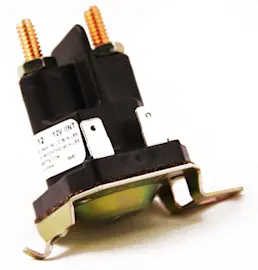
- Lawn tractor starter solenoid 725-06153a (clicking, no crank)
- Lawn tractor interlock switch 725-04363 (won’t crank, blades cut out)
- Lawn tractor electric clutch 917-05209 (PTO won’t engage)
- Park on level ground, set the parking brake, remove the key, and disconnect the spark plug wire.
- Inspect belts for glazing, cracks, fraying, or oil contamination.
- Confirm the PTO switch, brake pedal, and seat switch conditions allow starting and blade engagement.
- Check battery terminals for corrosion and tightness.
- Look for debris packed around pulleys, mandrels, and the deck.
| Symptom | Most likely cause | Common fix |
|---|---|---|
| Won’t move | Ground drive belt/idler issue | Inspect routing, replace belt if worn |
| Blades won’t engage | PTO clutch, blade belt, interlock | Test interlocks, inspect belt, check clutch |
| No crank | Solenoid, interlock, battery cables | Clean/tighten cables, test switch/solenoid |
| Uneven cut | Blade condition, deck level | Sharpen/replace blades, level deck |
Catching belt wear, interlock problems, and deck issues early prevents bigger failures like damaged pulleys, overheated clutches, and poor cut quality. Routine inspection also reduces downtime during mowing season.
Last updated: March 2026
What model number is the Craftsman 247204440?
The model number for this Craftsman tight turn riding lawn mower is 247204440. Use that exact number when ordering parts (like belts, blades, or a starter solenoid) and when checking diagrams and specifications in the 247204440 owner's manual.
Most Craftsman riding mowers and tractors list the model number on an ID label. Common locations include:
- Under the seat pan or on the seat bracket
- On the frame near the engine compartment
- Near the rear hitch plate area
- Under the hood on the chassis rail
- On the left or right side of the frame by the footrest
Craftsman model numbers can look similar, but parts can differ by deck size, drive system, and production run. Using 247204440 helps us match the correct diagrams and compatible parts.
| What you are doing | Use this identifier | Example from this model |
|---|---|---|
| Looking up manuals and diagrams | Model number | 247204440 |
| Ordering a specific replacement part | Part number | 954-05027A (ground drive belt) |
| Confirming an accessory kit | Part ID (when listed) | 19B30018OEM (bagger assembly) |
- Match the model number exactly: 247204440
- Compare the part description to your mower setup (deck size, drive type)
- Replace worn hardware when you remove it (nuts, cotter pins) to prevent loosening
- For drive issues, inspect belts and idler pulleys for glazing, cracking, or slack
- For no-crank issues, check the battery connections and safety interlock circuit first
Using the correct model number prevents wrong-part returns and saves time during repairs, especially on high-variation items like mower blades, drive belts, and electrical interlock components.
Last updated: February 2026