
How many tons is a 48000 BTU AC unit?
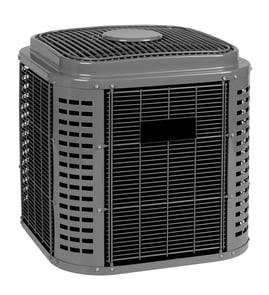
A 48,000 BTU central air conditioner is 4 tons of cooling capacity because 1 ton equals 12,000 BTU per hour. For your York H1RA048S06D central air conditioner, “4 ton” is the standard way to describe that 48,000 BTU size.
Quick conversion (BTU to tons)
Use this simple formula:
- Tons = BTU ÷ 12,000
- 48,000 ÷ 12,000 = 4
- “Tonnage” describes cooling capacity, not the unit’s weight
| Cooling capacity | BTU per hour | Common label |
|---|---|---|
| 3 ton | 36,000 | 3 ton AC |
| 3.5 ton | 42,000 | 3.5 ton AC |
| 4 ton | 48,000 | 4 ton AC |
| 5 ton | 60,000 | 5 ton AC |
Why it matters
Matching tonnage to your home and system matters because it affects comfort, humidity control, and efficiency. A system that is oversized can short-cycle (run in short bursts), while an undersized system can run constantly and still struggle on hot days.
Tips when shopping for parts or confirming size
When we help you match parts to a York central air conditioner like model H1RA048S06D, we use the model number and the unit data plate information to avoid mismatches.
- Confirm the model number and serial number from the outdoor unit label
- Note the rated capacity (often shown as BTU/h or tons)
- Match electrical specs (typical items include contactor, run capacitor, and fan motor)
- If you are unsure where the model tag is located, use how to find your appliance model number (and what it means for parts)
For replacement parts and model lookups, start with the model-based parts listing, or search by model number on Sears PartsDirect.
Last updated: February 2026
Is 115 volt AC good?
Yes; 115-volt AC power is “good” for many smaller loads, but it is usually not the right supply voltage for an outdoor central air conditioner like York H1RA048S06D, which commonly uses a higher-voltage circuit (typically 208/230V) to handle compressor and condenser-fan demand safely and reliably.
What 115V is typically used for (and what it is not)
115V (often called 110V or 120V) is common in homes, but it is generally used for lighter electrical loads.
- Good fit: small window AC units, portable AC units, many mini-split indoor components
- Sometimes used: furnace/air-handler controls and blower circuits (depends on system)
- Usually not used: outdoor central AC condensing units (compressor-driven loads)
- Not a safe “swap”: changing voltage requires equipment rated for that voltage
- Key point: the unit nameplate and wiring requirements control what you can use
How to tell what your York H1RA048S06D needs
Use the equipment rating label (nameplate) on the outdoor unit, typically inside the service panel or on the cabinet. Match your electrical supply to the nameplate values.
| What to check on the nameplate | What it means | What to do |
|---|---|---|
| Rated voltage (ex: 208/230V) | Required supply range | Supply must match the rating |
| MCA (minimum circuit ampacity) | Minimum wire and breaker sizing basis | Size wiring and breaker per code |
| MOCP (max overcurrent protection) | Maximum breaker/fuse allowed | Do not exceed this value |
| Phase (usually 1PH) | Residential vs commercial power | Must match your service |
Why it matters
Using the wrong voltage can cause hard starts, nuisance breaker trips, overheating, and compressor damage. Correct voltage and proper breaker sizing also reduce voltage drop, which helps the compressor start and run efficiently.
Practical guidance for homeowners
- If you only have a 115V circuit available outdoors, plan on a new properly sized circuit for most central AC condensers.
- If you are comparing systems: 115V is convenient, but higher-voltage equipment is common for higher BTU capacity.
- When you are ready to identify parts for this model, start with the model number and diagrams; you can also search by model on Sears PartsDirect.
Last updated: February 2026
What is the most expensive part to replace on an AC unit?
On a York central air conditioner like model H1RA048S06D, the compressor is typically the most expensive single component to replace because it is the “pump” that moves refrigerant through the system. In many repairs, the evaporator coil or condenser coil can also be among the highest-cost replacements.
Most expensive AC parts (typical ranking)
These are the parts that most often drive the highest repair bills on a central AC system:
- Compressor (in the outdoor condensing unit)
- Evaporator coil (usually in the indoor air handler or furnace plenum)
- Condenser coil (outdoor coil)
- Main control board or inverter module (on some systems)
- Refrigerant leak repair (labor-intensive; may include coil replacement)
Typical cost drivers (what makes it expensive)
Even when the part itself is only one line item, total cost rises quickly because of labor, refrigerant handling, and system setup.
| Repair item | Why it gets expensive | What’s commonly included |
|---|---|---|
| Compressor replacement | Sealed-system work and heavy labor | Refrigerant recovery, brazing, evacuation, recharge, electrical checks |
| Coil replacement (evaporator or condenser) | Leak-prone, time-consuming access | Coil swap, nitrogen pressure test, evacuation, recharge |
| Control board/module | High part cost on some models | Diagnostics, wiring checks, setup/verification |
How we recommend deciding: repair vs. replace
Use these practical checkpoints before investing in a major repair:
- Age of the system: Central AC life expectancy is 15 to 20 years.
- Failure type: A compressor or coil failure is a “major” repair; repeated refrigerant leaks usually stay expensive.
- Condition of the rest of the unit: Corrosion, noisy fan motor, or burnt wiring often means more repairs are coming.
- Efficiency goals: Older units can cost more to run even after repair.
- Parts availability: Use the model number H1RA048S06D to match parts correctly.
Why it matters
The compressor and coils are core refrigerant-circuit components. When one fails, the repair often involves specialized tools, refrigerant recovery, and precise charging, so the total installed cost can exceed what most homeowners expect.
Ordering the right replacement part
We recommend matching parts by the exact model number and the part diagram for your unit. If you do not see what you need listed for H1RA048S06D, search by model number on Sears PartsDirect.
Last updated: February 2026
How many square feet will a 3 ton AC unit handle?
A 3-ton central AC (about 36,000 BTU/hr) typically cools about 1,500 to 1,800 square feet in average conditions. For York model H1RA048S06D, the “048” model size commonly indicates about 48,000 BTU/hr (4 tons), so its coverage is typically larger than a 3-ton system.
Typical 3-ton coverage (rule-of-thumb ranges)
Use these as planning numbers; a proper load calculation is the final word.
- Well-insulated, shaded home: often 1,800 to 2,100 sq. ft.
- Average insulation and sun exposure: often 1,500 to 1,800 sq. ft.
- Older, leaky, high-sun home: often 1,200 to 1,500 sq. ft.
- High ceilings or lots of glass: effective coverage drops
- Hotter climates: effective coverage drops
Quick comparison table
| System size | Approx. capacity | Typical coverage (average conditions) |
|---|---|---|
| 3 ton | 36,000 BTU/hr | 1,500 to 1,800 sq. ft. |
| 4 ton (like “048”) | 48,000 BTU/hr | 2,000 to 2,400 sq. ft. |
What changes the square-foot number
These factors often matter more than the “sq. ft. per ton” shortcut.
- Attic and wall insulation level
- Window area, glass type, and sun exposure
- Air leakage (drafts, unsealed penetrations)
- Ceiling height and open floor plan volume
- Duct sizing and duct leakage
Why it matters
Oversizing can short-cycle and leave humidity high; undersizing can run nonstop and still miss the thermostat setting. Correct sizing improves comfort and reduces wear on the compressor and blower.
Parts and repair help
If you are diagnosing weak cooling, icing, or frequent cycling on York H1RA048S06D, match parts by the exact model number first. We list model-specific parts and diagrams, and you can also search by model on Sears PartsDirect.
Last updated: February 2026
What is the error code E1 on a York split AC unit?
Error code E1 is commonly used on many ductless or wall-mounted “split” systems to indicate a temperature sensor (thermistor) fault, but your York H1RA048S06D is a central air conditioner outdoor condensing unit that typically does not display split-system style codes like E1. For this model, treat “E1” as a signal to verify what device is actually showing the code (thermostat, indoor control board, or a separate mini-split controller).
First: identify where the E1 code is coming from
On a central AC setup, the outdoor unit rarely provides a user-facing error display. E1 is usually shown by one of these:
- A wall thermostat or smart thermostat
- An indoor air handler or furnace control board (often via an LED blink pattern)
- A ductless mini-split indoor head (not part of a typical H1RA outdoor condenser setup)
- A third-party zoning panel
What E1 usually means (when it is a split-system code)
If the code is on a ductless or split controller, E1 most often points to a sensor circuit problem.
Common causes:
- Indoor ambient (room) thermistor out of range
- Coil/pipe temperature sensor issue
- Loose connector at the sensor or control board
- Damaged low-voltage wiring (rubbed, pinched, rodent damage)
- Moisture/corrosion at plugs
Safe checks that apply to most systems
Shut off power at the breaker before opening any panels.
- Power reset: off 2 to 5 minutes, then on
- Confirm the thermostat has power and is calling for cooling
- Replace the air filter and open supply/return vents
- Inspect visible low-voltage wiring for damage
- If the indoor coil is iced, let it fully thaw and correct airflow issues
| What you see | Most likely area to check | Next step |
|---|---|---|
| E1 on a ductless controller | Sensor/thermistor circuit | Inspect connectors; test sensor resistance |
| E1 on thermostat screen | Thermostat or indoor control | Check thermostat manual/settings; verify wiring |
| No display anywhere | Not an “E1 code” issue | Check power, fuses, and contactor circuit |
For meter technique, use how to use a multimeter to test electrical parts video.
Why it matters
Chasing an E1 meaning without confirming the device can lead to the wrong repair. On a central AC like the York H1RA048S06D, the actionable step is pinpointing the control that generated the code, then testing the related sensor or wiring.
If you need to look up replacement parts by model number, search H1RA048S06D on Sears PartsDirect.
Last updated: February 2026