Error Codes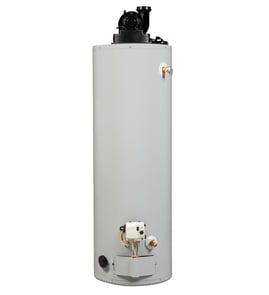





What's the average lifespan of a gas hot water heater?
Most tank-style gas water heaters, including the State GS640YBVIT, last 8 to 12 years. With consistent maintenance (especially flushing sediment and protecting the tank from corrosion), many reach 12 to 15 years before performance drops or leaks become likely.
A water heater’s life is mainly limited by tank corrosion and sediment buildup.
- Water quality: Hard water speeds up sediment and can shorten life.
- Maintenance: Regular flushing and anode-rod checks extend life.
- Temperature setting: Higher temps increase wear and scale.
- Usage: Heavy daily demand cycles the burner more often.
- Venting and combustion air: Poor airflow can stress components.
If your GS640YBVIT is approaching the 10-year mark, watch for these common symptoms:
- Rusty or discolored hot water
- Rumbling, popping, or banging (sediment on the tank bottom)
- Water around the base of the heater
- Inconsistent hot water or slow recovery
- Frequent pilot/ignition problems
These actions directly reduce corrosion and sediment problems:
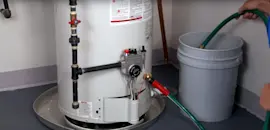
- Flush a few gallons from the tank periodically to reduce sediment
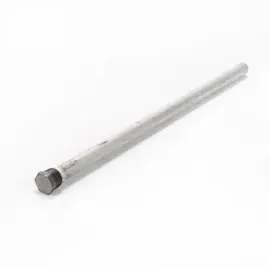
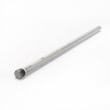
- Inspect and replace the anode rod when it is heavily worn
- Keep the air intake area clear and clean
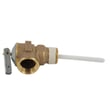
- Verify the temperature and pressure relief valve operates correctly
| Maintenance need | What it protects | Example part for this model |
|---|---|---|
| Corrosion control | Tank life | Anode rod 100109624 |
| Overpressure safety | Tank and piping safety | Water heater temperature and pressure relief valve 100108279 |
| Combustion airflow | Reliable burner operation | Water heater air intake screen 100109216 |
Once a tank begins to corrode internally, failure usually shows up as a leak with little warning. Planning replacement around the 8 to 12 year window helps avoid water damage and unexpected loss of hot water.
You can order replacement parts for your State GS640YBVIT from the parts list for this model, or search by model number on Sears PartsDirect.
Last updated: February 2026
Why are gas water heaters being phased out?
Gas water heaters are being phased out in some areas because local and State clean-air policies target nitrogen oxides (NOx) and greenhouse-gas emissions from gas appliances. For a State GS640YBVIT gas water heater, this usually affects what you can install next, not how your current unit operates today.
Rules vary by city, county, and State, but the most common drivers are:
- Reducing smog-forming NOx from gas burners (a major air-quality focus in some regions)
- Meeting long-term climate targets by shifting homes from gas to electric options
- Local building codes that restrict gas hookups in new construction or major remodels
- Regional air districts that set tighter emissions limits for new water heaters
- Incentive programs that encourage switching to heat pump water heaters
In most cases, a phase-out policy:
- Does not require you to remove a working gas water heater immediately
- Limits new installations or like-for-like replacements after a certain date
- May require a low-NOx model, a different venting approach, or an electric replacement
- Can change what parts and service you prioritize to keep your current unit running reliably
If you are maintaining your State GS640YBVIT to avoid an unplanned replacement, these parts are commonly involved in reliability and safety:
| Maintenance goal | Part to check/replace | What it helps prevent |
|---|---|---|
| Protect the tank from corrosion | Anode rod 100109624 | Premature tank rust and leaks |
| Keep pressure safe | Water heater temperature and pressure relief valve 100108279 | Overpressure events and nuisance leaking |
| Restore ignition reliability | Water heater burner igniter assembly 100110771 | No-heat or intermittent burner operation |
When local rules tighten, a failed water heater can turn into a rushed decision. Keeping key components in good shape helps you control timing, compare gas vs. electric options, and avoid emergency installation constraints.
We recommend matching parts by your exact model number (GS640YBVIT) and the part ID listed for your unit. You can order parts from the list for this model, or search by model number on Sears PartsDirect.
Last updated: February 2026
What is the most common problem with gas water heaters?
The most common gas water heater problem is loss of hot water or inconsistent hot water caused by ignition or burner issues, restricted airflow, or sediment buildup in the tank. On the State GS640YBVIT, start by checking the igniter, burner, and air intake before replacing parts.
- Ignition failure: no hot water; repeated attempts to light
- Dirty or failing burner: weak heating, rumbling, or delayed ignition
- Restricted combustion air: shutdowns or poor performance (often from a clogged intake screen)
- Sediment buildup: popping or rumbling sounds; reduced hot water volume
- Failing anode rod: rotten-egg odor or accelerated tank corrosion
- T and P relief valve issues: dripping or intermittent discharge (often tied to pressure/temperature problems)
- Confirm gas supply is on and other gas appliances work.
- Check for adequate airflow around the heater; clean the intake area.
- Look for obvious venting problems (loose connections, unusual blower noise on power-vent models).
- Listen for ignition attempts; repeated clicking without ignition points to igniter/burner concerns.
- Flush a few gallons from the tank to reduce sediment symptoms (follow your normal maintenance procedure).
| Symptom | Likely area | Example part for GS640YBVIT |
|---|---|---|
| No ignition, no flame | Ignition system | Water heater burner igniter assembly 100110771 |
| Weak/unstable flame | Burner | State water heater burner assembly 100110753 |
| Poor combustion air | Air intake | Water heater air intake screen 100109216 |
| Dripping discharge line | Safety valve | Water heater temperature and pressure relief valve 100108279 |
Gas water heaters rely on correct combustion (air + gas + ignition) and clean heat transfer. When airflow is restricted or the burner system is failing, the heater can short-cycle, stop heating, or produce inconsistent hot water. Sediment and a worn anode rod also reduce efficiency and shorten service life.
Use the parts list for State GS640YBVIT to match your symptom to the correct component, then order from the model’s parts list or search by model number on Sears PartsDirect.
Last updated: February 2026
How to tell if a gas water heater is bad?
A State GS640YBVIT gas water heater is “bad” when the tank leaks, hot water output drops, or the burner system cannot run reliably. Many problems are repairable (ignition, airflow, safety valve), but a leaking tank means replacement is the practical fix.
- Water pooling or rust streaks under the tank or around the bottom seam
- Hot water runs out faster than it used to (reduced capacity)
- Rumbling, popping, or banging sounds (sediment buildup)
- Pilot will not stay lit or repeated ignition failures (common on power-vent models)
- Soot, scorch marks, or strong exhaust smell near the burner area
- Relief valve dripping or frequent discharge from the drain line
- Look for tank leaks: Dry the area, then recheck after a few hours. Water from fittings can mimic a tank leak.
- Check venting and airflow: A clogged intake screen can cause poor combustion and shutdowns; inspect and clean the water heater air intake screen 100109216.
- Watch the ignition sequence: If it tries to light and fails repeatedly, the igniter or burner components are common suspects.
- Test the T&P relief valve behavior: Occasional brief discharge can happen with overheating or pressure spikes; steady leaking often points to a failing valve or system issue.
| Symptom | Most likely cause | Usually repairable? |
|---|---|---|
| Water leaking from tank body/bottom seam | Tank corrosion | No |
| No heat or frequent shutdowns | Ignition, burner, airflow, venting | Yes |
| Rumbling and slow recovery | Heavy sediment | Sometimes |
| Dripping from relief valve pipe | Relief valve or overheating/pressure | Yes |
If the tank is not leaking, these model-matched parts often address the root cause:
- Water heater burner igniter assembly 100110771 for ignition failures
- State water heater burner assembly 100110753 for combustion problems
- Water heater temperature and pressure relief valve 100108279 for a leaking or weak relief valve
- Anode rod 100109624 to slow tank corrosion and extend tank life
A struggling gas water heater can waste fuel, deliver inconsistent hot water, and create unsafe operating conditions if combustion air or venting is compromised. Catching issues early (sediment, airflow restriction, worn anode rod) prevents bigger failures.
You can order replacement parts for your State GS640YBVIT from the parts list for this model, or search by model number on Sears PartsDirect.
Last updated: February 2026
What is the average cost of installing a new gas water heater?
Installing a new gas water heater in a typical home usually costs $1,600 to $2,400 for a standard tank unit, while tankless gas installation commonly runs $2,400 to $5,400. For a State GS640YBVIT, the biggest price swings come from venting changes, gas-line work, and code-required safety updates.
These factors most often change the total installed cost:
- Venting type and modifications (atmospheric vs. power vent, new vent route)
- Gas piping updates (new shutoff, sediment trap, pipe sizing for BTU demand)
- Water line work (new shutoffs, dielectric unions, connector upgrades)
- Code and safety items (drain pan, seismic straps, T&P discharge piping)
- Removal and disposal of the old tank
- Access and location (tight closet, attic, crawlspace)
| Installation type | Common total installed range | Best fit when |
|---|---|---|
| Standard tank, like-for-like replacement | $1,600 to $2,400 | Existing venting and gas line are usable |
| Tankless gas installation | $2,400 to $5,400 | You want endless hot water and can accommodate venting upgrades |
| Standard tank with major venting or gas upgrades | $2,400+ | Vent route or gas capacity must be changed |
Installers commonly replace or add a few items for safety and reliability:
- Water heater temperature and pressure relief valve 100108279 (part number 9000071; critical safety valve)
- T&P discharge pipe materials (often required)
- Water and gas shutoff valves and connectors (as needed)
- Expansion tank (common in closed plumbing systems)
If you are comparing repair vs. replacement, also price common maintenance parts such as the anode rod 100109624 (part number 9003972).
A gas water heater installation is more than hooking up water lines. Proper venting and gas supply directly affect safe combustion, efficiency, and consistent hot water, so the scope of required upgrades often determines the final price.
If your current heater is showing a fault code, use State gas water heater error codes to narrow down whether you are looking at a repair (ignition, airflow, venting) or a full replacement.
You can order replacement parts for your State GS640YBVIT from the parts list for this model, or search by model number on Sears PartsDirect.
Last updated: February 2026