


How much is the Honda HRT216 self propelled mower?
Pricing for a Honda HRT216 self-propelled mower depends on condition (new vs. used), included accessories, and local availability; this page is focused on replacement parts for the HRT216 rather than selling the complete mower. For keeping your mower running, we recommend using the HRT216 parts list to match the exact parts you need.
What you can expect to pay (typical ranges)
Because the HRT216 is an older walk-behind mower model, it is most commonly found used.
- Used, running condition: typically a few hundred dollars
- Used, needs work: typically under a few hundred dollars
- New old stock (rare): typically priced higher than used units
Why prices vary so much
These factors change the value quickly:
- Engine condition (easy starting, no smoke, steady idle)
- Self-propel drive performance (pulls consistently under load)
- Deck condition (rust-through, cracks, heavy dents)
- Maintenance history (fresh oil, clean air filter, clean carburetor)
- Included items (bagger, mulching plug, spare blade)
Quick self-propel check before you buy
If you are evaluating a mower that “says” self-propelled, verify these items:
| Check | What “good” looks like | What it may need |
|---|---|---|
| Drive engagement | Moves smoothly when drive is engaged | Cable adjustment or drive parts |
| Wheels/traction | Wheels grip and do not slip | Worn wheel components |
| Control feel | Lever/cable moves freely | Binding cable or linkage |
Parts that commonly affect performance
If the mower is sluggish, hard to control, or inconsistent, these HRT216 parts are often involved:
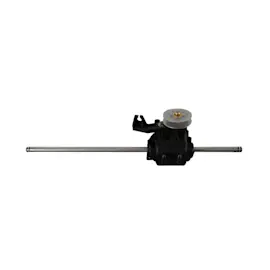
- Lawn mower transmission assembly 20001-VG3-B03 (drive issues)
- Lawn mower drive control cable 54630-VG4-D01 (engagement issues)
- Lawn mower throttle control assembly 17850-VG3-010 (engine speed control)
Why it matters
Knowing the typical price range helps you decide whether to buy a mower “as-is” and repair it, or pay more for one that is already running well. In many cases, replacing a worn cable or drive component restores self-propel performance and extends the mower’s life.
Last updated: February 2026
Is the Honda HRT216 good for mulching?
Yes. The Honda HRT216 walk-behind mower is a solid choice for mulching when the deck is clean, the blade is sharp, and you mow at the right height and pace; those factors matter more than anything else for fine clippings and even distribution.
What makes mulching work well
Mulching performance depends on cutting the grass into small pieces and keeping airflow moving under the deck.
- Mow when grass is dry (wet grass clumps and smears)
- Cut no more than 1/3 of the grass height per pass
- Slow down in thick or tall grass so the blade can re-cut clippings
- Keep the underside of the deck clean to maintain airflow
- Sharpen or replace the blade regularly
- Use the correct discharge setup for mulching (plug or closed discharge, if equipped)
Quick troubleshooting if clippings look messy
If you see windrows, clumps, or uncut stragglers, these are the most common causes.
| Symptom | Most common cause | What we do next |
|---|---|---|
| Clumps on top of lawn | Grass too tall or wet | Raise cut height; mow more often |
| Uneven cut | Dull or damaged blade | Sharpen blade; check for bends |
| Poor re-cutting | Deck packed with grass | Scrape/clean deck; avoid wet mowing |
| Mower bogs down | Overloading the engine | Reduce ground speed; take a narrower pass |
Parts that can affect mulching results
These parts do not “create” mulching, but they can affect cut quality, safety, and how consistently you can maintain the mower.
- If the discharge area is damaged or missing, replace the lawn mower deflector shield 81211-VG4-E01ZA
- If you use a plug-style mulching setup and yours is worn or missing, replace the mulching plug 76266-VG4-000ZB
- If the throttle control is sticking and you cannot keep steady blade speed, inspect/replace the lawn mower throttle control assembly 17850-VG3-010
Why it matters
Good mulching returns nutrients to the lawn and reduces bagging time, but only when clippings are small enough to filter down into the turf. A sharp blade and clean deck are the difference between “mulch” and “clumps.”
For blade service steps and tool tips, use our how to sharpen a lawn mower blade and lawn mower blade removal tool guides.
Last updated: February 2026
Why is my self-propelled lawn mower pulling to one side?
If your Honda HRT216 self-propelled mower pulls to one side, the most common causes are uneven wheel traction (tire pressure, tread wear, debris buildup) or a drive system issue on one wheel (binding, worn ratchet/pinion parts, or a dragging cable). Fixing the side-to-side traction difference usually corrects the pull.
Quick checks that fix most “pulling” problems
- Check tire pressure and inflate both rear tires evenly.
- Clean packed grass and mud from the deck edge and around both rear wheels.
- Inspect both rear wheels for uneven tread wear or damage.
- Confirm the height adjusters are set to the same cutting height on both sides.
- With the engine off, roll the mower forward; both rear wheels should roll smoothly without one side dragging.
Self-propel drive causes (one wheel driving harder than the other)
On many walk-behind self-propel mowers, each rear wheel uses a ratchet or pinion mechanism. If one side sticks, slips, or binds, the mower can “steer” itself.
Common drive-related causes include:
- A sticking or weak return spring in the drive ratchet mechanism
- Debris or corrosion in the wheel drive components
- A drive control cable that is too tight, routed incorrectly, or partially seized
- A transmission output issue affecting one side more than the other
Parts on this model that can be involved
| Symptom | What to inspect | Related part on this model |
|---|---|---|
| Pulls right or left only when drive is engaged | Cable tension and smooth lever return | Lawn mower drive control cable 54630-VG4-D01 |
| One rear wheel “clicks” or does not consistently drive | Ratchet/pinion return action | Lawn mower drive pinion gear ratchet return spring 42668-VE2-800 |
| Pulls gets worse under load or on hills | Drive system wear | Lawn mower transmission assembly 20001-VG3-B03 |
Why it matters
A mower that pulls to one side is usually telling you one wheel has more resistance or more drive than the other. Correcting it improves cut quality, reduces operator fatigue, and helps prevent premature wear on the transmission, wheels, and cables.
Helpful DIY guidance
If you suspect a wheel or drive issue, our DIY article lawn mower wont move troubleshooting video motion drive failure walks through common motion-drive checks that also apply when the mower “pulls” during self-propel.
Last updated: February 2026