Owner’s manual
 Error Codes



What are the disadvantages of a bottom freezer refrigerator?
Bottom-freezer refrigerators like the KitchenAid KRFC302ESS02 make fresh-food access easier at eye level, but the tradeoffs are real: you typically bend more for frozen items, pay more upfront than top-freezer styles, and the freezer drawer layout can make bulky or frequently used frozen foods harder to organize.
Common disadvantages (what owners notice most)
- More bending and lifting: You often squat to reach items at the bottom of the freezer drawer, especially heavier foods.
- Drawer organization challenges: Stacked bins can hide items; “out of sight, out of mind” leads to forgotten food.
- Higher purchase price: Bottom-mount designs commonly cost more than basic top-freezer models.
- Heavier freezer drawer: A fully loaded drawer can feel heavy to pull out and push in.
- More door-open time: Searching through a drawer can keep the freezer open longer, which can affect temperature stability.
Quick comparison: bottom freezer vs top freezer
| Feature | Bottom freezer | Top freezer |
|---|---|---|
| Fresh-food access | Easier (at eye/waist level) | More bending for fridge items |
| Frozen-food access | More bending/squatting | Easier reach |
| Freezer organization | Drawer and bins; can bury items | Shelves; easier to see |
| Typical cost | Higher | Lower |
Tips to reduce the downsides
- Use bins to group foods (breakfast, veggies, proteins) and label them.
- Keep heavy items in the upper freezer basket area when possible.
- Rotate older items forward weekly to prevent waste.
- Make sure doors seal tightly; poor sealing increases run time and can worsen temperature swings.
Why it matters
If you use the freezer daily, store heavy frozen foods, or have mobility limitations, the bottom-freezer layout can be less comfortable long-term. For many households, the convenience of the fresh-food section still outweighs the freezer tradeoffs.
For model-specific features and storage layout details, follow the diagrams in the KRFC302ESS02 owner’s manual.
Last updated: January 2026
What is the average lifespan of a KitchenAid refrigerator?
KitchenAid refrigerators typically last 14 to 17 years on average, and many run 10 to 20 years with normal use and good care. For your KitchenAid KRFC302ESS02 bottom-mount refrigerator, routine maintenance and quick fixes (like sealing air leaks and keeping airflow clear) are the biggest factors in reaching the high end of that range.
Typical lifespan ranges (what to expect)
Most freestanding KitchenAid refrigerators fall into these practical ranges:
- 10 to 12 years: higher chance of repairs (fans, valves, controls)
- 14 to 17 years: common “average” service life with regular upkeep
- 18 to 20 years: achievable with strong maintenance and timely part replacement
| Lifespan range | What it usually means | Common needs |
|---|---|---|
| 0 to 5 years | Early ownership | Filter changes, basic adjustments |
| 6 to 12 years | Mid-life | Door seal work, fan or valve issues |
| 13 to 20 years | Late-life | More frequent repairs, cooling-system wear |
What shortens (or extends) refrigerator life
These are the most common drivers of longevity for a bottom-mount refrigerator like the KRFC302ESS02:
- Dirty condenser area causing longer run times and heat stress
- Door gasket leaks letting warm, moist air in (creates frost and overwork)
- Blocked vents from overpacking shelves or freezer baskets
- Water system neglect (old filters, low water pressure, air in lines)
- Delayed repairs after new noises, warm temps, or ice buildup
Parts that often matter most over time
If you are maintaining performance, these are common wear items we see affect cooling and efficiency:
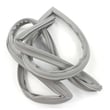
- Door sealing components such as the whirlpool refrigerator door gasket W10830046
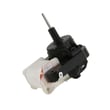
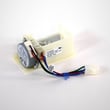
- Air movement components such as the refrigerator evaporator fan motor WPW10128551
- Water delivery components such as the refrigerator water inlet valve assembly WPW10420083
Why it matters
A refrigerator that runs longer than it should (from air leaks, restricted airflow, or dirty heat exchange surfaces) uses more energy and puts extra strain on the sealed system. Keeping temperatures stable helps protect food, reduces frost, and supports a longer overall lifespan.
For model-specific care and maintenance intervals, follow the KRFC302ESS02 owner’s manual.
Last updated: January 2026
What is the most common problem with a KitchenAid refrigerator?
The most common KitchenAid refrigerator issues are ice maker and cooling problems. On the KitchenAid KRFC302ESS02 bottom-mount refrigerator, the usual root causes are restricted airflow (dirty condenser coils or a weak evaporator fan), water system restrictions, or a drain/defrost issue that leads to warm temps, leaks, or frost.
Most common symptoms customers notice
- Ice maker is slow, stops making ice, or makes small/hollow cubes
- Refrigerator section is warm but freezer seems OK
- Frost buildup on the back wall or around vents
- Water puddles under the crisper drawers or on the floor
- Unusual fan noise, buzzing, or clicking
Quick checks we recommend first (no parts needed)
- Confirm temperatures: set fresh food to about 37°F and freezer to about 0°F.
- Clean condenser coils: dusty coils are a top cause of poor cooling and long run times.
- Check door sealing: look for gaps, torn gasket areas, or doors not closing fully.
- Listen for the evaporator fan: it should run when the compressor is running (door switch may need to be pressed).
- For water and ice issues: replace the filter on schedule and purge air after changes.
Common causes and what they point to
| Symptom | Most likely cause | What to do next |
|---|---|---|
| Warm fridge, freezer OK | Weak/failed evaporator fan motor | Follow how to fix your evaporator cooling fan and inspect the fan area |
| Ice maker slow or no ice | Filter restriction or water supply issue | Follow how to replace the water filter in a KitchenAid refrigerator and verify supply flow |
| Puddles inside or under unit | Defrost drain issue | Clear the drain path and follow how to get rid of refrigerator puddles |
| Doors not sealing, moisture/frost | Worn or warped gasket | Inspect and replace the whirlpool refrigerator door gasket W10830046 if damaged |
Why it matters
Cooling and ice maker complaints often share the same underlying problem: the refrigerator cannot move heat out efficiently or cannot move cold air through the compartments. Fixing airflow, sealing, and water flow early prevents food spoilage, frost buildup, and repeat leaks.
Model-specific tip for KRFC302ESS02
Use the KRFC302ESS02 manual to confirm the correct temperature settings, control features, and the recommended cleaning intervals for your KitchenAid refrigerator.
Last updated: January 2026