Owner’s manual
 Error Codes


How to identify a Kenmore washer model?
Your Kenmore washer’s model number is the ID we use to match the correct parts and instructions for your exact machine. For Kenmore model 11026712690, the model and serial numbers are printed on the washer’s model and serial number plate; record both for future parts and service needs.
Where to look on the washer
Most Kenmore washers place the model and serial number plate in one of these common spots:
- Under the lid near the tub opening (top-load washers)
- Around the lid frame or underside of the lid
- On the back panel near the power cord entry
- Behind the control panel area (less common)
For model-specific guidance and diagrams, use the 11026712690 owner's manual.
What the model number looks like (Kenmore)
Kenmore washer model numbers often:
- Start with 110 (common for many Kenmore-built-by-Whirlpool designs)
- Are 10 to 12 digits long
- Appear next to a separate serial number on the same plate
Quick ID checklist
| What to capture | Example | Why it matters |
|---|---|---|
| Model number | 11026712690 | Ensures exact part fit |
| Serial number | (varies) | Helps match production changes |
| Type | Top-load or front-load | Narrows parts and troubleshooting |
Why it matters
We use the model number to filter parts that actually fit your washer, such as a lid safety switch, drain pump, or agitator components. Ordering by “looks like mine” often leads to wrong-fit parts.
If you are ordering common parts
These are frequently searched once the model is confirmed:
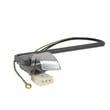
- Washer lid switch WP3949238 (won’t spin if the switch is bad)
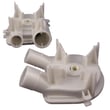
- Washer drain pump WP3363394 (drain and spin problems)
- Coupling 285753A (agitate or spin issues on direct-drive designs)
Last updated: February 2026
Is it worth repairing a Kenmore washing machine?
Yes, it’s usually worth repairing a Kenmore washer like model 11026712690 when the fix addresses a common wear part and the total repair cost is clearly less than replacing the machine. Many issues on this style of top-load washer are straightforward and restore years of dependable operation when repaired correctly.
Quick way to decide (repair vs. replace)
Use these practical checkpoints before spending money:
- Start with a diagnosis: confirm the failure (drain, spin, agitate, fill, or lid safety). The 11026712690 owner’s manual helps you match symptoms to likely causes.
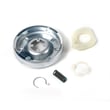
- Repair if it’s a common wear part: lid switch, drain pump, motor coupling, clutch, or agitator components are typical fixes.
- Replace if multiple major systems are failing: repeated leaks plus spin problems plus electrical issues usually means costs stack up.
- Consider condition and maintenance: heavy rust, chronic vibration, or a damaged tub can turn into a bigger job.
- Compare total cost: parts + labor + downtime vs. a new washer delivered and installed.
Common repairs that are often “worth it” on this model
These are frequent, high-impact fixes on Kenmore top-load washers:
| Symptom | Likely area | Example part for this model |
|---|---|---|
| Won’t spin or stops when lid closes | Lid safety circuit | Washer lid switch WP3949238 |
| Won’t drain or drains slowly | Drain pump or blockage | Washer drain pump WP3363394 |
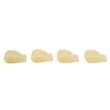
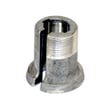
| Agitates poorly or makes rattling in agitator | Agitator drive parts | Agitator dog 80040 |
| Motor runs but washer won’t agitate/spin | Drive coupling | Coupling 285753A |
Why it matters
A targeted repair keeps a proven Kenmore design running efficiently and avoids replacing the entire appliance for a single failed component. Proper installation and leveling also reduce vibration and repeat failures; the manual’s setup checklist is especially helpful.
Last updated: February 2026
What is the average lifespan of a Kenmore washer?
A Kenmore washer like model 11026712690 typically lasts 10 to 15 years with normal household use. Consistent care (correct loading, good detergent habits, and quick attention to leaks or draining issues) helps you reach the upper end of that range; see the 11026712690 owner's manual for model-specific care guidance.
Typical lifespan and what affects it
Most top-load, agitator-style washers last longest when the drive system and water system stay protected from overloads, off-balance spinning, and sediment.
Common factors that shorten lifespan:
- Frequent overloading or washing heavy items (rugs, comforters) without balancing the load
- Chronic off-balance spinning and vibration
- Hard-water buildup affecting fill and rinse performance
- Running with a slow drain or partial clogs
- Ignoring early symptoms (burning smell, grinding, intermittent no-spin)
Parts that commonly drive “repair vs. replace” decisions
On Kenmore washers in this design family, these parts often show wear first and are usually worth checking before assuming the washer is “done.”
| Symptom | Common wear area | Example part for this model |
|---|---|---|
| Won’t spin or stops when lid opens | Lid safety circuit | Washer lid switch WP3949238 |
| Won’t drain or drains slowly | Drain pump or blockage | Washer drain pump WP3363394 |
| Agitates poorly or makes clicking in agitator | Agitator drive components | Agitator dog 80040 |
Maintenance habits that extend washer life
We recommend these practical habits for model 11026712690 and similar Kenmore top-load washers:
- Keep loads balanced; mix large and small items
- Use the right amount of detergent to reduce residue
- Turn off water supply valves if the washer will sit unused for long periods
- Clean up detergent and bleach spills promptly
- Address new noises early (squeal, grinding, thumping)
Why it matters
A washer can run for years with minor wear, but a small issue (like a weak lid switch or slow drain) can cascade into bigger problems such as repeated motor strain, poor spin performance, and longer cycle times.
Last updated: February 2026