Owner’s manual
 Error Codes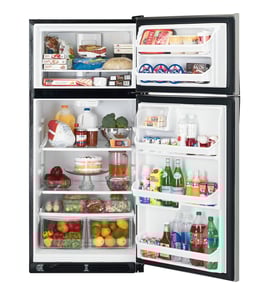





What is the top part of a refrigerator called?
On the Kenmore 10672292201 top-mount refrigerator, the top compartment is the freezer compartment (often just called the freezer). It’s the section designed to keep foods frozen and it also supplies cold air that circulates to help cool the fresh food section. See the 10672292201 owner's manual.
What you’ll typically find in the top (freezer) section
- Freezer shelves or a wire rack for frozen foods
- Freezer door bins for smaller items
- Air vents that move cold air through the freezer and into the refrigerator section
- An ice maker (if equipped) and its shutoff arm
Why the freezer matters for overall cooling
In a top-mount design like model 10672292201, cold air enters and circulates through the freezer first, then some of that air moves into the refrigerator section through vents. Keeping those vents clear helps prevent temperature swings and moisture issues.
| Compartment | Common name | Main job |
|---|---|---|
| Top section | Freezer | Freezes food; provides cold air for circulation |
| Bottom section | Refrigerator (fresh food) | Keeps food cold but not frozen |
Quick tips we recommend
- Don’t block freezer vents with food packages; airflow problems can cause warm spots.
- Keep foods wrapped or covered to reduce odor transfer between sections.
- If your unit has an ice maker, make sure the shutoff arm moves freely and is in the correct position.
Related DIY help
Why it matters
When customers call the top section the “top fridge,” it can lead to ordering the wrong part or adjusting the wrong control. Using the correct term, freezer compartment, helps you troubleshoot faster and match parts correctly.
Last updated: January 2026
What are the common problems with Kenmore Elite refrigerators?
Many “Kenmore Elite” refrigerator complaints come down to a few repeat issues: weak cooling from blocked airflow or a failed fan, frost buildup from a defrost or door-seal problem, and water or ice maker troubles from a restricted filter or supply issue. For Kenmore model 10672292201, start with the checks in the 10672292201 owner's manual.
Most common symptoms and what usually causes them
- Not cooling well (fresh food warm, freezer warm): blocked air vents, dirty condenser area, evaporator fan not running, or sealed-system/compressor issues.
- Too much frost or ice buildup: defrost system problem, door left ajar, or a leaking/stiff door gasket.
- Moisture inside or sweating: frequent door openings, high humidity, or poor door sealing.
- Water flow slows at dispenser (if equipped): clogged filter, kinked supply line, or shutoff valve not fully open.
- Ice maker not making ice (if equipped): water supply issue, inlet valve issue, or ice maker failure.
Quick checks we recommend first (safe, no parts swapping)
- Confirm airflow is clear: do not block the freezer and refrigerator vents with food packages (blocked vents cause temperature and moisture problems).
- Verify control settings: many Kenmore top-mount models are factory preset to a mid-setting; confirm yours is still near the mid-setting.
- Check door sealing: clean the gasket and the cabinet surface it touches; if the gasket sticks, a thin coat of paraffin wax can help.
- Check water supply basics (if equipped): make sure the shutoff valve is on and the line is not kinked.
- Listen for fan noise: a failed evaporator fan often causes warm temperatures and uneven cooling.
Parts that commonly solve these problems on model 10672292201
| Symptom | Part to consider | What it affects |
|---|---|---|
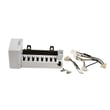
| Ice maker not working | Ice maker assembly - refrigerator ice maker by whirlpool 4317943 | Ice production and harvest cycle |
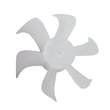
| Warm temps, poor airflow | Refrigerator evaporator motor WPW10189703 | Circulates cold air through vents |
| Frost/defrost complaints | Defrost bi-metal WP4387503 | Helps control defrost cycling |
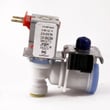
| Water/ice supply issues | Refrigerator inlet valve WP2315576 | Feeds water to dispenser/ice maker |
Why it matters
Most cooling and moisture complaints are airflow or sealing related. Fixing vent blockage, door sealing, and basic water supply issues first prevents unnecessary part replacement and helps the refrigerator hold stable temperatures.
Last updated: January 2026
How to tell cubic feet of Kenmore refrigerator by model number?
For Kenmore model 10672292201, the most accurate way to get the refrigerator’s cubic-foot capacity is to look it up in the model specifications section of the 10672292201 owner's manual. If you need a quick estimate, you can calculate interior volume from measurements and convert cubic inches to cubic feet.
Best ways to find cubic feet (most accurate first)
- Check the model specs in the 10672292201 owner's manual.
- Look for a rating label inside the fresh food compartment (often on an inside wall); some labels list capacity.
- Search the model’s parts diagrams and feature descriptions to confirm configuration (top-mount, ice maker, etc.).
- Estimate capacity by measuring the usable interior space (good for a ballpark number).
How to estimate cubic feet by measuring
- Empty the compartment you are measuring (refrigerator section and freezer section).
- Measure width x depth x height of the usable interior space in inches.
- Multiply to get cubic inches.
- Divide by 1,728 (12 x 12 x 12) to convert to cubic feet.
Example conversion
| What you have | Formula | What you get |
|---|---|---|
| Interior measurements (in.) | W x D x H | Cubic inches |
| Cubic inches | ÷ 1,728 | Cubic feet |
Tips so your estimate is closer to the real rating
- Measure usable space, not the outer cabinet size.
- Subtract areas taken up by fixed components (air ducts, light housing, ice maker area, shelves you cannot remove).
- If your unit has an ice maker installed, it reduces usable freezer volume; the rated capacity may still reflect the full design volume.
Why it matters
Cubic-foot capacity helps us match the right accessories and parts (like shelves, bins, and ice maker components) and helps you compare storage space realistically between refrigerator models.
Last updated: January 2026