Installation guide
 Owner’s manual


Do I really need an air gap for my dishwasher?
For the Jenn-Air JDB8200AWS0 dishwasher, an air gap is not always required, but it is recommended in certain drain setups and may be required by local code. If your drain connection is lower than 20 inches above the floor, we use an air gap to help prevent dirty water from siphoning back into the dishwasher.
When an air gap is recommended (or required)
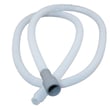
We follow the installation guidance for JDB8200AWS0: the drain hose should be routed in a high loop under the counter or connected to an air gap.
- Use an air gap if the drain hose connects to house plumbing lower than 20 inches (50.8 cm) above the subfloor or floor
- Use an air gap if local plumbing code requires it (common in some areas)
- Consider an air gap if you have frequent sink backups or slow drains
- Use an air gap when you cannot secure a proper high loop under the countertop
Quick decision guide
| Your setup | Air gap needed? | What we recommend |
|---|---|---|
| Drain hose has a secure high loop under the counter | Usually no | Keep the loop high and secured |
| Drain connects below 20 inches above the floor | Yes | Install an air gap |
| Local code requires an air gap | Yes | Install an air gap |
| Unsure how your drain is routed | Treat as yes until confirmed | Compare to the JDB8200AWS0 installation guide |
Why it matters
An air gap (or a correctly installed high loop) helps prevent contaminated drain water from flowing back into the dishwasher. That protects wash performance, reduces odor risk, and helps avoid repeat “dirty dishes” complaints caused by backflow.
Installation notes that affect air gap use
These details commonly decide whether an air gap is the best choice:
- Drain hose routing: high loop under the counter versus direct connection
- Drain connection point: disposer inlet, waste tee, or house plumbing
- Drain height: whether the connection is at least 20 inches above the floor
- Clamps and adapters: correct sizing and tight connections to prevent leaks
- Condition of the drain path: disposer knockout plug removed (if applicable) and no kinks
Last updated: January 2026
How do I find the model number on my JDB8200AWS0?
On a Jenn-Air JDB8200AWS0 dishwasher, the model number is printed on the rating label attached to the dishwasher frame. You usually see it when you open the door and look along the inner edge of the tub opening.
Where to look (most common spots)
- Top edge of the door opening (on the frame, above the tub)
- Left or right side of the door opening (vertical frame area)
- Inside edge of the door (near the hinge area)
- Behind the toe-kick panel (less common, but possible)
What you are looking for
The rating label typically lists several identifiers. Use the model number for parts matching.
| Label item | Example | What it’s used for |
|---|---|---|
| Model | JDB8200AWS0 | Selecting correct parts and diagrams |
| Serial | (varies) | Production details and service history |
| Type/other codes | (varies) | Internal manufacturing info |
Tips to avoid ordering the wrong part
- Copy the model number exactly, including all letters and numbers.
- If the label is worn, take a clear photo and zoom in.
- Match parts by model first, then confirm the part ID and description.
If you are still unsure, the how to find your appliance model number (and what it means for parts) guide shows common label locations and what the numbers mean. For model-specific label location notes and diagrams, check the JDB8200AWS0 installation guide.
Why it matters
Dishwashers can look identical across model series, but internal parts like the electronic control, water inlet valve, and rack adjusters can differ. Using the exact model number prevents fit and wiring mismatches.
Last updated: March 2026
What is the average lifespan of JDB8200AWS0?
A Jenn-Air JDB8200AWS0 dishwasher typically lasts 10 years with normal household use. Keeping the filter and spray system clean, using the right detergent, and fixing small leaks or drain issues quickly helps you reach that lifespan.
What affects lifespan most
- Water quality (hard water speeds up mineral buildup on the heater and spray system)
- Filter maintenance (clogging strains the wash pump and reduces cleaning)
- Drain performance (standing water stresses the drain pump and can cause odors)
- Door sealing and alignment (leaks can damage components and flooring)
- Loading habits (blocked spray arms reduce cleaning and increase rewash cycles)
Maintenance checklist (high impact)
- Clean the filter regularly; replace it if damaged (see dishwasher filter W10872845).
- Rinse heavy food soil off dishes; avoid letting debris collect in the sump.
- Confirm the spray arms spin freely; replace a cracked arm (see dishwasher spray arm WPW10491331).
- Run hot water at the sink before starting a cycle to improve wash performance.
- Inspect for drips around the door and tub gasket; address leaks promptly.
Common wear items and what they do
| Part area | What you may notice | Example part on this model |
|---|---|---|
| Filtration | Grit on dishes, poor wash | Dishwasher filter (W10872845) |
| Spray system | Dishes not getting clean | Dishwasher spray arm (WPW10491331) |
| Draining | Water left in tub | Dishwasher drain pump (WPW10348269) |
| Drying/heating | Poor drying, cool wash | Dishwasher heater (W10703867) |
Why it matters
Dishwashers usually fail from gradual restriction (filters, hoses, spray arms) or water-related wear (seals, heater). Preventive cleaning reduces strain on the motor, heater, and electronic control, which are the most expensive repairs.
For model-specific care steps and cleaning intervals, follow the JDB8200AWS0 owner's manual.
Last updated: March 2026