Owner’s manual
 View engine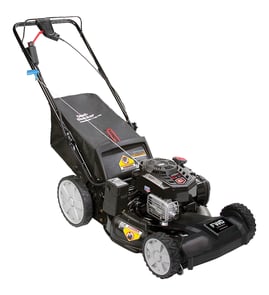


What kind of gas do I put in my push lawn mower?
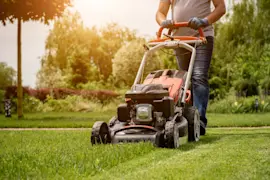
For the Craftsman 917385350 rotary lawn mower, use fresh unleaded gasoline from a clean container. For best starting and fewer fuel problems, avoid old fuel and keep the gas fresh through the season; use a fuel stabilizer if the mower will sit.
What to use (and what to avoid)
- Use fresh unleaded gasoline (buy what you will use within about 30 days).
- Avoid stale fuel; it is a common reason a mower will not start.
- Keep gas cans clean and rust-free to prevent dirt and rust from getting into the tank.
- If you store fuel, add fuel stabilizer or use a fuel-preserver cap system if equipped.
- Never mix oil into the gas on a typical 4-cycle walk-behind mower; engine oil goes in the crankcase.
Quick fuel care checklist
- Fill with fresh gas before mowing; do not top off with old gas.
- If the mower sat for months, drain the tank and refill with fresh gas.
- Store gasoline in an approved container, tightly capped.
- Let the engine cool before storing the mower indoors.
Fuel freshness guide
| Situation | What we recommend | Why |
|---|---|---|
| Mowing weekly | Fresh unleaded gas | Reliable starts, smoother running |
| Mower sits 30+ days | Add stabilizer or refresh fuel | Helps prevent hard starting |
| Off-season storage | Stabilize fuel and follow storage steps | Reduces stale-fuel issues |
Why it matters
Fuel quality directly affects starting, power, and carburetor cleanliness. The 917385350 manual lists stale fuel and water in fuel as common causes of a no-start condition, so keeping gas fresh prevents a lot of frustration.
For model-specific operating and storage guidance, follow the 917385350 owner's manual.
Last updated: January 2026
Will a 42 inch mower fit through my gate?
A “42-inch mower” usually refers to cutting width, not the mower’s overall outside-to-outside width. For a Craftsman walk-behind mower like model 917385350, you should measure your gate opening and compare it to the mower’s widest point (often the wheels and discharge side) to confirm clearance.
How to measure it correctly
- Measure the narrowest clear opening of the gate (inside-to-inside), including any latch hardware.
- Measure the mower at its widest point (typically wheel-to-wheel; include any side discharge chute if installed).
- If your mower has a side discharge, check clearance with the chute in its normal position and in the stowed/raised position (if applicable).
- Leave extra room for steering and uneven ground; tight fits are frustrating and can damage the chute or gate.
- If you need to tip or angle the mower to pass through, shut the engine off and wait for the blade to fully stop.
Typical clearance guidance (what most people run into)
Most 42-inch deck mowers (commonly riding mowers) end up needing a wider opening than 42 inches because of tires and the discharge side. Use this as a practical rule of thumb:
| Gate opening (inside clear width) | What it usually means | Practical expectation |
|---|---|---|
| 42 in | Same as deck size | Often too tight for many 42-in deck mowers |
| 45 to 48 in | Common “walk gate” range | Often works, but may be snug depending on chute/tires |
| 48+ in | Comfortable clearance | Easiest for regular in-and-out use |
Why it matters
If the mower barely fits, you can catch the discharge chute, bend brackets, or scrape wheels. A little extra clearance also makes it safer to maneuver without rushing.
Related reference
For general operation and safety reminders (like stopping the engine before clearing the chute), follow the 917385350 owner’s manual.
Last updated: January 2026
How much does a 42 riding mower weigh?
A typical 42-inch riding mower weighs about 400 to 600 lb, depending on the engine, frame, and transmission. Your Craftsman 917385350 is a walk-behind rotary mower, so this question applies to a different mower type; use the 917385350 owner's manual to confirm specs for your exact unit.
Typical weight ranges for 42-inch riding mowers
Most 42-inch lawn tractors and rear-engine riders fall into these ranges:
- Rear-engine riders (42 in.): ~350 to 450 lb
- Lawn tractors (42 in.): ~400 to 600 lb
- Heavier garden tractors (42 in.): ~550 to 750 lb
Why weights vary so much
Several design choices change the weight quickly:
- Transmission type (manual vs. hydrostatic)
- Engine size and starter system
- Deck construction (stamped vs. fabricated steel)
- Tire size and wheel hardware
- Added accessories (bagger, mulch kit, weights)
Quick comparison: riding mower vs. your model
| Item | What it is | Typical weight |
|---|---|---|
| 42-inch riding mower | Sit-on mower with 42-in deck | 400 to 600 lb |
| Craftsman 917385350 | Walk-behind rotary mower | Much lighter than a rider |
Why it matters
Knowing the weight helps you choose the right trailer ramps, tie-down points, and storage surface. It also affects turf compaction and whether you can safely load the mower without help.
Last updated: January 2026
How much weight can a Craftsman riding mower pull?
A Craftsman riding mower can typically pull a light utility cart or small yard trailer, but the safe towing limit depends on the exact tractor model, hitch setup, terrain, and braking control. The 917385350 owner's manual is for a Craftsman walk-behind mower, so it does not provide towing capacity for a riding mower.
What to use as a practical towing guideline
Most residential riding mowers are best kept to light-duty towing for yard work. For a safe starting point, we use these rules of thumb:
- Keep loads light on slopes, wet grass, or loose soil
- Avoid towing heavy loads without trailer brakes
- Use low gear and slow speed to protect the transaxle
- Stop immediately if the drive belt slips or the mower struggles
- Never tow with people or pets riding in the cart
Typical towing ranges (general guidance)
| Riding mower type | Typical “everyday” tow load | Notes |
|---|---|---|
| Lawn tractor (residential) | 200 to 500 lb | Best for mulch, tools, small carts |
| Garden tractor (heavier-duty) | 500 to 1,000+ lb | Built for more traction and stronger driveline |
What changes the towing limit the most
These factors usually matter more than engine horsepower:
- Traction and tires: turf tires spin before the engine runs out of power
- Transmission/transaxle: overheating and gear damage happen when overloaded
- Hitch design: a proper hitch point prevents frame damage and unsafe handling
- Terrain: hills and soft ground reduce safe towing dramatically
- Stopping distance: the mower’s brakes are designed for the mower, not a heavy trailer
Why it matters
Over-towing can strip gears, overheat the transaxle, snap a belt, or cause loss of control on a slope. Keeping towing loads reasonable protects the drivetrain and keeps handling predictable.
If you meant this Craftsman model 917385350 (walk-behind mower)
This model is a 22-inch walk-behind mower; it is not designed for towing. If you are servicing it, common wear items include the lawn mower blade 532406713 and the lawn mower engine zone control cable 582991501.
Last updated: January 2026