 Installation guide
 Owner’s manual


Is it worth fixing a Maytag washer?
For a Maytag MVWB765FW1 washer, it’s usually worth fixing when the problem is isolated to a serviceable part (like a lid lock, drain pump, or inlet valve) and the tub and motor system are in good shape. Use the MVWB765FW1 use and care manual to confirm symptoms and basic checks before you decide.
We recommend weighing these factors first:
- Age and condition: If the washer is under about 8 years old, repairs are typically a good value.
- Failure type: One failed component (won’t fill, won’t drain, lid won’t lock) is usually repairable.
- Repeat breakdowns: Multiple recent failures often point to higher total cost over time.
- Performance issues: Chronic off-balance, loud spin, or leaks can indicate more involved repairs.
- Parts cost vs. washer value: If parts plus labor approach 50% of replacement cost, replacement often makes more sense.
These are frequent, targeted fixes on top-load HE washers like the MVWB765FW1:
- Won’t start or lid won’t lock: inspect/replace the washer lid lock assembly W10810403
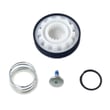
- Won’t drain or leaves clothes wet: inspect/replace the washer drain pump W10876600
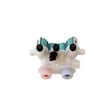
- Won’t fill or fills slowly: inspect screens and consider the washer water inlet valve W11165546
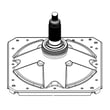
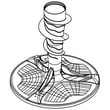
- Excessive vibration or banging: check leveling and suspension components
- Clicking/humming during drain: check for small items in the drain system
| Situation | Usually worth fixing? | Why |
|---|---|---|
| Won’t fill/drain, otherwise normal | Yes | Often a single part repair |
| Lid lock problems | Yes | Common, straightforward fix |
| Major leak from tub area | Maybe | Can involve tub/drive components |
| Multiple major issues at once | Often no | Costs add up quickly |
A targeted repair can restore reliability and extend the MVWB765FW1’s service life, while avoiding the cost and hassle of replacing a high-efficiency top-load washer.
Last updated: January 2026
What is the life expectancy of a Maytag washing machine?
A Maytag top-load washer like model MVWB765FW1 typically lasts 10 to 13 years with normal household use. Consistent care (using HE detergent, avoiding overloads, and routine cleaning) is the biggest factor in getting the full lifespan.
The MVWB765FW1 is a high-efficiency top-load design; how it’s loaded, cleaned, and installed has a direct impact on wear to the drive system, suspension, and water-handling parts.
- Overloading or tightly packing loads (increases strain and imbalance)
- Using non-HE detergent or too much detergent (can cause excess suds and residue)
- Skipping monthly tub cleaning (odor and buildup can lead to performance issues)
- Poor leveling or weak flooring (increases vibration and component wear)
- Not replacing inlet hoses on schedule (leak risk and water-flow problems)
For model-specific operating and maintenance steps, follow the MVWB765FW1 use and care manual.
| Task | How often | Why it helps |
|---|---|---|
| Run “Clean Washer with affresh®” cycle | Every 30 loads (or monthly) | Reduces residue and odor buildup |
| Leave lid open between loads | Daily habit | Helps the tub dry out |
| Check leveling and vibration | Every 6 months | Prevents off-balance wear |
| Replace water inlet hoses | Every 5 years | Reduces hose failure risk |
- Frequent off-balance events or excessive vibration during spin
- Slow/no drain or repeated “won’t drain/spin” symptoms
- Loud grinding, clicking, or humming that is new and persistent
- Water fill problems (slow fill, inconsistent temperatures)
If you’re troubleshooting fill issues that can shorten lifespan, the washer water inlet valve W11165546 is one of the common wear parts to inspect on this model.
Knowing the typical 10 to 13 year lifespan helps you decide whether to invest in repairs (like a drain pump, inlet valve, or suspension components) versus planning for replacement, especially if multiple symptoms show up at once.
Last updated: January 2026
What is the most common problem with a Maytag washer?
On the Maytag MVWB765FW1 washer, the most common customer-reported issues are “won’t drain/spin” (clothes stay wet), “won’t fill,” and out-of-balance vibration during spin. These are often caused by load balance, excess suds from non-HE detergent, or a drain, inlet, or lid-lock problem (see the MVWB765FW1 use and care manual).
- Won’t drain or spin; clothes are still wet: drain restriction, pump issue, or too many suds
- Won’t fill or fills slowly: clogged inlet screens, kinked hoses, or inlet valve issue
- Stops mid-cycle or won’t start: lid not locking, pause condition, or control sensing a problem
- Vibration or “walking”: unbalanced load, leveling issue, or suspension wear
- Use only HE detergent and do not exceed the dispenser Max line; excess suds can slow or stop draining.
- Load items in loose heaps evenly around the agitator; avoid washing a single heavy item by itself.
- Confirm both hot and cold faucets are fully on; check hoses for kinks.
- If you suspect suds, run Drain & Spin and add Extra Rinse.
- If the lid is locked, wait for the basket to stop before expecting it to unlock.
If troubleshooting points to a component, these parts are commonly involved on MVWB765FW1:
| Symptom | Part to inspect | What it does |
|---|---|---|
| Won’t drain / still wet | Washer drain pump W10876600 | Pumps water out during drain and spin |
| Won’t start / lid lock issues | Washer lid lock assembly W10810403 | Confirms the lid is locked so the washer can run |
| Won’t fill / fills slowly | Washer water inlet valve W11165546 | Controls hot and cold water entering the washer |
On the MVWB765FW1, the washer may prevent high-speed spin when it detects excess suds, an unbalanced load, or a lid-lock problem. Correcting the root cause helps prevent repeat interruptions and reduces wear on the drive system.
Last updated: January 2026





