 Installation guide
 Owner’s manual


How long should a Kenmore dryer last?
A Kenmore dryer typically lasts 10 to 13 years. For your Kenmore 11075102310 29" gas dryer, consistent airflow and lint control are the biggest lifespan drivers; following the cleaning and venting guidance in the 11075102310 owner's manual helps keep drying times down and prevents overheating.
Typical lifespan and what changes it
Most dryers land in the same general range, but real-world life depends on usage and maintenance.
- Normal household use: 10 to 13 years
- Heavy use (large family, daily loads): closer to 8 to 10 years
- Light use with strong maintenance: 13 to 15 years
Quick rule of thumb
If the cabinet is solid and the drum turns smoothly, many “old dryer” problems are wear items (belt, rollers, thermal protection) rather than the dryer being at end-of-life.
Maintenance that extends life (and improves drying)
The manual calls out lint and vent cleaning as key upkeep items.
- Clean the lint screen before each load
- Use 4-inch rigid metal venting when possible (avoid plastic or foil)
- Keep the vent run short with few elbows (bends reduce airflow)
- Clean lint from the entire vent system at least every 2 years (more often with heavy use)
- Keep the area in front of the dryer clear so air can circulate
Parts that commonly wear out first
These are normal wear items on many Kenmore 110-series dryers; replacing them often restores performance.
| Symptom | Common wear item | Example part for this model |
|---|---|---|
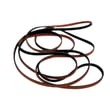
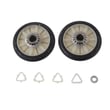
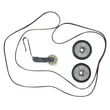
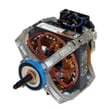
| Drum won’t turn or squeals | Drum drive belt / support parts | Belt 341241 |
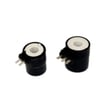
| Runs but heat is intermittent | Gas valve coils | Dryer valve coil kit 279834 |
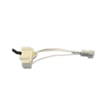
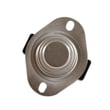
| Overheats or shuts off early | Thermostat / thermal protection | Dryer operating thermostat WP3387134 |
Why it matters
Restricted airflow makes a gas dryer run hotter and longer, which accelerates wear on the motor, thermostats, and drum support parts. Good venting and lint removal protect the dryer and help clothes dry faster.
Last updated: February 2026
Where is the part number on a Kenmore dryer?
On a Kenmore dryer like model 11075102310, the identifying information you need is on the model and serial number label, which is typically found inside the dryer door opening on the cabinet. Use that label info to match the correct replacement parts and diagrams in the 11075102310 owner's manual.
What to look for on the label
The label usually includes several identifiers; here is what matters most when ordering parts:
- Model number (example: 11075102310)
- Serial number (helps confirm production series)
- Type (yours is a 29" gas dryer)
- Electrical ratings (useful for service and troubleshooting)
Common label locations on Kenmore dryers
For most Kenmore 110-series dryers, the label is in one of these spots:
- Inside the door opening on the front panel
- On the door frame area near the latch
- On the rear panel (less common, but possible)
Model number vs. part number (quick comparison)
| Item | What it identifies | Example from this model page | When you use it |
|---|---|---|---|
| Model number | The dryer | 11075102310 | To find diagrams and the correct parts list |
| Part number / part ID | A specific replacement part | Belt 341241 | To order the exact part you need |
| Serial number | Production run details | (varies by unit) | To confirm compatibility when versions change |
Why it matters
Kenmore model numbers can look similar across different dryers, but parts like a belt, door switch, igniter, or timer can vary by series. Using the model/serial label prevents ordering the wrong component and speeds up repair.
If you are trying to identify a specific replacement part for this dryer, a common example is the belt 341241, but always match parts to your model number first.
Last updated: February 2026
How to hard reset a Kenmore dryer?
For a Kenmore 11075102310 gas dryer, a “hard reset” is a power reset: disconnect power for a few minutes, then restore power and restart a cycle. This clears many control glitches and is also the first safe step before any troubleshooting or service.
Hard reset steps (power reset)
- Turn the dryer off.
- Unplug the dryer (or switch the breaker off).
- Wait 1 to 5 minutes.
- Plug the dryer back in (or switch the breaker on).
- Close the door fully, then press and hold PUSH to START until the drum starts.
For model-specific operating and safety notes, follow the 11075102310 owner's manual.
If it still will not start after the reset
These checks solve most “dead” or “won’t run” complaints on this model:
- Confirm the door is fully closed; a failed door switch can prevent starting.
- Press and hold PUSH to START long enough to hear the motor engage.
- Check the house breaker or fuse (power issues can mimic a control problem).
- If the dryer ran fine, then stopped after sitting unused, restart and listen for normal initial thumps.
- If the drum turns but performance is poor, clean the lint screen and check airflow.
If the door is not being detected reliably, the dryer door switch WP3406107 is the common replacement part for this symptom.
Quick symptom guide
| What you see | What the reset helps | What to check next |
|---|---|---|
| No lights, no response | Clears minor control lockups | Breaker/fuse, outlet power |
| Lights on, will not run | Clears stuck cycle logic | Door closed, PUSH to START hold |
| Runs but dries slowly | Not usually a “reset” issue | Lint screen, venting, load size |
Why it matters
A power reset is the safest first step because it restores normal control operation without disassembly. If the problem returns immediately, the next checks (door switch, power supply, airflow) pinpoint the real cause faster and prevent repeat shutdowns.
Last updated: February 2026
How do I know if my Kenmore dryer thermal fuse is blown?
If your Kenmore 11075102310 gas dryer suddenly will not start, or it runs but stops producing heat, a blown thermal fuse (or thermal cut-off) is a common cause. The sure way to know is a continuity test with a multimeter after unplugging the dryer.
Quick symptoms to look for
- Dryer will not start even though the door is closed and you press and hold Start
- Dryer tumbles but there is no heat (clothes stay damp)
- Dryer starts, then shuts down mid-cycle (often tied to overheating from poor airflow)
- You recently noticed long dry times or a very hot cabinet
How we confirm it (continuity test)
- Unplug the dryer (and shut off the gas supply valve as a safety step).
- Access the thermal fuse or thermal cut-off on the blower housing or heater/burner duct (location varies by design).
- Remove at least one wire from the fuse terminal.
- Set a multimeter to continuity or lowest ohms.
- Test across the fuse terminals.
What the meter reading means
| Meter result | What it indicates | Next step |
|---|---|---|
| Beep or near 0 ohms | Fuse is good | Check airflow, thermostat, igniter, coils |
| No beep or OL/infinite | Fuse is blown | Replace the fuse and fix the overheating cause |
What to check before replacing parts
The manual and installation guide both point to basics that can mimic a “bad fuse” symptom, especially no-heat complaints.
- Confirm the dryer door fully closes and latches
- Verify the household fuse/circuit breaker is not tripped
- Make sure the vent is not crushed or kinked
- For gas models, confirm the gas supply shutoff valve is open
- Run a short heat test and check for heat after about 5 minutes
For model-specific operating and troubleshooting steps, use the 11075102310 owner’s manual. For venting and startup checks, use the 11075102310 installation guide.
Why it matters
A thermal fuse usually opens because the dryer overheated. Replacing the fuse without correcting airflow (lint buildup, blocked vent, crushed duct, clogged blower wheel) often leads to repeat failures and longer dry times.
Last updated: February 2026
How to figure out dryer model number?
For a Kenmore dryer, the model number is printed on the model and serial rating plate; on the Kenmore 11075102310 gas dryer, you will typically find that plate in the door opening (door well) after you open the dryer door. Write the model number exactly as shown so we can match the correct parts and diagrams.
Where to look first (fastest checks)
- Open the dryer door and inspect the door frame and door opening (door well)
- Look for a sticker or metal plate with Model and Serial fields
- Check the back panel if you do not see a label in the door area
- On some gas dryers, the rating plate is still easiest to spot with the door open
What the label looks like
Most labels include:
- Model number (example format: 110.75102310 or 11075102310)
- Serial number
- Gas type and burner information (common on gas models)
- Electrical ratings
Use this info the right way
Once you find the model number:
- Copy it exactly, including all digits
- Use the model number to choose compatible parts such as a belt 341241 or dryer door switch WP3406107
- Keep a photo of the label for future repairs and maintenance
Quick reference table
| Where you checked | What you should see | What to do next |
|---|---|---|
| Door opening (door well) | Model and serial rating plate | Record model and serial exactly |
| Door frame | Sticker with model and serial | Take a photo for clarity |
| Back of cabinet | ID label | Use it to match parts diagrams |
Why it matters
Kenmore model numbers can look similar, but small differences change which parts fit (timers, thermostats, igniters, and even door switches). Using the exact model number helps us get you the correct replacement part the first time. For model and serial label locations and other identification details, use the 11075102310 owner's manual.
Last updated: February 2026
How much does it cost to replace a heating element in a Kenmore dryer?
For a Kenmore dryer, replacing a heating element usually runs about $20 to $120 for the part, while a typical installed (labor + part) total is about $100 to $350. For your Kenmore 11075102310 29" gas dryer, “no heat” problems are often caused by gas-heat components (igniter, coils, thermostats) rather than an electric element; use the 11075102310 installation guide heat-check steps first.
What you’ll typically pay (part vs. service)
Costs vary by dryer design (electric vs. gas), how hard the cabinet is to access, and whether you replace related safety parts at the same time.
- Electric dryer heating element (part only): ~$20 to $120
- Common “no heat” kits (thermostats, fuses, etc.): often ~$25 to $55
- Professional replacement (part + labor): ~$100 to $350
- Extra cost drivers: vent cleaning, seized fasteners, multiple failed heat-safety parts
| Repair scenario | What’s included | Typical total cost |
|---|---|---|
| DIY, part only | Heating element or gas-heat part | $20 to $120 |
| DIY, small kit | Cut-off, thermostat, fuse set | $25 to $55 |
| Pro repair | Diagnosis + part + labor | $100 to $350 |
Model-specific note: 11075102310 is a gas dryer
This model is a gas dryer, so it does not use the same style “electric heating element” that many electric dryers do. If the drum tumbles but there’s no heat, these parts are common suspects:
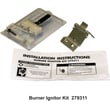
- Igniter 279311 (glows to light the burner)
- Dryer valve coil kit 279834 (opens the gas valve when energized)
- Dryer radiant sensor WP338906 (confirms flame/heat at the burner)
- Operating or high-limit thermostat (controls and protects temperature)
Quick heat check (5-minute test)
We follow the same basic check used during installation troubleshooting:
- Start a heated cycle and let it run about 5 minutes
- Open the door and feel for heat
- If there’s no heat, turn the dryer off and confirm the gas shutoff valve is open
- If the valve is open and there’s still no heat, plan on burner-system diagnosis (igniter, coils, sensor, thermostats)
Why it matters
Pricing depends on whether you’re fixing an electric heating circuit or a gas burner system. On gas models like 11075102310, replacing the correct burner component first prevents repeat service calls and helps restore safe, consistent drying.
Last updated: February 2026
What is the capacity of the Kenmore dryer model 11075102310?
The Kenmore gas dryer model 11075102310 is a full-size 29-inch dryer; dryers in this class run in the large-capacity range, about 6.5 to 7.4 cu. ft. Use the 11075102310 owner's manual to confirm the exact cubic-foot rating for your specific unit.
How to confirm the exact capacity for model 11075102310
We recommend checking the specification callouts that are tied to your exact model number.
- Look for a “Specifications” or “Product data” section
- Check the model and serial label page reference (often points to the spec list)
- Review any cycle and loading guidance that mentions drum size
- If you have the installation paperwork handy, compare the 29-inch platform and cabinet dimensions in the 11075102310 installation guide
What “capacity” means for drying performance
Capacity is the drum volume (cubic feet). Drying results depend on leaving enough room for clothes to tumble and for airflow to move through the load.
- Large loads dry faster when items can lift and fall freely
- Overloading increases dry time and can raise operating temperatures
- Proper airflow reduces stress on wear parts such as the belt 341241 and the blower system
Typical capacity by dryer size
| Dryer size/type | Typical capacity | Common use |
|---|---|---|
| 29-inch full-size gas dryer (like 11075102310) | 6.5 to 7.4 cu. ft. | Towels, bedding, family loads |
| Compact dryer | 3.4 to 4.0 cu. ft. | Small loads, tight spaces |
Why it matters
Matching capacity to your laundry habits helps prevent long dry times, damp spots, and overheating from restricted tumbling and airflow.
Last updated: February 2026








